
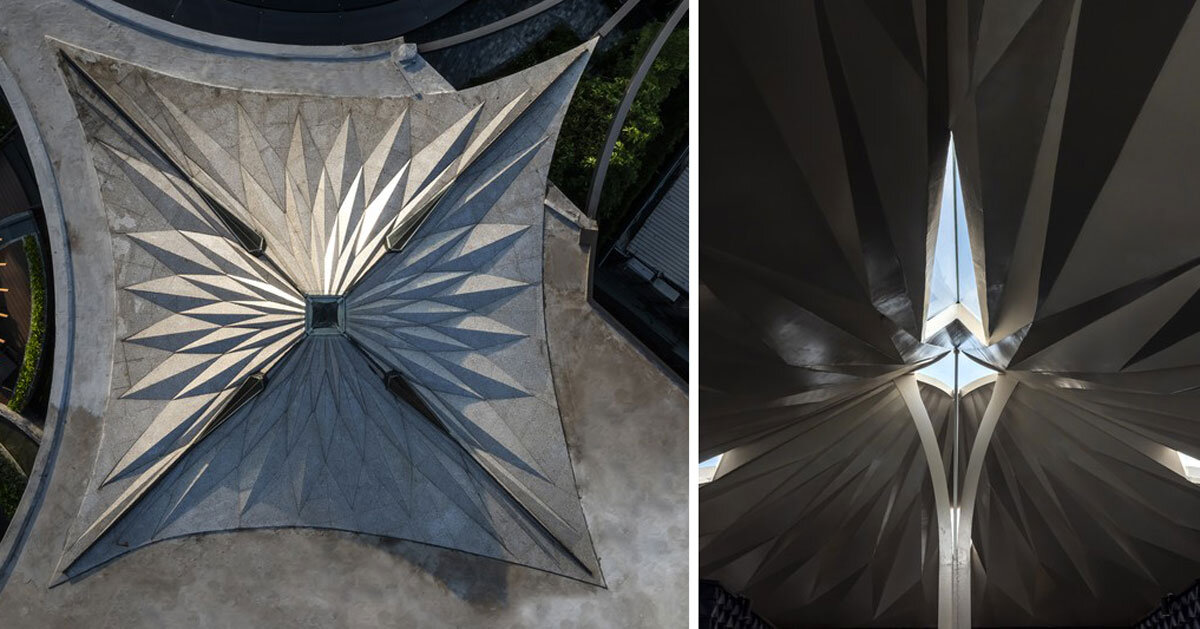
Takashi Niwa uses folded steel geometry to shape a restaurant
Takashi Niwa Architects designs Urban Sparkle for Hokkaido Sachi Restaurant located in Thao Dien, Ho Chi Minh City, Vietnam. Designed for a flagship Japanese restaurant, the building is defined by an origami-inspired steel roof that establishes a strong architectural presence while organizing light, circulation, and program across the site. The project occupies a 30-meter street frontage directly in front of Ho Chi Minh City’s first metro line and is surrounded by high-rise residential towers. As a result, the building is experienced from three primary viewpoints: street level, passing trains, and elevated perspectives from adjacent towers. The design responds to these conditions by treating the roof as both a visual marker and a spatial framework, allowing the building to register at multiple urban scales.
The roof structure is composed of folded 4 mm steel plates spanning up to 6 meters. Through systematic origami-based folding principles, the thin steel gains structural rigidity while maintaining a lightweight appearance. This approach is considered one of the first applications of origami-inspired thin steel plate construction in Vietnam. The folded geometry enables large spans, integrates skylights, and minimizes material thickness while remaining structurally efficient. Local metalworking techniques were used to fabricate the complex geometry within budget constraints.
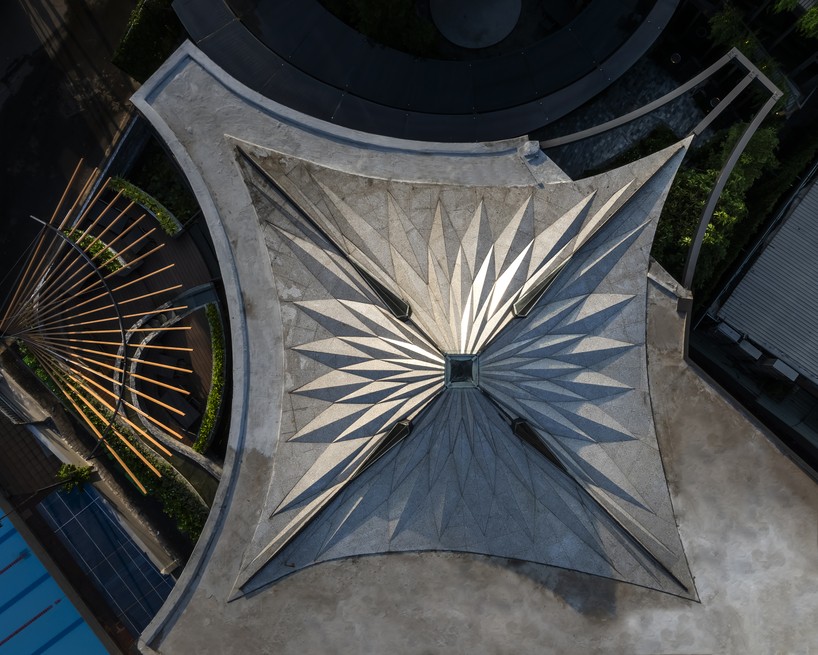
Urban Sparkle is located in Thao Dien, Ho Chi Minh City | all images courtesy of Takashi Niwa Architects
Folded form and lighting create a dynamic spatial framework
Light plays a central role in the project, designed by Takashi Niwa Architects. During the day, the folded roof channels daylight through strategically placed skylights, distributing natural light across the interior. At night, artificial lighting reverses this effect, projecting outward through the same openings and transforming the building into a luminous presence within its surroundings. The steel surfaces reflect and diffuse light throughout the day, producing changing visual conditions depending on time and viewpoint. The geometric pattern of the roof subtly references snow crystals, establishing an abstract connection to northern landscapes associated with Japanese cuisine. This reference is conveyed through form rather than literal symbolism, allowing cultural identity to be expressed through material and geometry. The roof also defines interstitial exterior and interior spaces, supporting gathering areas and outdoor performances along the landscaped approach.
Inside, the folded ceiling creates variations in height and compression, guiding movement through the restaurant. Circulation follows the curves of the roof geometry, with spatial transitions shaped by changing light conditions and ceiling profiles. Dining, circulation, and performance areas are organized as a continuous spatial sequence rather than discrete rooms. Urban Sparkle demonstrates how folded geometry, thin steel construction, and controlled lighting can be combined to produce a building that responds to its urban context while supporting programmatic flexibility. Through material efficiency and geometric clarity, the project establishes a recognizable architectural identity shaped by light, structure, and movement.
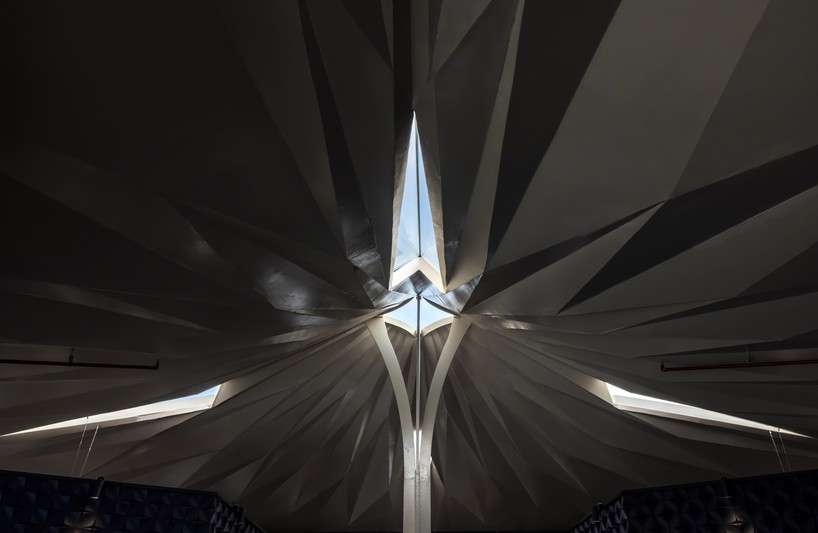
the folded ceiling channels natural light through skylights, creating a dramatic interplay of light and shadow
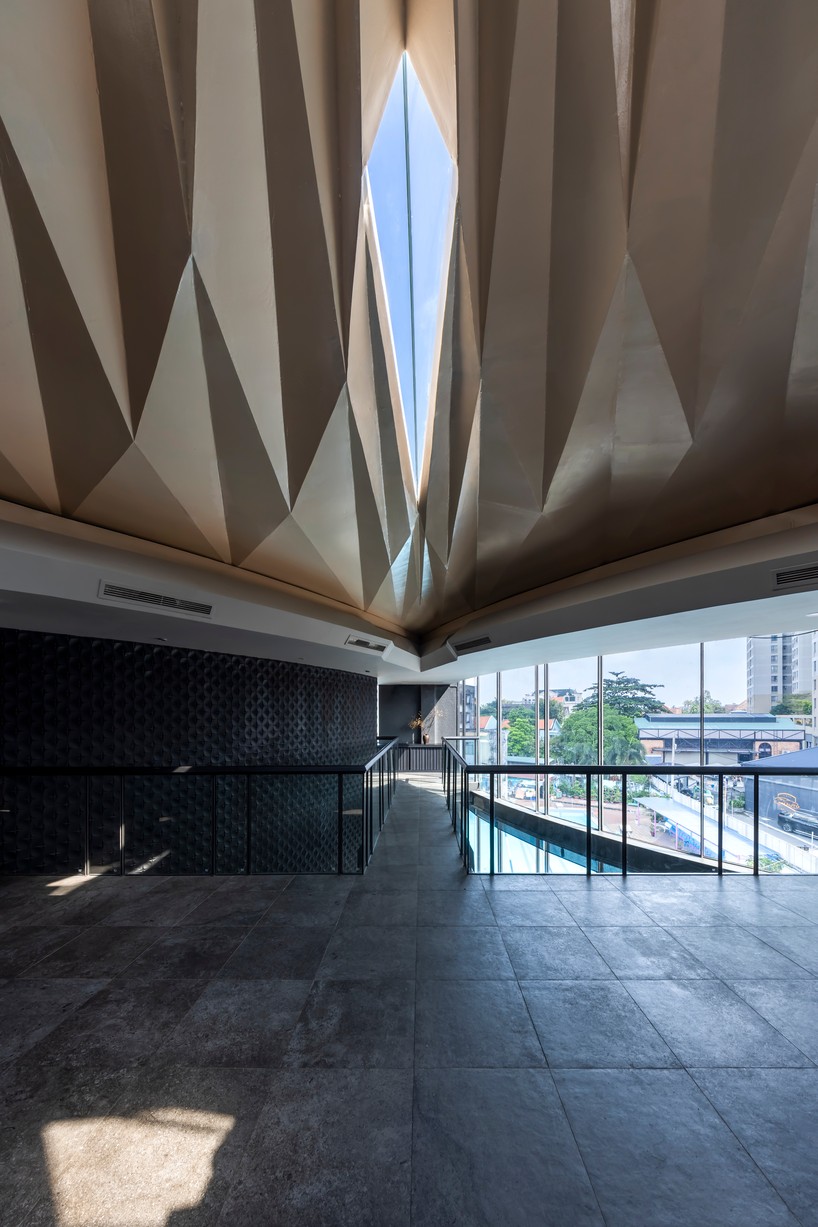
the central skylight reveals the complex intersection of folded steel planes, creating ever-changing light patterns
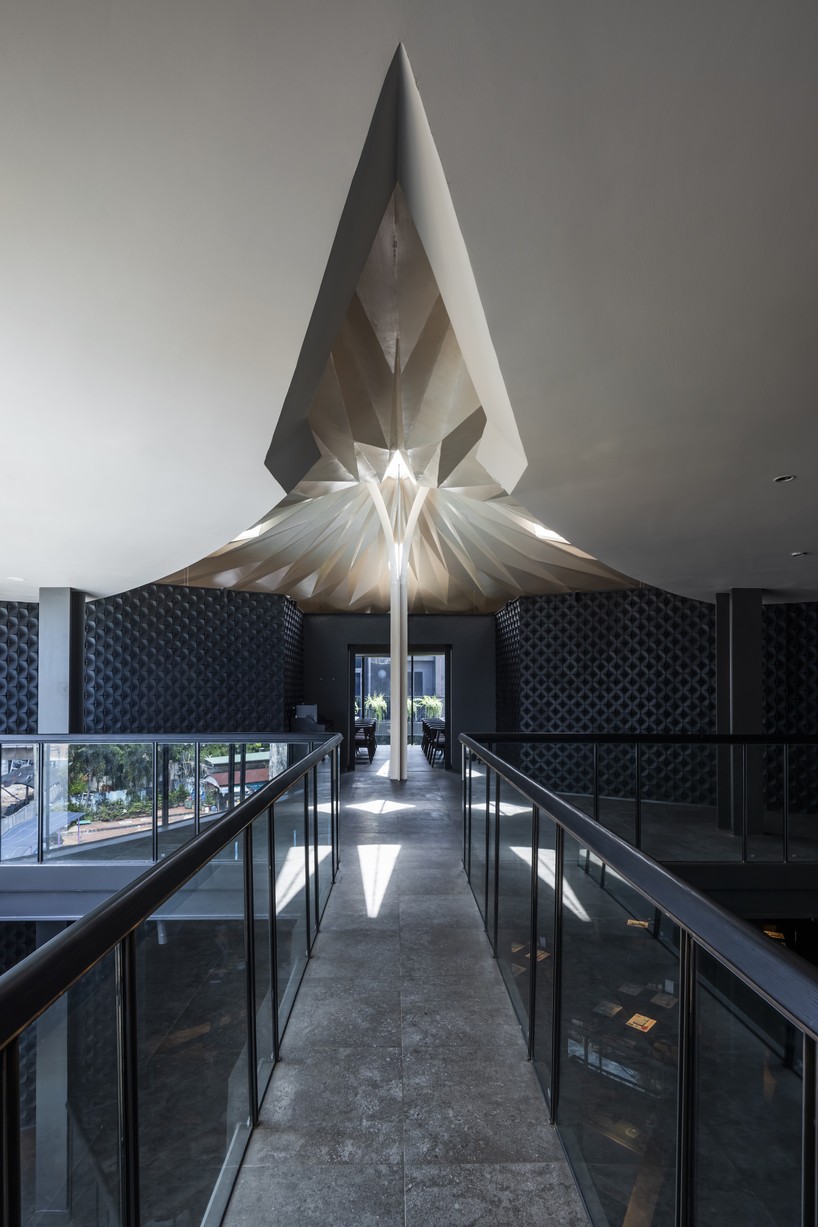
varying ceiling heights beneath the folded roof naturally guide circulation
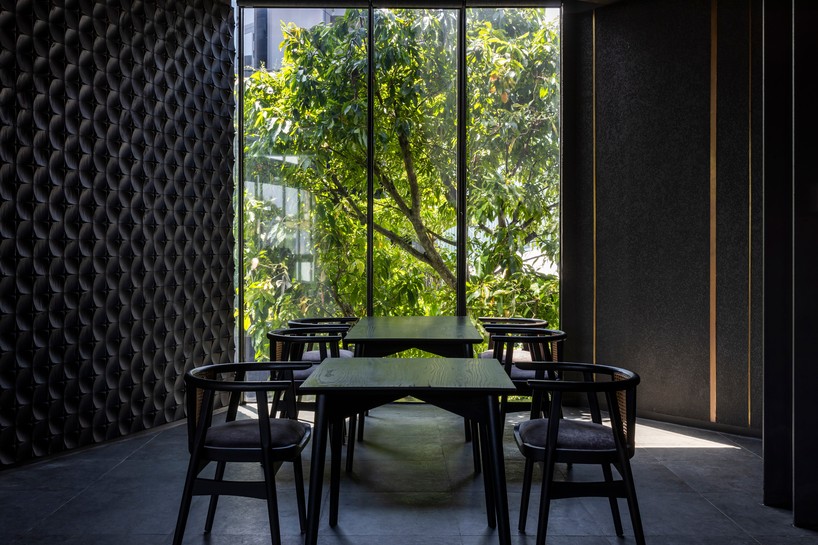
a dining alcove frames views of the garden landscape