
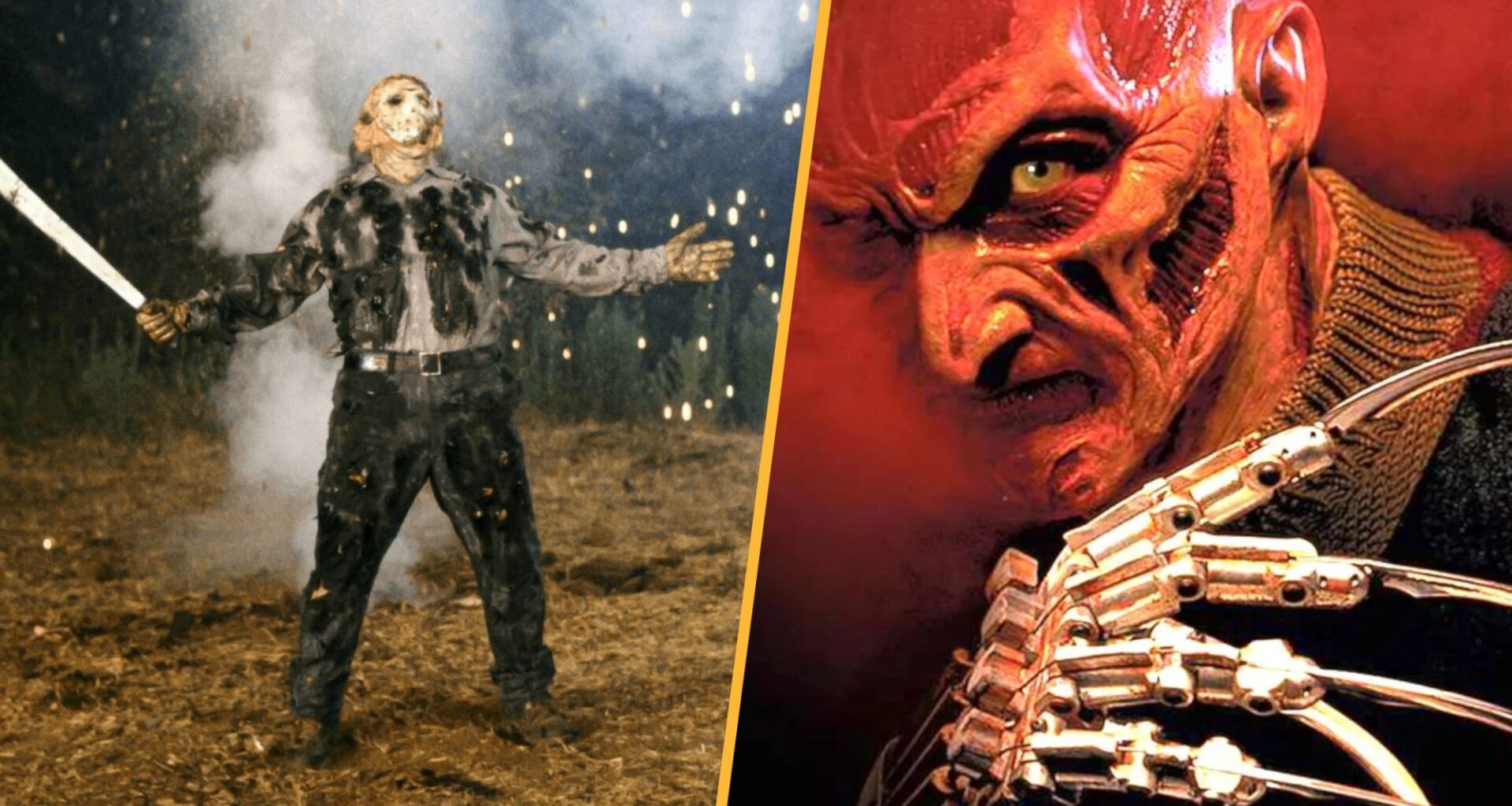
Horror movie villains quite often work extremely well when they are used conservatively. The fact we don’t see much of The Babadook is what makes it so scary. All we need of Pamela Voorhees is for her to come in during the third act of Friday the 13th, reminisce about the negligence-caused death of her son, and try to take out Alice, the final remaining camp counselor trying to re-open Camp Crystal Lake. Hannibal Lecter managed to be the most terrifying presence in The Silence of the Lambs even though he wasn’t its primary villain. We don’t need to see the shark in Jaws to feel as though it’s lurking just beneath the surface of the water.
Then there are the following villains, all of them iconic and all of them severely underutilized in at least one of their movies. What a letdown.
5) Michael Myers in Halloween Ends
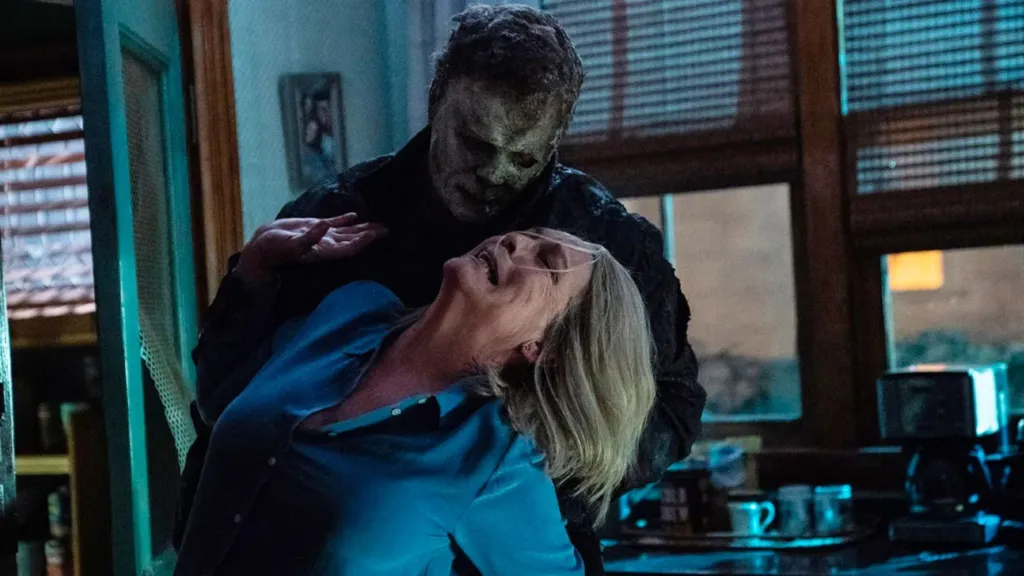 image courtesy of universal pictures
People have bashed on Halloween Ends quite a bit, and it’s all deserved. Sure, after Halloween Kills ended up being a full-on Michael fest it made sense to dial him back in the trilogy-capper, but not to the point where he’s barely in it.
And how they dialed him back is the biggest problem. Watching a bullied teen become a vicious killer simply hits too close to home (in the U.S., at least) in the 2020s. Halloween Ends is a really tough movie to watch, and not just because someone has their tongue cut off and placed on a turntable.
4) Pinhead in Hellraiser: Inferno
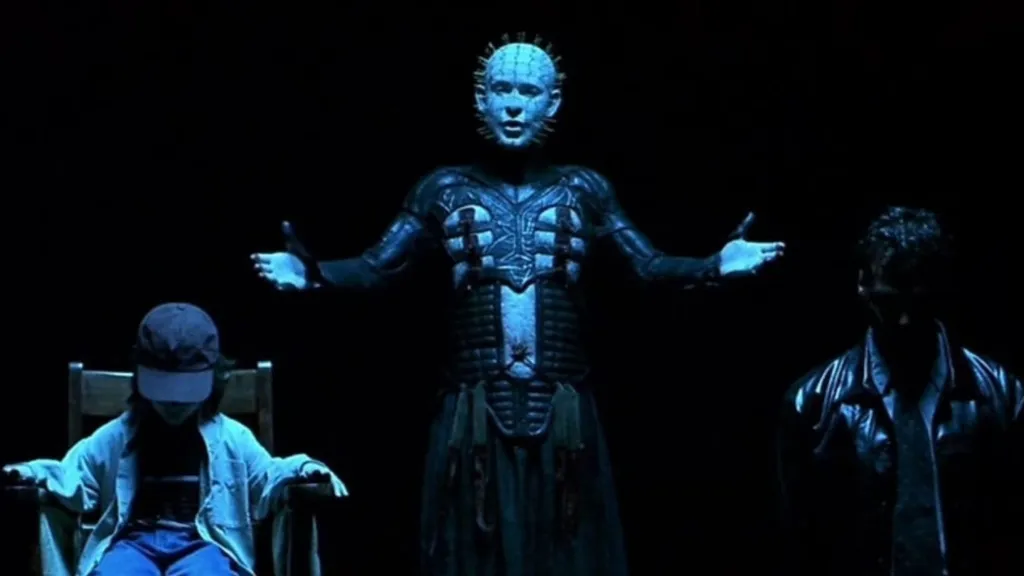 image courtesy of buena vista home entertainment
The original Hellraiser has Pinhead and his fellow Cenobites in it for less than 10 minutes, and it works like a charm. Why? Because its central plot is so compelling, and the fact that one of the two main villains is actively avoiding the Cenobites allows their absence to make full sense.
In Hellraiser: Inferno, we’re basically just watching a corrupt cop procedural. And when Pinhead pops up towards the end for all of five minutes (having worn the corrupt cop’s therapist as a disguise), it feels shoehorned in. And there’s a good chance that is exactly the case, because Pinhead himself, Doug Bradley, has claimed Inferno wasn’t initially meant to be a Hellraiser movie. Director Scott Derrickson has disputed this claim, but if indeed Bradley is right, it wouldn’t be much of a shock.
3) Freddy Krueger in New Nightmare
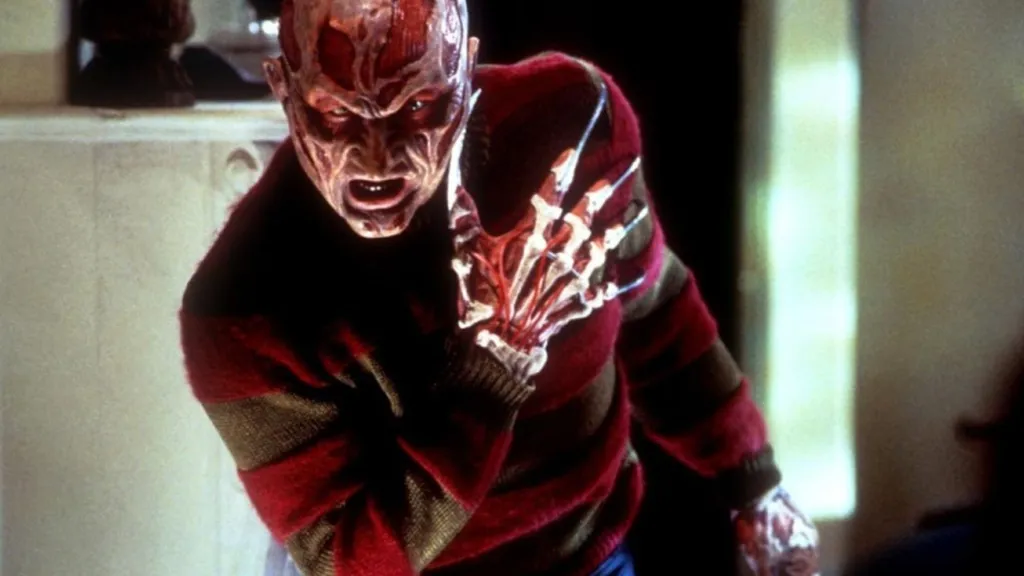 image courtesy of new line cinema
Unlike the other entries on this list, New Nightmare isn’t a bad movie. In fact, it’s an impressively ambitious one. But Freddy Krueger or, rather, The Entity, isn’t much of a presence in it.
That could have worked, and it’s easy to see what they were trying to do by going in that direction. Gone is the wise-cracker and in comes a dreaded, increasingly alluded to monster that isn’t quite like what we’ve seen before. But, in spite of some makeup changes, The Entity still is basically just Freddy Krueger, and for the most part he’s reenacting what his cinematic predecessor did back in 1984. For those who went into New Nightmare thinking they would see this terrifying new rendition of Freddy for more than 10 or so minutes, they were in for a huge disappointment.
2) Albert Wesker in All Resident Evil Movies That Feature Him
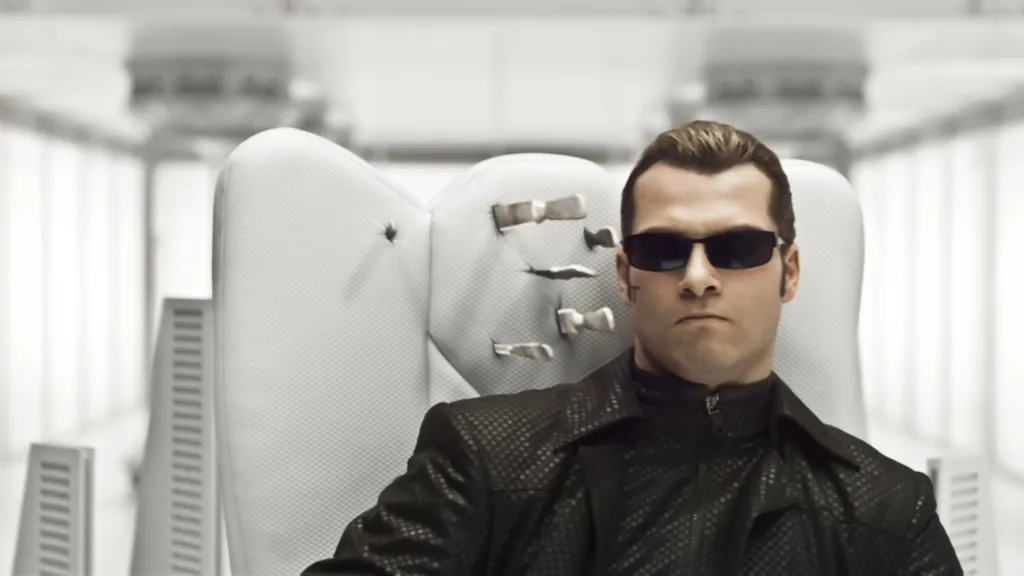 image courtesy of sony pictures releasing
Albert Wesker is one of the Resident Evil games’ more memorable villains, with slicked back hair, sunglasses, a black jacket, and an air of cool that is matched only by the level of danger he poses. His appearances in the Milla Jovovich movies kept the clothing and left the danger elsewhere.
After a cameo in Resident Evil: Extinction (where he was played by Jason O’Mara for all of two minutes) he was given a bit more of a presence in Resident Evil: Afterlife. Unfortunately, even when positioned as the final boss he is, we don’t take Wesker seriously thanks to horrendous CGI and a widely criticized flat performance by Shawn Roberts. The character wasn’t saved in Resident Evil: Retribution and Resident Evil: The Final Chapter, as he was given next to nothing to do in those films. And, in Resident Evil: Welcome to Raccoon City, we only really get an origin story version of him, and that never went anywhere, so his betrayal of the team doesn’t really carry any emotional weight.
1) Jason Voorhees in Jason Goes to Hell: The Final Friday
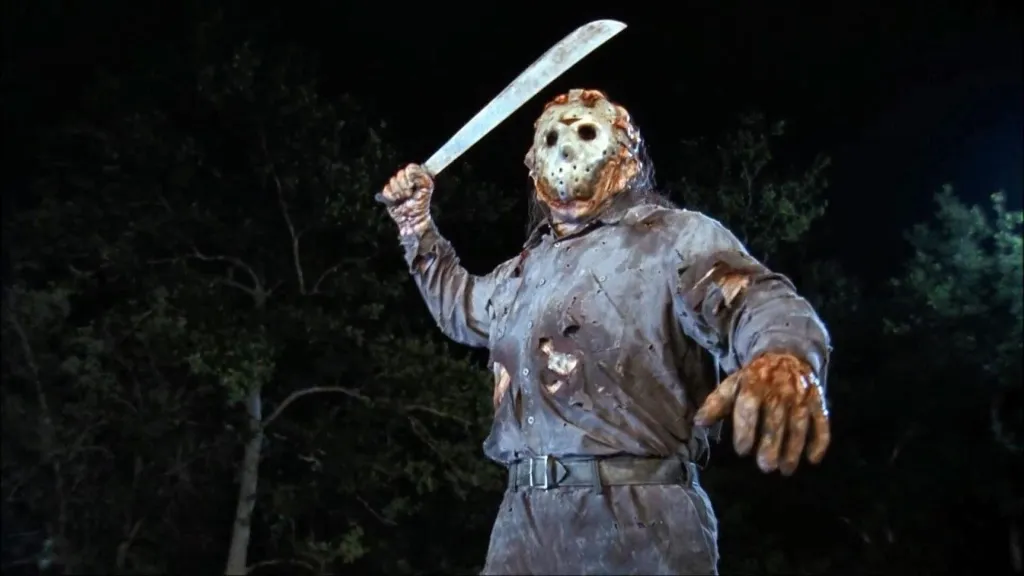 image courtesy of new line cinema
After the first four installments, the Friday the 13th franchise experienced a severe case of diminishing returns. By the time we got to Friday the 13th Part VIII: Jason Takes Manhattan, it was made clear that even with a setting change the audience just wasn’t quite there anymore to see Jason do his thing (the same could be said of the slasher subgenre as a whole in the late ’80s and early ’90s).
So, credit where due to young Adam Marcus for directing a movie that tries to throw an even bigger curveball of a wrench into the machinery, but the result was just as Jason movie that featured Jason in only two scenes less than five minutes in length. Jason Goes to Hell: The Final Friday tries to greatly expand the lore of the Friday the 13th franchise, but it failed to realize that people were tired of Jason because the audience got eight installments in just about as many years. There needed to be both a new hook and a healthy amount of time after Manhattan to regenerate audience interest. And it really depended on the hook. Body swapping wasn’t it (nor was going to space), but fighting Freddy very much was.