
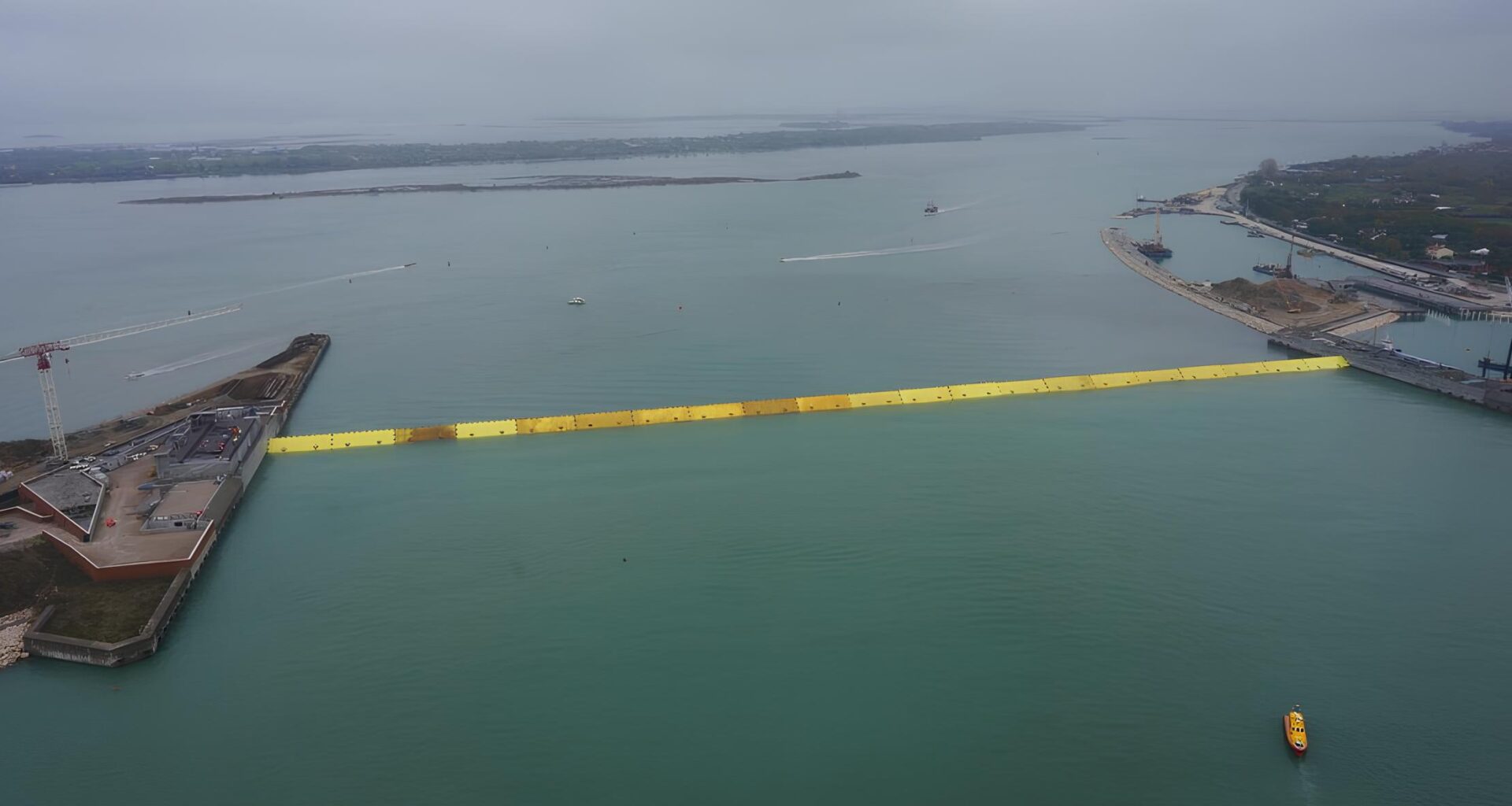
The MOSE system uses 78 giant underwater floodgates to protect Venice from extreme tides and the ongoing advance of sea levels.
Venice has always lived in an unstable equilibrium with the water. Built on stilts driven into the bottom of the lagoon, the city depended for centuries on predictable tides and relatively stable levels of the Adriatic. This balance began to crumble in the 20th century, when the combination of gradual sinking of the ground e sea level rise This led to increasingly frequent and destructive flooding. The Italian response was one of the most complex coastal engineering projects ever attempted in Europe: the MOSES.
The threat that has turned water into a permanent enemy.
The phenomenon known as acqua alta It ceased to be an occasional event and began to occur dozens of times a year. During extreme tides, large areas of Venice were submerged, affecting residents, businesses, historical heritage, and the very structure of the buildings.
Some squares experienced flooding exceeding one meter, putting churches, palaces, and centuries-old foundations at risk.
— ARTICLE CONTINUES BELOW —
Faced with the prospect of making the city uninhabitable throughout the 21st century, Italy decided not to elevate the entire city of Venice, but rather… to physically control the sea’s entry.
A submarine system on a monumental scale.
MOSE — acronym for Electromechanical Sperimentale Module it’s composed by 78 movable metal gates, installed on the seabed at three strategic points connecting the Venice Lagoon to the Adriatic Sea.
Each gate operates independently and weighs up to 300 tonnes , with dimensions comparable to those of a multi-story building when erected.
These structures are normally filled with water and lying on the bottom. When the tide reaches critical levels, the system injects compressed air into the gates, expelling the water and causing them to… spin and rise, forming a continuous barrier between the open sea and the lagoon.
Engineering designed to not interfere with the city.
One of the biggest technical challenges was creating a system capable of operating without permanently altering the natural tidal regime. MOSE only comes into operation during extreme events, remaining submerged most of the time.
The floodgates were designed to withstand marine corrosion, water pressure, and repeated opening and closing cycles. The entire system depends on… underground infrastructure, including service tunnels, engine rooms and control centers, invisible to those observing the city.
Billion-dollar costs and decades of construction.
The complexity came at a high price. MOSE took more than 20 years between design, construction and testing., with an estimated final cost of billion eurosThe project faced delays, technical revisions, changes in scope, and even political scandals related to its financing.
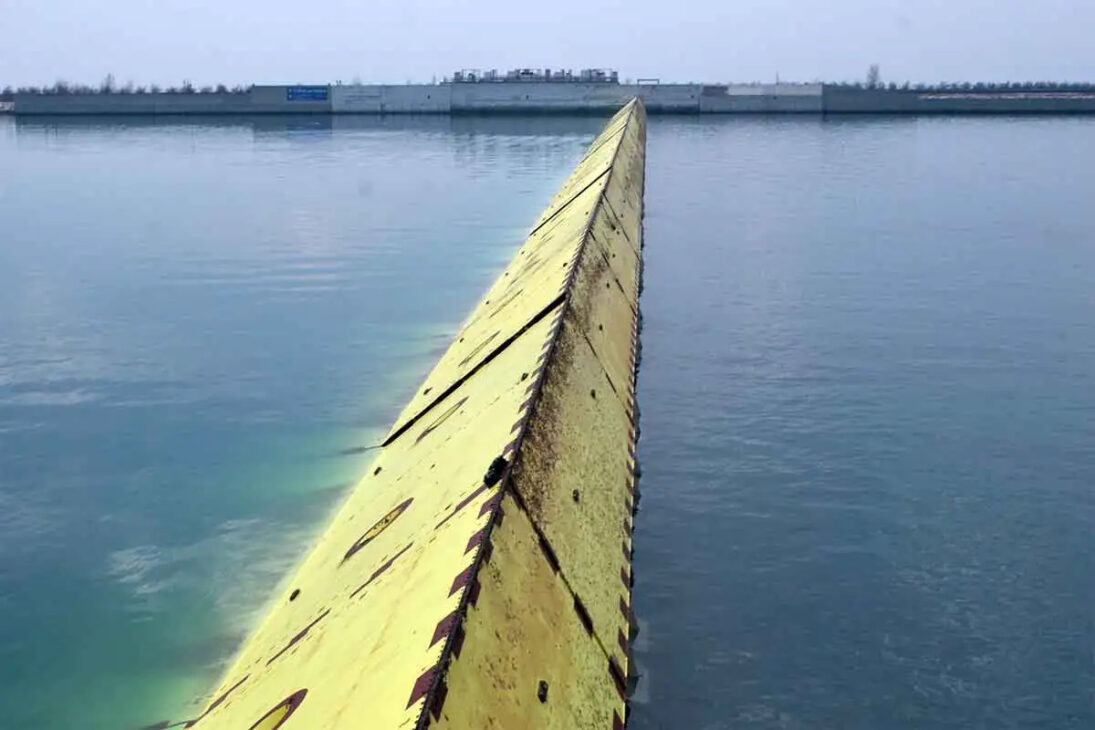 With 78 movable floodgates weighing up to 300 tons each, Italy has built a multi-billion dollar underwater system to isolate Venice from the sea, contain extreme tides, and prevent the historic city from sinking completely.
Despite this, the system entered experimental operation and began to be activated during episodes of exceptional tides, preventing flooding that, in similar situations in the past, would have inundated a large part of Venice.
A mobile shield against the advancing sea.
When activated, MOSE is capable of completely isolating the lagoon for hours, keeping the internal water level controlled even during storms and strong winds. This protects not only the historical heritage but also the city’s modern infrastructure, such as electrical systems, sewage networks, and transportation.
Unlike fixed dikes, the system does not permanently block water circulation, reducing ongoing environmental impacts and preserving the lagoon’s natural dynamics most of the time.
Despite being one of the largest coastal engineering projects ever built, MOSE is not a permanent solution. The continued rise in sea level may require further improvements. more frequent activations, increasing operating and maintenance costs.
Furthermore, the floodgates require constant inspections, cleaning to remove marine fouling, and structural revisions to ensure safe operation over the coming decades.
When engineering becomes the last line of defense.
MOSE represents a radical shift in how historic cities deal with natural threats. Instead of slowly adapting urban development, Venice has come to rely on a… submarine mechanical shield, operated on demand, to ensure its survival.
More than just a retaining wall, the project symbolizes the point where engineering, historical heritage, and climate change intersect.
In Venice, protecting the past required building one of the most technically advanced infrastructures of the present and keeping 78 steel giants ready to rise whenever the sea tries to reclaim the city.