

As the era of bilateral bad blood between Canada and the U.S. drags on, some snowbirds are facing a choice this January: Go south to warmer climes, or boycott a country that has gone from friend to somewhat of a foe.
That decision is more difficult for the hundreds of thousands of Canadians who collectively own an estimated $60 billion worth of property in Florida, the favoured refuge for generations of the winter-weary.
Donna Lockhart, a snowbird from Ennismore, Ont., decided the recent anti-Canadian sentiment was too much to bear and it was time to put her condo near Punta Gorda, Fla., up for sale and get out of U.S. President Donald Trump’s America.
In addition to Trump’s 51st-state talk and ongoing trade war, the dismissive remarks from Florida Republican Gov. Ron DeSantis — he’s been hostile to Canada and mocked Ontario Premier Doug Ford last month — made her feel unwelcome in a place she had made her second home.
“I think you get a little more anxious the older you get, and I do not like the direction that the United States is going in. If they don’t want us there, we don’t need to be there,” Lockhart said in an interview with CBC News.
But, when the time came to list her home, Lockhart faced a complication: She wasn’t the only one trying to leave. The ongoing Canadian exodus has pummelled the real estate market in some parts of the state, and southwest Florida is uniquely susceptible to the snowbird-induced selloff.
“There aren’t that many people looking,” she said. “Supply is way above demand.”
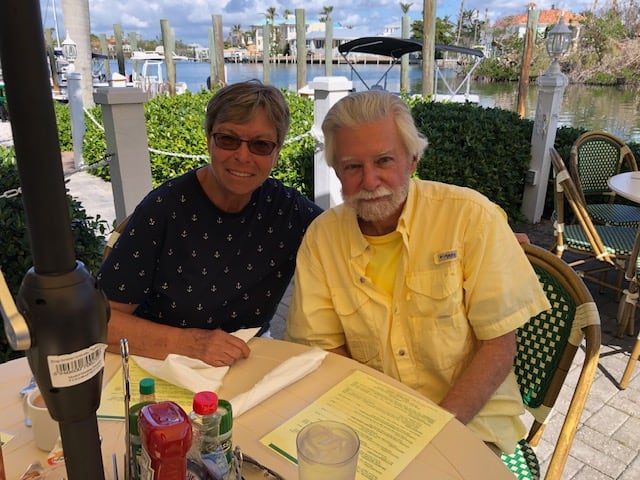 Canadian snowbird Donna Lockhart, left, decided to sell her Punta Gorda, Fla., condo after U.S. President Donald Trump attacked Canada — but a bad housing market has complicated the sale. (Submitted by Donna Lockhart)Housing troubles in southwest Florida
Southwest Florida, which stretches along the Gulf Coast from Naples in the south to the edge of Tampa Bay in the north, is grappling with a host of housing troubles.
A number of hurricanes have ripped through this often sun-drenched part of the state over the last five years, destroying homes, damaging others and pushing up the price of insurance — in some cases by a lot. The average policy price has soared some 40 per cent in three years, according to state regulators.
The COVID-19 boom that juiced prices is over. Home construction is still in full swing despite a drop in would-be homeowners. Add in the stampede of Canadians trying to get out, and it’s just not an ideal time to sell, analysts say.
In Lockhart’s neighbourhood nestled along Charlotte Harbour, more than 100 units are on the market. That means nearly 10 per cent of all homes in the picturesque boating community are for sale, well above the average turnover rate. A similar unit to hers in the same building has been listed since last April.
“Southwest Florida is characterized right now by an exceptionally high level of inventory,” Joel Berner, a senior economist at Realtor.com who tracks the Florida market, said in an interview.
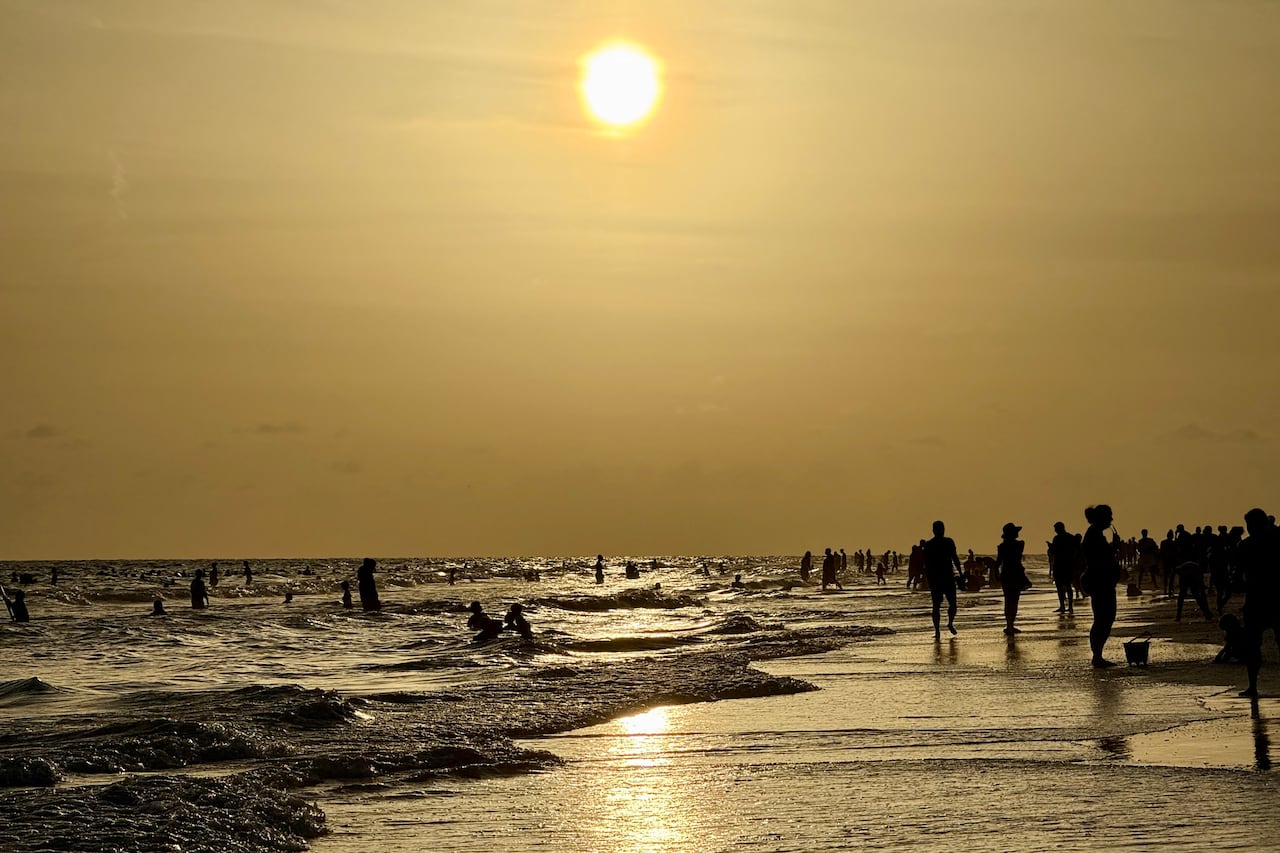 People walk on the beach at sunset at Siesta Beach in Sarasota, Fla. Communities along Florida’s Gulf Coast rely on Canadian visitors and seasonal residents. (Daniel Slim/AFP/Getty Images)
“Prices are coming down considerably and time on the market is up and what we’re seeing there is more supply than we’ve seen for years,” Berner said.
Some of that can be attributed to Canadians stepping back, he said.
“The number of Canadian buyers in Florida and in the U.S. as a whole has kind of shrunk.”
The Canadian exodus
Realtor.com has been tracking a decline in the number of Canadians interested in buying U.S. homes. There’s been lighter traffic on its website, one of the largest listing sites.
The company’s data shows two southwest Florida destinations are among the top four most sought after by Canadians in all of the U.S.: the Cape Coral-Fort Myers and North Port-Bradenton-Sarasota metropolitan areas.
Those two areas also just happen to be where the firm is projecting the steepest price declines in the state in 2026.
Berner said he’s expecting prices will drop by 10.2 per cent in Cape Coral, 8.9 per cent in North Port and 3.6 per cent in Tampa, further to the north — declines beyond what were already recorded in a painful 2025.
John Willows, a retiree who lives in rural eastern Ontario not far from the U.S. border, is one of those people staying away. While he’s an avid boater and loved his past winters in Florida, he said he can’t stomach going to the States right now.
“We’re in a trade war and we’ve got to support our own side,” Willows said in an interview. “I’m bullheaded and I’ve just decided, ‘Hey, I’ve had enough.’ And just to throw it in their faces, I’m probably going to Cuba instead.”
The slumping sales data aligns with what Royal LePage found when it surveyed Canadians who own property in the U.S.: 54 per cent are considering selling their stateside homes within the next year.
“Close to two-thirds of them actually pointed to concerns over the current U.S. administration as the No. 1 reason to sell,” said Anne-Elise Cugliari Allegritti, vice-president of research and communications, in an interview.
“Overwhelmingly the main reason is the current political climate in the U.S. It’s a real temperature check on where Canadians are at today.”
A different approach
At least one Florida politician is trying to get leery Canadians to stay put or come back to his part of the state, given how dependent the area is on these neighbours from the north.
“It’s unfortunate because Canadians love coming here and I understand why they’re not right now,” said Allen Spence, a Democratic candidate for U.S. Congress in a district that includes hard-hit Sarasota.
“But not everybody here believes in what Donald Trump and Ron DeSantis are spewing. There are people like me who are spending a lot of money and free time trying to kick these MAGA politicians out.”
 Democratic congressional candidate Allen Spence shakes hand with voter in Port Charlotte, Fla. Spence told CBC News he’s running, in part, to stop MAGA Republicans’ anti-Canadian agenda. (Wesley Walther/Garcia/Submitted by Allen Spence)
Canadians pay an estimated $600 million annually in property taxes alone, according to the Canadian consulate in Miami. Restaurants, small businesses and the workers they employ in tourist towns up and down the Gulf Coast are suffering from the many absent Canadians, Spence said.
The state’s own data shows the number of Canadian visitors has plunged, despite its governor’s claims about record-setting tourism.
“The Canadian boycott is absolutely affecting us. It’s hurting us financially because the people from Canada who come here, they stay for weeks or months,” he said. “Now what we’re seeing is a larger share of the tax burden being pushed from tourists onto residents.”
And it’s not just about the money, Spence said.
“It’s unfortunate. We do have a shared history; we were allies in both world wars. We’re basically cousins and I wish we treated our family with a little more respect.”
Lockhart spoke similarly. The aggressive posture from a long-time ally was “like a slap in the face,” she said.
In her case, rather than selling into a down market, she and her husband have decided to wait it out and list in early 2027, hoping prices will bounce back by then. And since she’s on the hook for fees whether she lives in the condo or not, she’s decided to go down there this winter while she still has the property.
She said she’s faced some small acts of antagonism for being Canadian.
“Things have changed; it makes you feel less comfortable.”