
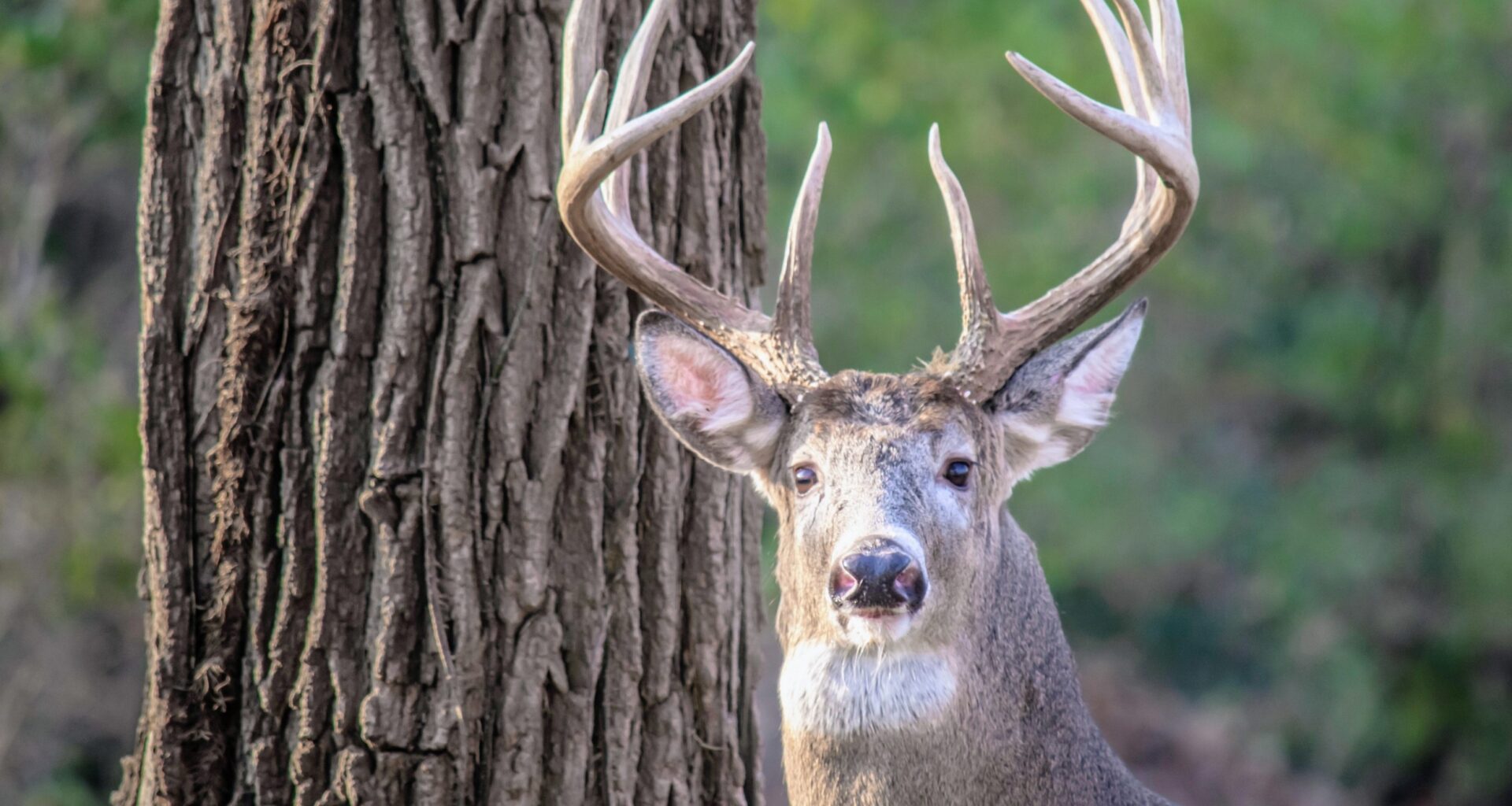
We usually think of animal communication as something we hear or smell. Deer are a familiar example, using scents as signals during mating season. New research suggests those messages may also glow.
Scientists have discovered that marks left by male white-tailed deer may glow faintly during dusk and dawn. This glow could help deer notice each other when light is low.

The finding opens a new way of thinking about how animals use the environment to communicate.
The work focuses on a common forest behavior that hunters and wildlife watchers already know well.
Deer use glowing signals
During breeding season, male white-tailed deer show strength and presence through physical signs. A buck rubs tree bark with antlers and presses scent glands from the forehead onto the trunk.
The animal also scrapes the ground with hooves and urinates in the disturbed soil. These spots send strong messages about dominance and readiness to mate.
Scientists call these marks signposts. Such signposts usually rely on smell. However, new evidence suggests signposts may also send visual signals.
“I would equate it to highway reflectors,” said Daniel DeRose Broeckert, a biologist at the University of Georgia and lead author of the study.
The idea is simple. When light hits certain materials, those materials can absorb energy and release it as visible glow. This process is known as photoluminescence. Many natural substances show this effect.
Glowing signposts in the forest
DeRose Broeckert and colleagues carried out fieldwork in Georgia’s Whitehall Forest. The team searched for white-tailed deer, also known as Odocoileus virginianus, signposts during two periods before peak breeding time.
Researchers scanned trees, scraped ground, and urine patches using ultraviolet light. Two UV wavelengths were chosen because similar light exists naturally during dawn and dusk.
After scanning, the team measured light that reflected back. Special focus went to wavelengths that deer eyes are likely to detect.
In total, the team examined 146 signposts. This group included 20 urine patches. The results were clear. Both tree rubs and urine glowed in a noticeable blue green color under UV light.
“The urine definitely glows, it looks like spilled white paint,” said DeRose Broeckert. “It’s pretty striking. To deer, these marks may appear as bright turquoise blue spots against darker forest backgrounds.
Why deer glow may attract mates
Female deer rely heavily on scent when choosing mates. A glowing signpost could add visual strength to the message. Smell provides one signal, while light provides another.
“You get stimulus from two senses,” said DeRose Broeckert. “You have the sense of smell telling you something, and then, oh boy, it’s also superbright.”
The glow became stronger as breeding season progressed. Researchers suggest this change may come from increased rubbing behavior or more gland secretions spreading onto tree surfaces.
Inner layers of bark may also play a role since some plant tissues naturally show photoluminescence.
The exact chemical source of the glow remains unknown. Possible contributors include compounds from deer glands, urine, and exposed wood.
Scientists raise doubts
Some scientists urge caution when interpreting the findings. Linda Reinhold, a zoologist at James Cook University who was not part of the study, praised the method but pointed out limits.
Artificial UV lights were used during testing. Natural twilight conditions may not produce the same effect.
“The idea that deer, or any other mammals, can see natural photoluminescence in natural lighting still remains a hypothesis,” said Reinhold.
Another concern involves animal behavior. Ron Douglas, a biologist at City St George’s, University of London, noted that many biological materials glow without serving a purpose.
“To be certain that any observed fluorescence has a biological function one would also need to observe a behavioral response to it in the animal,” he said.
Such responses could include changes in movement or attention.
What future research may reveal
The authors agree that more work is needed. Future studies could analyze glowing chemicals in greater detail. Scientists could also cover glowing areas or reduce the glow to see how deer react.
Such experiments may show whether light truly plays a role in mating communication. If confirmed, this discovery would expand understanding of how animals use sight, smell, and environment together.
For now, the study offers a new way to view familiar forest signs. What once looked like simple scratches and stains may also shine quietly at twilight, guiding deer through the woods.
The study is published in the journal Ecology and Evolution.
—–
Like what you read? Subscribe to our newsletter for engaging articles, exclusive content, and the latest updates.
Check us out on EarthSnap, a free app brought to you by Eric Ralls and Earth.com.
—–