
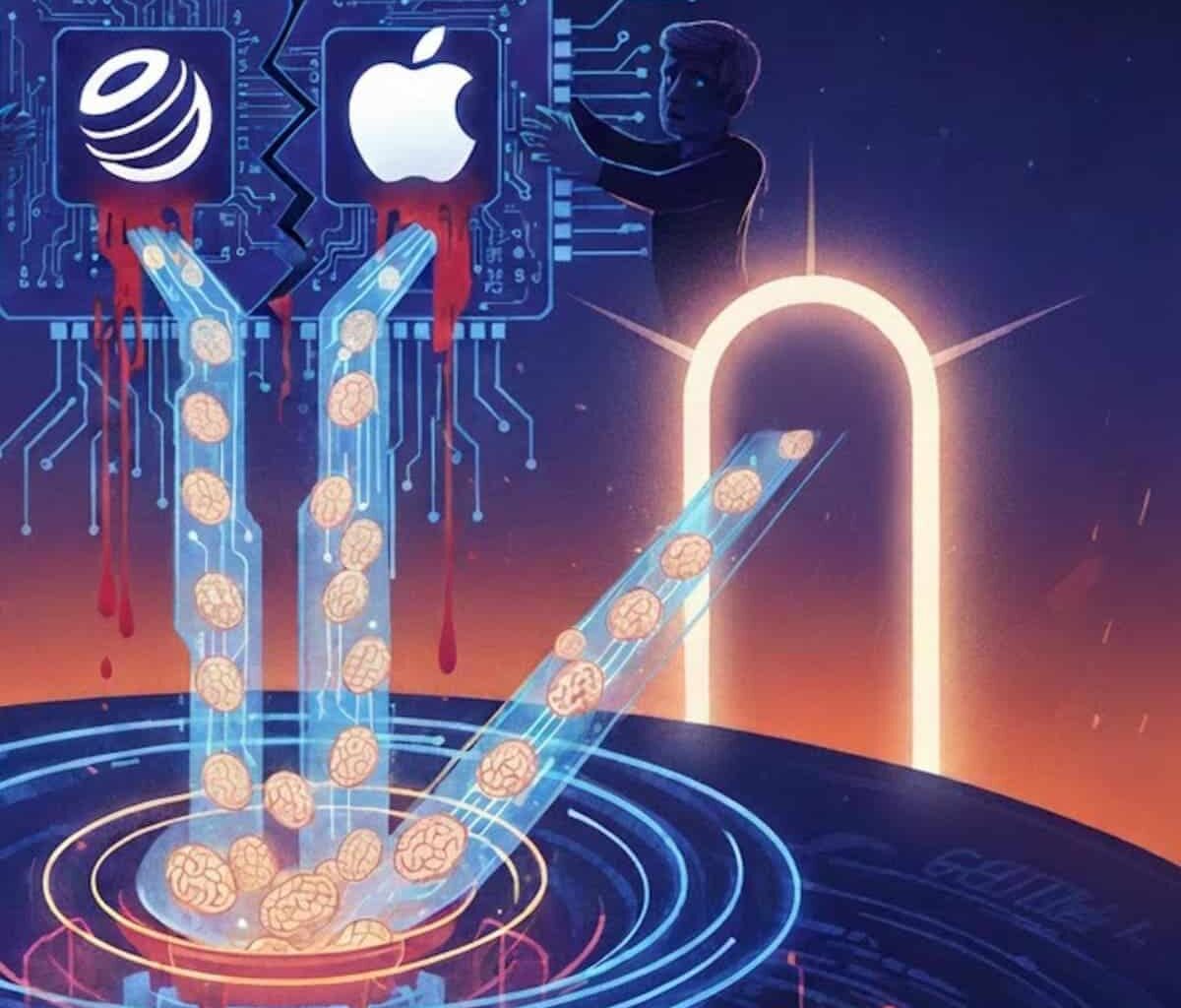
A dramatic twist. OpenAI is now on the defensive as Google overtakes ChatGPT. The problem: the best talents are leaving OpenAI. The same thing is happening at Apple, and Meta is taking full advantage!
On November 18, Google launched Gemini 3. The internet giant made a strong comeback and went all out on the new version of its AI. Benchmark tests are unanimous — Gemini 3 easily surpasses ChatGPT. A real slap in the face for OpenAI. Its CEO, Sam Altman, has triggered what’s known as a “code red” — an alert that halts all monetization projects (ads, shopping assistants, personal agents, and more) to focus on one single goal: climbing back up to Gemini 3’s level.
Three years ago, that same “code red” came from Google, which had been completely overtaken by ChatGPT’s success. Despite OpenAI’s massive investments, strong reputation, and early lead, the company now finds itself in a defensive emergency.
Meanwhile, Google has a major advantage: total control over its entire ecosystem, with in-house accelerators and tools where AI can be seamlessly integrated, such as Android, Search, and Chrome.
To top it all off, this “red alert” comes just as OpenAI is facing a wave of departures among its top people — a brain drain that will certainly not help Altman advance ChatGPT the way he hopes.
With Gemini 3, Google struck hard enough to shake the AI champion OpenAI. © Google
Ethics above all
This great migration is, above all, the symptom of the governance crisis surrounding Sam Altman that unfolded in 2023. It had already caused the resignation of major executives, particularly those responsible for safety — meaning oversight and ethics in AI. While employees were involved in a project that was almost academic and dedicated to the common good, they suddenly found themselves in a structure driven purely by commercial goals. A radical shift in direction that no longer matched their values.
Today, the hemorrhage has not stopped, and OpenAI is not the only company affected. The same thing is happening at Apple, which is experiencing a sudden series of departures from its most sensitive AI teams. After robotics AI head Jian Zhang, the latest to leave Cupertino is Alan Dye, Apple’s chief of user interface design. All of them are joining Meta to take on similar roles — likely with very generous paychecks to go with them.
Since AI entered our everyday lives, Apple has struggled to find its footing. The company has failed to deliver a truly intelligent Siri and hesitates between promoting its own internal models or integrating partners like OpenAI or Anthropic. The internal crisis of confidence born from this erratic governance also helps explain this exodus of talent.
Meta, the brain magnet
As nature abhors a vacuum, by a kind of communicating vessels effect, these “brains” are almost all landing at Meta. The parent company of Facebook, which once lost its way by betting on a stillborn metaverse, is now going all in on its own AI development. Meta has truly become the talent magnet of the moment, attracting experts from both OpenAI and Apple. They are joining the company’s Superintelligence Labs and working on open models and general AI projects. It’s also a spectacular turnaround for Meta, which has now become a central hub for the elite of the discipline.
At Meta, they are rediscovering the roots of their commitment — developing relatively open models, feeling they are working for the common good, and avoiding the pressure of strained governance or the institutional slowness of a giant like Apple. In this completely reshaped landscape, no one would have imagined Meta becoming a breeding ground for talent — and perhaps soon positioning itself as one of the future leaders of AI.
In any case, one thing is certain: the acceleration of AI development sometimes causes the front-runner to miss the turn. That’s the case for OpenAI. Those who missed the start can climb back just as sharply. And those who don’t take risks — like Apple — will remain where they are, at the back of the pack.

Sylvain Biget
Journalist
From journalism to tech expertise
Sylvain Biget is a journalist driven by a fascination for technological progress and the digital world’s impact on society. A graduate of the École Supérieure de Journalisme de Paris, he quickly steered his career toward media outlets specializing in high-tech. Holder of a private-pilot licence and certified professional drone operator, he blends his passion for aviation with deep expertise in tech reporting.
A key member of Futura’s editorial team
As a technology journalist and editor at Futura, Sylvain covers a wide spectrum of topics—cybersecurity, the rise of electric vehicles, drones, space science and emerging technologies. Every day he strives to keep Futura’s readers up to date on current tech developments and to explore the many facets of tomorrow’s world. His keen interest in the advent of artificial intelligence enables him to cast a distinctive light on the challenges of this technological revolution.