
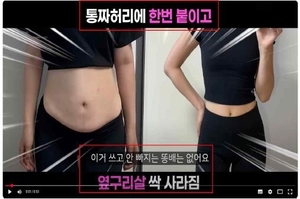
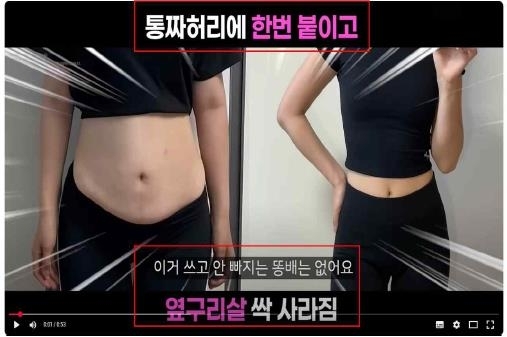
 Captured from a joint press release by relevant government ministries. (Yonhap)
Misleading advertising created with artificial intelligence is proliferating on social media, making it increasingly difficult for users to distinguish fact from fiction, prompting the government to prepare countermeasures to prevent consumer harm.
When limited to food and pharmaceutical products, 96,726 cases of false online advertising were detected last year, according to the Ministry of Food and Drug Safety.
In recent months, advertisements claiming that a product can restore hair growth within months, or eradicate toenail fungus simply by applying it, have spread widely online. The ministry conducted a three-week crackdown from Nov. 24 and identified 376 cases of false advertising.
Officials say the surge in misleading ads stems from a lack of regulation, including the absence of a preliminary review system. Platforms such as YouTube are classified as value-added telecommunications service providers, unlike television broadcasters, allowing them to operate outside advertising review guidelines that apply to broadcast media.
The government plans to revise relevant laws later this year to allow the Korea Communications Commission to directly request platform operators to correct violations. It also aims to require companies to clearly label advertisements generated using artificial intelligence.
shinjh@heraldcorp.com