
Canonsburg, Pennsylvania, is a modest-sized community southwest of Pittsburgh that was once home to crooner Perry Como, actress Demi Moore, 1960s heartthrob singer Bobby Vinton, rapper Wiz Khalifa, and race car driver and car builder Don Yenko.
Ah, Yenko! Did that mention make your ears perk up in a way even Perry Como can’t manage? Yes, it’s that Yenko, an automotive legend known by just his last name, like Shelby, but not as famous—unless you are a dedicated Chevrolet performance fan, who possibly dreams of owning a car breathed upon by the ahead-of-his-time Don Yenko.
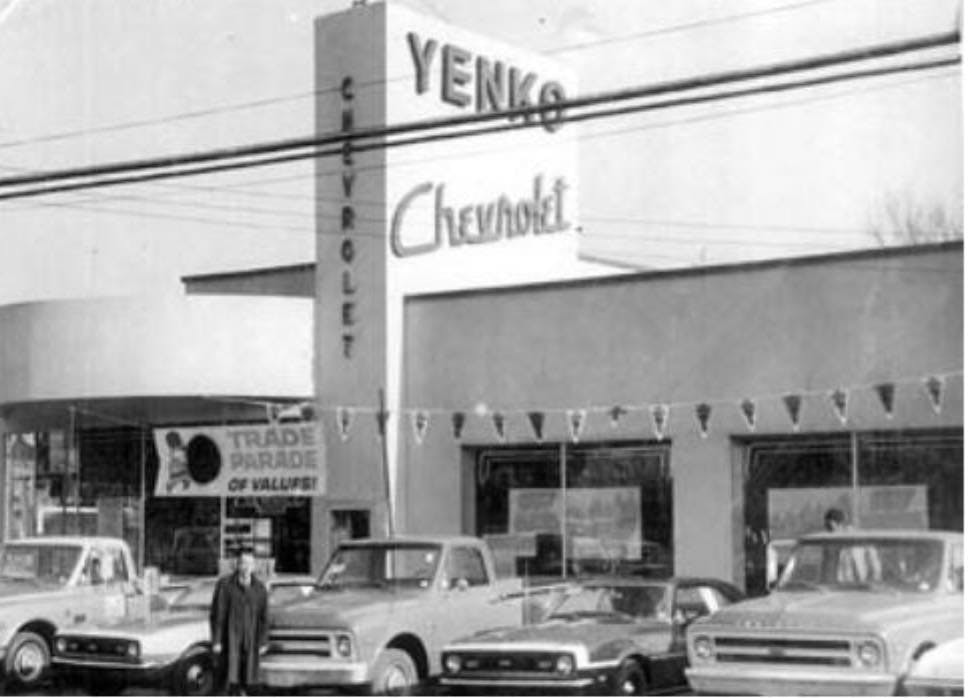
The present population of Canonsburg is fewer than 10,000, according to the most recent census, and it was smaller than that in 1949, when Yenko Chevrolet was founded by Don’s father. It avoided the fate of being just another rural Chevy dealer via Don’s love of going fast.
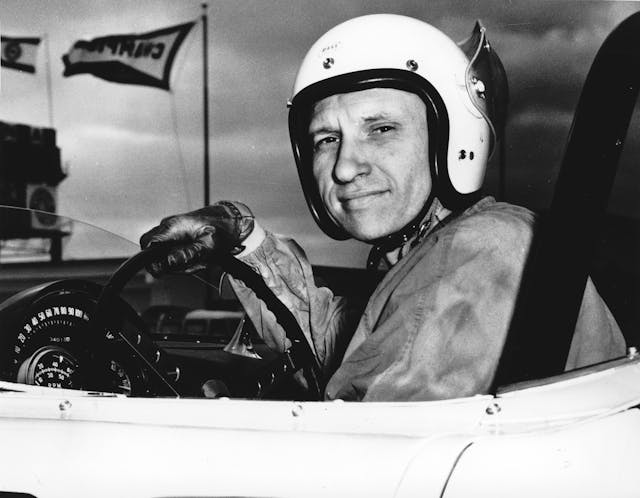 Don Yenko showed great promise behind the wheel of a race car.Getty Images
He was a four-time Sports Car Club of America class champion, and he raced at Daytona, Sebring, Riverside, and even in the 24 Hours of Le Mans. He won the 1969 Citrus 250 at Daytona International Speedway in his Camaro, ahead of drivers that included Peter Gregg, Bob Tulius, Parnelli Jones, and Lloyd Ruby. He also became a licensed pilot when he was 16; we’ll circle back to that in a moment.
In 1957, Don Yenko helped launch a performance arm at the family Chevy dealership. Salespeople there learned all the secret codes required to special-order the most potent Chevrolets; people in the parts department were well-versed in add-on bits and pieces, and dealership mechanics knew how to properly install those parts for maximum effect. Word spread.
 via Facebook
Don raised Yenko Chevrolet to the next level in 1965, when he took stock Corvairs and began modifying them to sell as turn-key new vehicles. The Yenko Corvair, which featured sophisticated upgrades in power, handling, and looks, was known as the Stinger, and it starred in most every automotive publication in the country. Yenko built them through 1967, when he understandably turned his attention to a new Chevrolet: the Camaro.
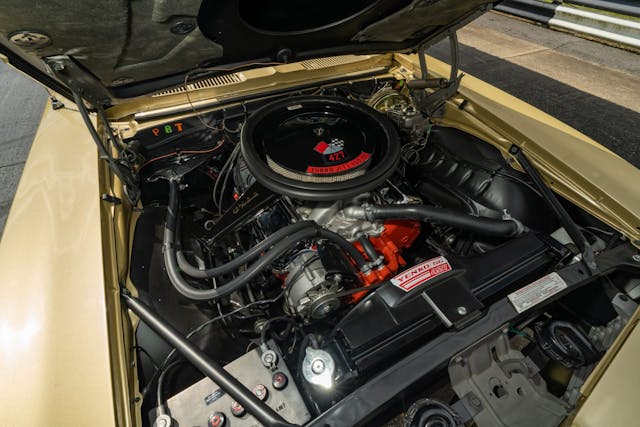
If the Chevy performance community was enthusiastic about the Corvair Stinger, it was enraptured over Don’s Yenko Camaro. He would take the already-muscular Camaro SS, yank out the 396-cubic-inch V-8, which was the biggest engine offered from the factory, and replace it with the 427-cubic-inch, L-72 V-8 from the Corvette. Yenko also appropriately beefed up some of the Camaro’s hardware, including adding a fiberglass hood. The company built just over 50 copies of the ’67 Yenko SC (Super Camaro), and 64 in 1968.
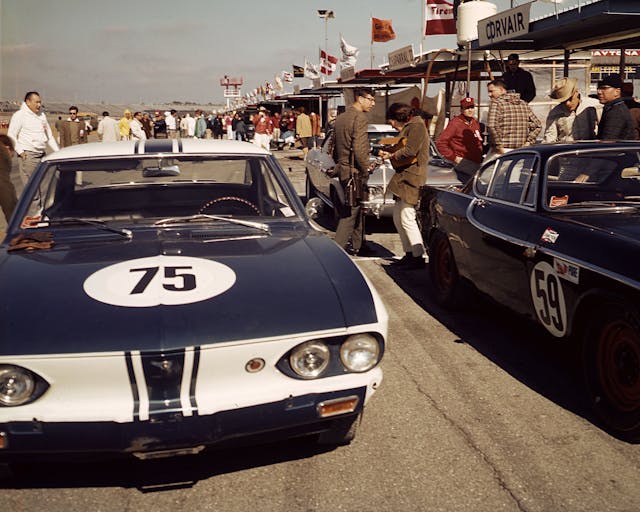 Art Riley and Ross MacGrotty drove the No. 75 Yenko Stinger Corvair in the 1966 24 Hour Daytona Continental, the first 24-hour event at the track. Oddly, Don Yenko co-drove the No. 59 Volvo beside it.Getty Images
As with the Corvair Stinger, Yenko found some friendly car magazines just waiting for the SC, providing what amounted to a fortune in free advertising. It’s worth noting that until the Camaros, Yenko products seemed largely aimed at road racing, but these big-block cars found a ready market among drag racers.
In 1969, for that one-year-only Camaro design, Chevrolet made things a little easier on the Yenko shop by arranging for the 427 to be installed at the factory as part of the little-known Central Office Production Order system. The COPO cars also came with factory upgrades to other parts of the Camaro, ranging from power disc brakes to a beefier front antiroll bar, plus an available automatic transmission.
Later on, Yenko offered a much-modified Chevrolet Nova as the Yenko Deuce, and a Chevrolet Vega called the Stinger II. He also hot-rodded a handful of Chevelles. The last true Yenko-modified cars were built in 1972; since then there have been attempts to restart the program, but none have found much traction. Yenko himself was involved in a run of 19 Camaros in 1981, which were turbocharged to modest effect.
Yenko was killed on March 5, 1987, along with his three passengers, when a Cessna 210M he was piloting tried to land at Yeager Airport in Charleston, West Virginia. The National Transportation Safety Board found that the Cessna bounced after a hard landing, and Yenko, who had nearly 5000 flight hours, applied power, presumably to go around, but the plane hit an embankment and plunged nose-down into a 300-foot ravine, “in a near-vertical descent.” Don Yenko was 59.
Yenkos on the Block
 Mecum
Mecum
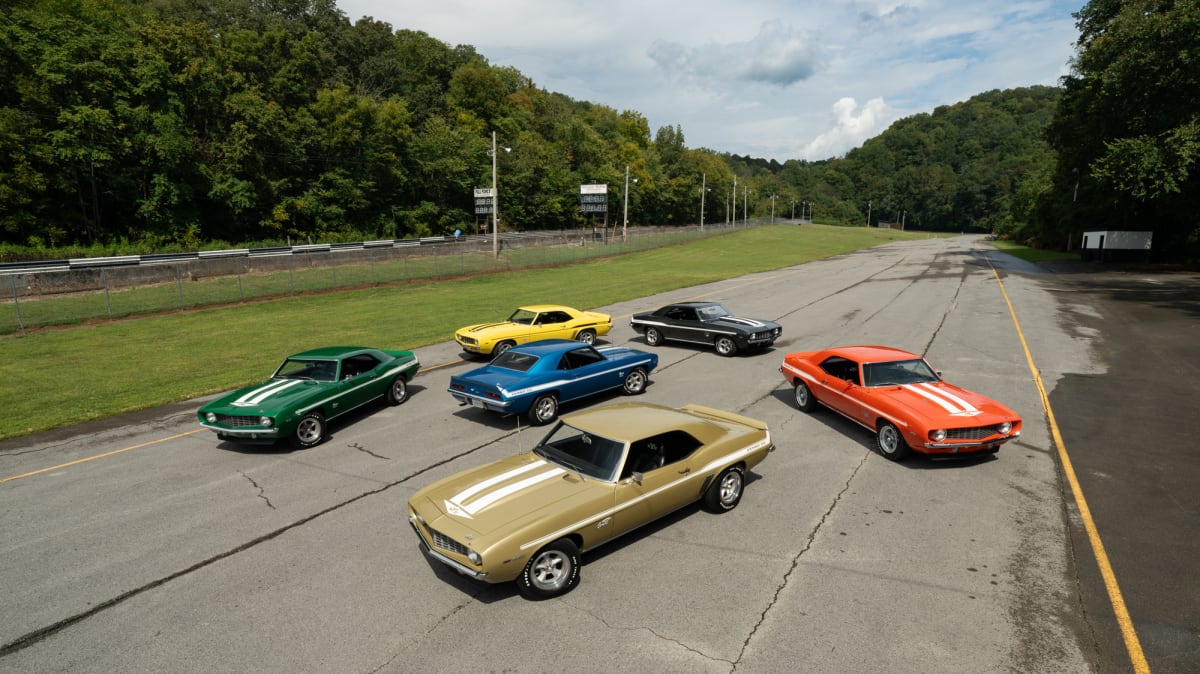
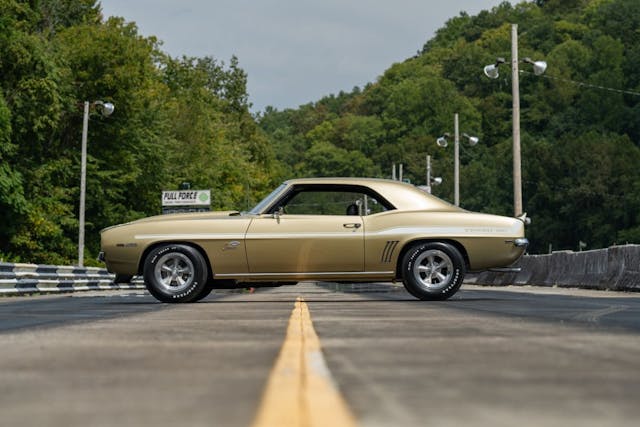
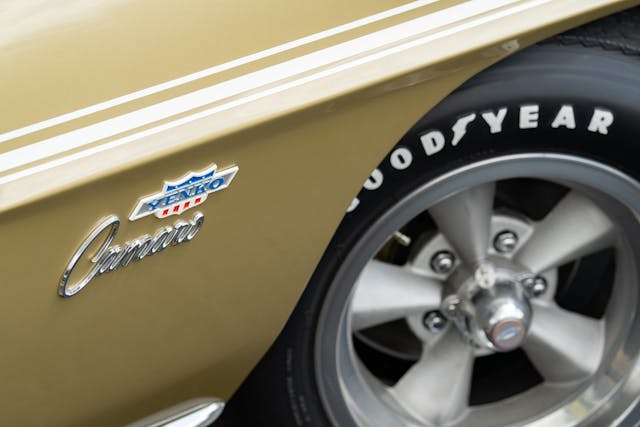
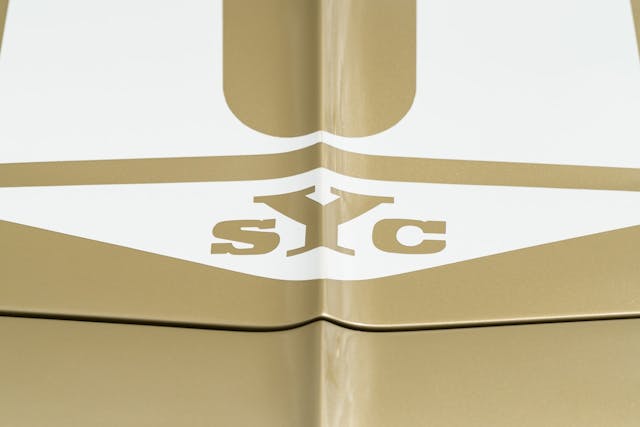
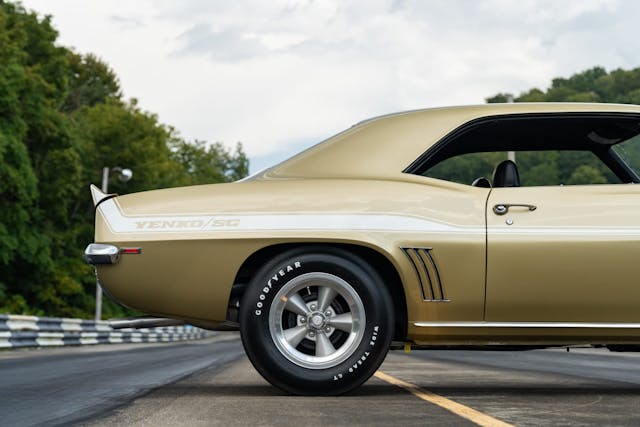
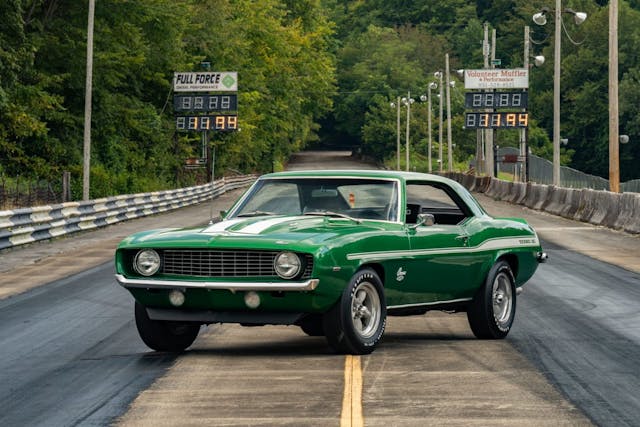
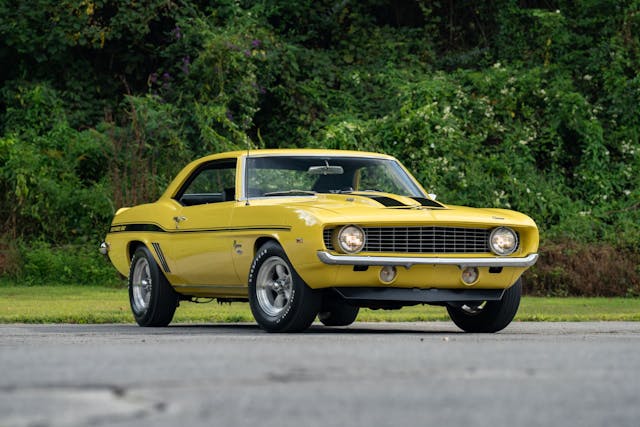
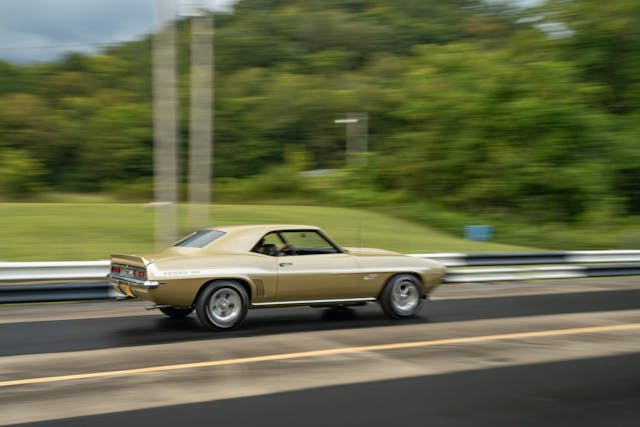
Certainly, the legend of the Yenko Chevrolets has not diminished. A 1969 Yenko Camaro sold last year at Mecum’s Indianapolis auction for $715,000. That figure may be eclipsed on Saturday, January 17, at Mecum’s event in Kissimmee, Florida. That’s when the Cliff Ernst Collection goes on sale, highlighted by a gold 1969 Yenko Camaro that was the lone “prototype pilot test car” for Yenko’s run of 201 Camaros in 1969. The late car collector Ernst bought it in 1987 from its original owner. The odometer shows an apparently correct 9353 miles.
That car “could cruise toward seven figures and beyond,” says Chevrolet performance car expert Matt Avery, author of COPO: Chevrolet’s Ultimate Muscle Cars, a 204-page large-format book that covers the history of Chevy’s COPO ordering system in general, and how it was used by Don Yenko in particular. This Ernst collection “is kind of a once-in-a-lifetime opportunity” for a collector, Avery says, particularly that pilot prototype. “This car is the pinnacle of those 201 ’69 cars. It should set a new high-water mark for price.”
 Mecum
Mecum
 Mecum
Mecum
 Mecum
Mecum
 Mecum
Mecum
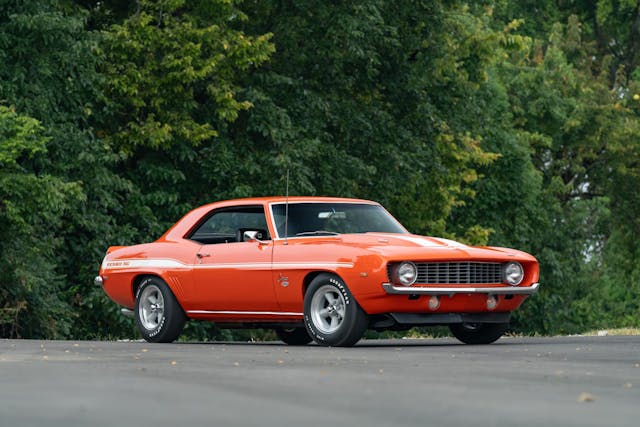
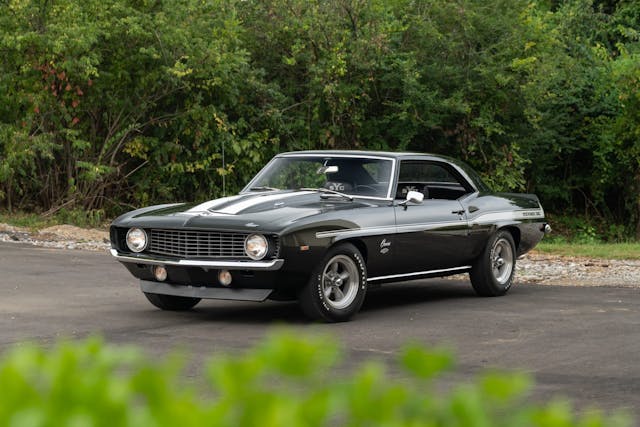
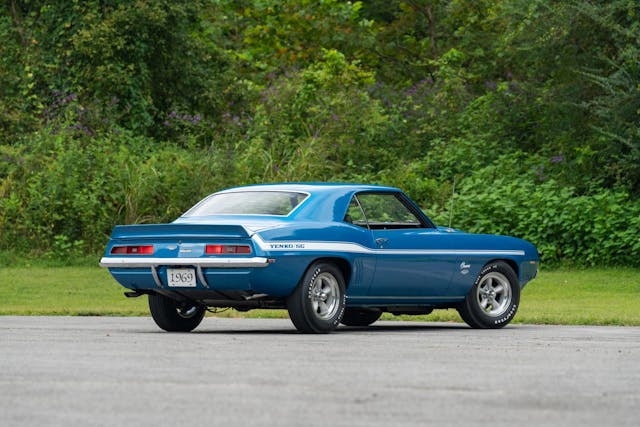
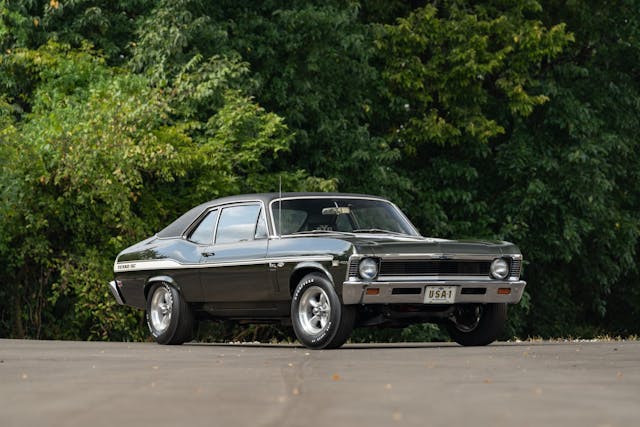
If it’s too rich for your checkbook, there are seven other 1969 Yenko Camaros offered from the Ernst collection, along with a rare 1969 Yenko Nova, with the 427 and a four-speed, one of just 38 built, which Avery suggests might also set a record when the gavel sounds. There’s also a couple of tribute cars, including a 2018 Yenko Camaro SC1000 with a supercharged, 1000-horsepower 6.8-liter V-8, and a 2024 Yenko/SC Stage 1 Corvette convertible, also with an advertised 1000 horses.
Ernst, a Tennessee resident who made his fortune in injection-molded plastics, died in 2024 at 84. He was definitely an enthusiast—his company car was once a new 1971 Corvette, with a 454-cubic-inch V-8 and a four-speed manual transmission. Fourteen cars from his eclectic collection of 50 or so crossed the block at the 2025 Mecum Kissimmee auction.
 Mecum
Mecum
 Mecum
Mecum
 Mecum
Mecum
 Mecum
Mecum
 Mecum
Mecum
 Mecum
Mecum
This, though, is the Year of the Yenko. “There’s been so much attention on this group,” Avery says. “One reason is the quantity, with eight 1969 Camaros. And another reason is the quality—they are all in showroom condition. And there’s also the diversity of color.” Aside from the gold prototype, two Camaros are yellow, two are orange, one is dark green, another is light green, and still another is a gorgeous Le Mans Blue.
You can view the collection here, and there’s a video of the cars featuring Avery, Mecum TV commentator Bill Stephens, and J.R. Ernst, Cliff Ernst’s son.
If you are a Yenko fan but don’t have the budget for any of these cars, welcome to the club. For us, there’s one last alternative: A cool new neon Yenko sign. Let the bidding begin.
 Mecum
Mecum