
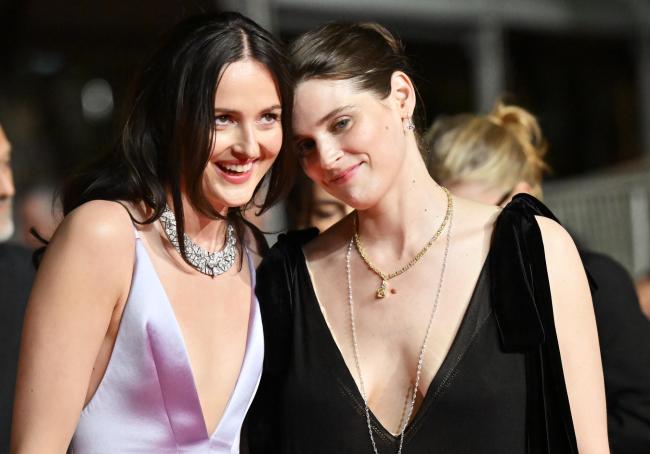

Part of the brilliance of Joachim Trier’s “Sentimental Value,” the Cannes Grand Prix-winning drama about a family pushed away and pulled back together by their art, chosen to represent Norway in the Best International Feature Oscar race, is how long actors like Renate Reinsve and Inga Ibsdotter Lilleaas were able to live with their characters.
Reinsve knew she would be playing older sister Nora, an accomplished Norwegian theater actress resistant toward reconciling with their internationally-renowned film director father (played by Stellan Skarsgård), since Trier and writing partner Eskil Vogt began working on the film as a follow-up to the last time the trio worked together, 2022 Oscar nominee “The Worst Person in the World.” But Lilleaas, a newcomer to Trier’s growing acting troupe, had a somewhat intensive audition process to play younger sister Agnes, the glue of the family who forgoes her child acting career to be a researcher, married with a kid.

“It was a standard process in the beginning, where the casting director called, and you do a first audition, and then on the second audition, I was doing a test with Renate but also had a half an hour conversation with Joachim,” she told IndieWire over Zoom. “That was new to me, that a director took that time that early in the process to get to know the people who he’s auditioning, which I thought was brilliant because he really gets to know you and you get to know him. It’s a mutual testing of each other. And I had a really lovely conversation with him that made me feel very safe and respected, and I think that affected the way the audition went, to be honest.”
The audition process would continue for five more months, “but I remember feeling like just having had that experience of that process, and going into those meetings, and those tests, and working on those scenes with Renate and the other actors I tested with, was an experience in itself that I would treasure for the rest of my life even if I didn’t get the part,” she said. “But luckily, I did.”
Reinsve, also on the Zoom call, told IndieWire that Trier “rewrote the role of Agnes a little bit when he found Inga, because she brought so much authenticity and rawness to the character, and she brought so much love to the set and the scenes and the characters. That dynamic in the process of casting her was something that he really, really saw was so valuable.”
 ‘Sentimental Value’Neon
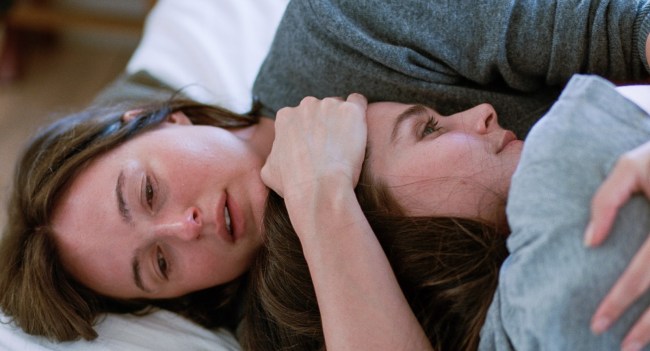
Though both actresses have several scenes in the Neon release that leave an impression on viewers, already earning both nominations at the Golden Globes and Critics Choice Awards, the one they share in the climax of the film, geared around Agnes revealing something to Nora that reframes their relationship to their father, is the one that stands out even to them. “[It] really punched me in the stomach,” said Reinsve. “That was when I understood everything and everything changed for me and it turned the whole script around and I was so invested emotionally.”
They achieved that feat by having those months of preparation to make them feel comfortable enough on shoot day to take risks, and creative turns, should the scene call for it in the moment. “The auditioning process started in August and we filmed in August the next year, it was a year that I had to live with this character in a way. That was a privilege to have that much time to process something, almost unconsciously but also consciously. And to have those rehearsals and to get to talk about the script and the characters in-depth was really meaningful. At least for me, it gives it a lived life, because it’s been with you for a long time,” said Lilleaas.
“Both me and Inga come from the theater and we know how to build a character and do analysis and really be specific about some things,” said Reinsve. “But when we’re on set, it’s very open. The process is very free and we want to chase those ‘events,’ as Joachim calls them, so that something really authentic occurs. But that can only happen because we’ve done so much work in rehearsals.”
The Best Actress Oscar contender notes that one of the benefits of working with Trier is that “he can really tap into what we do in a really subtle way. We never have to show him anything. We can be really truthful to the character and the situation and never have to make anything bigger than it is because he will pick it up. And then he doesn’t necessarily need to know intellectually what happens between us but he knows how to use it in the edit if it’s something authentic that occurs.”
For the aforementioned scene, in which the sisters are sitting next to each other on a bed, Lilleaas remembers mostly sticking to the script, until right before the end. “The only thing that’s improvised really is when I go up and hug Renate, that was something that we made up in the moment,” said the Best Supporting Actress Oscar contender. “I had this impulse that I didn’t follow, but [Trier] actually told me ‘Go hug her.’ And because he did that, I felt like I could say ‘I love you,’ which wasn’t in the script.”
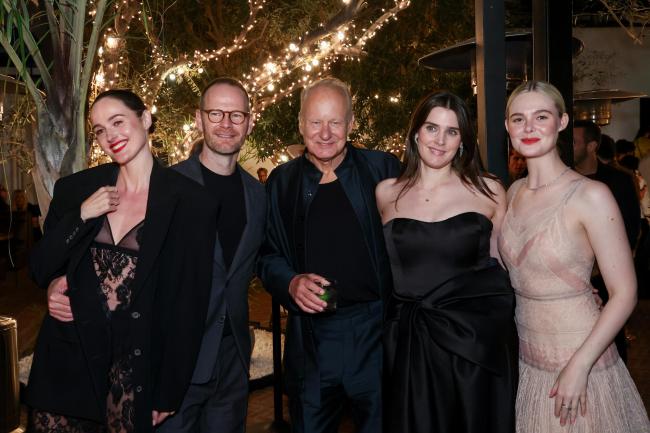 Renate Reinsve, Joachim Trier, Stellan Skarsgård, Inga Ibsdotter Lilleaas and Elle Fanning at the ‘Sentimental Value’ Los Angeles premiere after party held at Laurel Hardware on November 05, 2025 in West Hollywood, CaliforniaTommaso Boddi/Variety
The moment provides clarity to a concept that Trier has been calling his “jazz takes,” which he described in an interview with IndieWire’s Anne Thompson as a point in which they’re wrapping a scene, where “because you know the structure, you know the tune. But let’s phrase it differently. Let’s play it your way, different.” He continued, “The loose take encourages the actors to continually search and fall on their ass. It’s the ‘hang loose’ concept. Let’s see where it goes. They know that I’m next to the camera, and they want to do something unexpected. They find it. And I sit there and I cry and I laugh and I love them.” Lilleaas said, “It’s about the feeling of being free to react truthfully in the moment.”
Because of all their preparation, Trier would also rarely need to shoot more than five takes before they captured what they were looking for. “He’s very smart, because he doesn’t want to spend our emotions, because it is an economy in emotions,” said Reinsve, expanding on how they approached production on the family drama. “If you have a long run for two months and you have a lot of heavy emotional scenes, if he knows that he has the emotion he wants for the edit, then he doesn’t need to do it over and over again. He trusts that it happened so you don’t ever really get that tired working with him. He’s very respectful of what it means to share emotions.”
Reinsve added, “In that [bed] scene, it wasn’t just me and Inga improvising, it was the whole room, the cinematographer and Joachim. And we were all so nervous about that scene because it’s a pivotal scene in the movie so we knew it had to be a really, really good balance, because it’s very emotional. And that’s the most difficult scene to do because you don’t want to give the audience the answers, you want to leave it open for them but still be truthful to what’s happening.”
That inclusive environment developed by Trier extends up and down the call sheet, and front of and behind the camera. “Joachim is very good at including people in that family, you never feel like you’re an outsider. You’re very quickly invited in and you feel ownership of the project very quickly,” said Lilleaas. Every single actor in the film, no matter how big the role was, was on location for rehearsals, “which was really nice because then you actually know someone when you meet on set and it’s not like you meet a stranger on the day.”
“It was really the most collective process that I’ve ever been in,” added Reinsve.
For more analysis of “Sentimental Value,” and the 2026 Oscars race as a whole, read “IndieWire’s The Lead Up” where our Awards Editor Marcus Jones takes readers on the awards trail, interviewing more key figures responsible for some of the most compelling stories of the season, and offering predictions on who will win. Subscribe here to receive the newsletter in your inbox every Tuesday.