
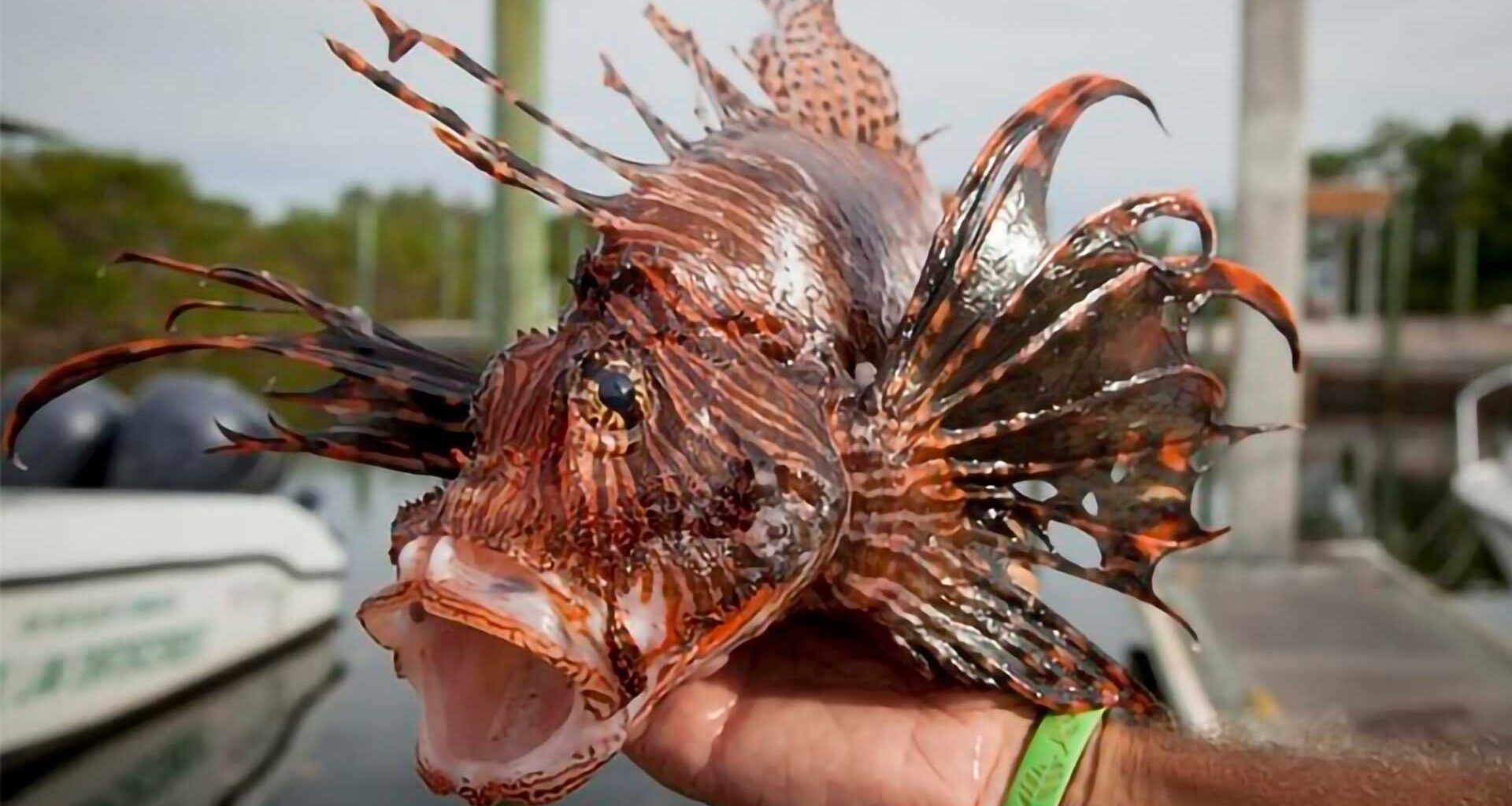
From an unrestrained predator to a “dish of the day,” the lionfish has become the target of initiatives that combine its removal from the sea with incentives for its consumption. The idea generates income and helps with local control, but it has limits and requires caution regarding food consumption.
O invasive lionfish It has spread to reefs in the western Atlantic, the Caribbean, and the Gulf of Mexico, putting pressure on already fragile ecosystems. As an efficient predator, it reduces native fish populations and alters reef dynamics, impacting fishing and tourism in various regions.
Given a scenario where eradicating the species is unlikely in vast areas, managers and researchers have been advocating a pragmatic approach. The proposal combines control by removal with the creation of a food market to maintain a steady withdrawal, but without selling the idea as a complete solution.
This model relies on a simple argument. If lionfish fishing pays the bills, it tends to happen more frequently, for longer periods, and with more people involved, which can… reduce impacts at specific points.
— ARTICLE CONTINUES BELOW —
See also other features
Millions of straw bundles and solar pumps are filling the Chinese desert after decades of suffocating sand; the plan is controversial, seems like a last resort, irrigates 200 trees, and may even slow desertification now.

A woman decides to face tornadoes up close and turns storms into work, documenting phenomena with winds between 60 km/h and 300 km/h in regions known for extreme instability.
Marked by the sun, the asphalt, and loneliness: wanderers explain why they abandoned family, jobs, and homes to live walking up to 40 km a day on Brazilian highways.

A man has lived alone in the woods for over 40 years, cooking beans over an open fire and sustaining himself with corn, cassava, and sweet potatoes; drought threatens his crops, but he persists in his isolated life, surrounded by dogs and stories that have become local treasures.

However, experts warn that the effect is localized and depends on rules, training, and monitoring.
Lionfish invasion in the Atlantic and Caribbean: why was the expansion so rapid?
NOAA summarizes the problem as additional pressure on reefs already affected by climate change, pollution and overfishingWhen lionfish consume herbivores that control algae, they promote the spread of algae over corals and exacerbate stress in the ecosystem.
The history of invasion also helps explain the current scale. NOAA points out that the first record in South Florida waters occurred in 1985, with more sightings until the species was considered established in the early 2000s, possibly linked to releases into the environment from the aquarium trade.
The reproduction rate is a factor in the calculation. NOAA points out that lionfish can reproduce year-round and that a mature female releases… approximately two million eggs per yearThis accelerates the occupation of new areas when there are not enough predators to control the population.
Control through removal and local management: how the strategy works in practice
The basis of the plan is straightforward: remove it from the sea to reduce the damage. According to NOAA, Local control through removal is effective in minimizing impacts on a local scale. and should be encouraged wherever possible, including through regulatory adjustments in areas where fishing is restricted.
In practice, this manifests in operations involving divers, artisanal fishermen, and community-based fish removal events, often with the support of environmental agencies and educational initiatives. The logic is to maintain high fishing pressure on priority reefs, such as tourist areas and nurseries for native species.
However, there is an operational limit. Removal requires continuous effort, cost, logistics, and access to deep points, and therefore tends to generate clearer results in specific locations than across the entire invaded region. Studies and technical documents often treat the strategy as mitigationnot as a definitive elimination.
That’s where economic incentives come in. NOAA reports that a workshop on lionfish harvesting concluded that A market for lionfish as food is practical, viable, and should be promoted.precisely because it creates constant motivation for withdrawal.
Even with a market, management requires coordination. NOAA cites the need for cooperation between local, state, and federal levels, as well as international partners, and points to the existence of a national prevention and management plan to align objectives and actions.
Lionfish consumption and the food market: how to transform fishing into income and engagement.
The campaign to turn the invader into food is not just marketing. NOAA states that, after the venomous spines are removed and the lionfish is cleaned, it can become a prized product, and that encouraging a seafood market It’s a way to mitigate impacts on the reefs.
Ultimately, this translates to restaurants offering dishes, fishmongers testing demand, and coastal communities finding a new item to sell. The idea also helps popularize the conversation about invasive species, making the public realize that there is a real ecological cost when they spread.
Food safety, the risk of ciguatera, and limiting consumption as a solution.
The most sensitive point is safety. NOAA emphasizes that, regarding the risk of ciguateraLionfish should not be treated differently from other tropical fish, and it is recommended that establishments display general cautionary warnings for consumers, especially in areas known for toxins.
There is data that helps to calibrate the risk without trivializing it. A study cited by NOAA NCCOS analyzed 293 lionfish in 74 locations and found 0,7 percent above the FDA guidance level across all areas, but also recorded “hotspots” with much higher percentages of measurable toxins, such as in the British Virgin Islands.
The FDA also signals concern about the issue by mentioning that ciguatera toxins have already been found in lionfish in areas near the U.S. Virgin Islands. The agency reports that, in 2023, it investigated a case of illness associated with lionfish consumption, but was unable to confirm the diagnosis due to a lack of food samples for analysis.
In addition to the toxin, there is the physical risk of handling. NOAA emphasizes that lionfish have poisonous thorns It recommends precautions, such as sturdy gloves and proper capture and cleaning techniques, which is crucial if the consumption chain is expanded.
In the end, consumption helps, but it doesn’t solve everything. It supports removal and reduces impacts in key areas, but it doesn’t replace monitoring, environmental education, and policies to prevent new introductions and protect reefs already under pressure from multiple factors.
If you were an environmental manager, would you support turning lionfish into a “product” to accelerate removal, or do you think this could create a dangerous trend and divert attention from protecting reefs and reducing other pressures? Leave your comment with your opinion and, if you disagree, explain which strategy you consider more efficient.