
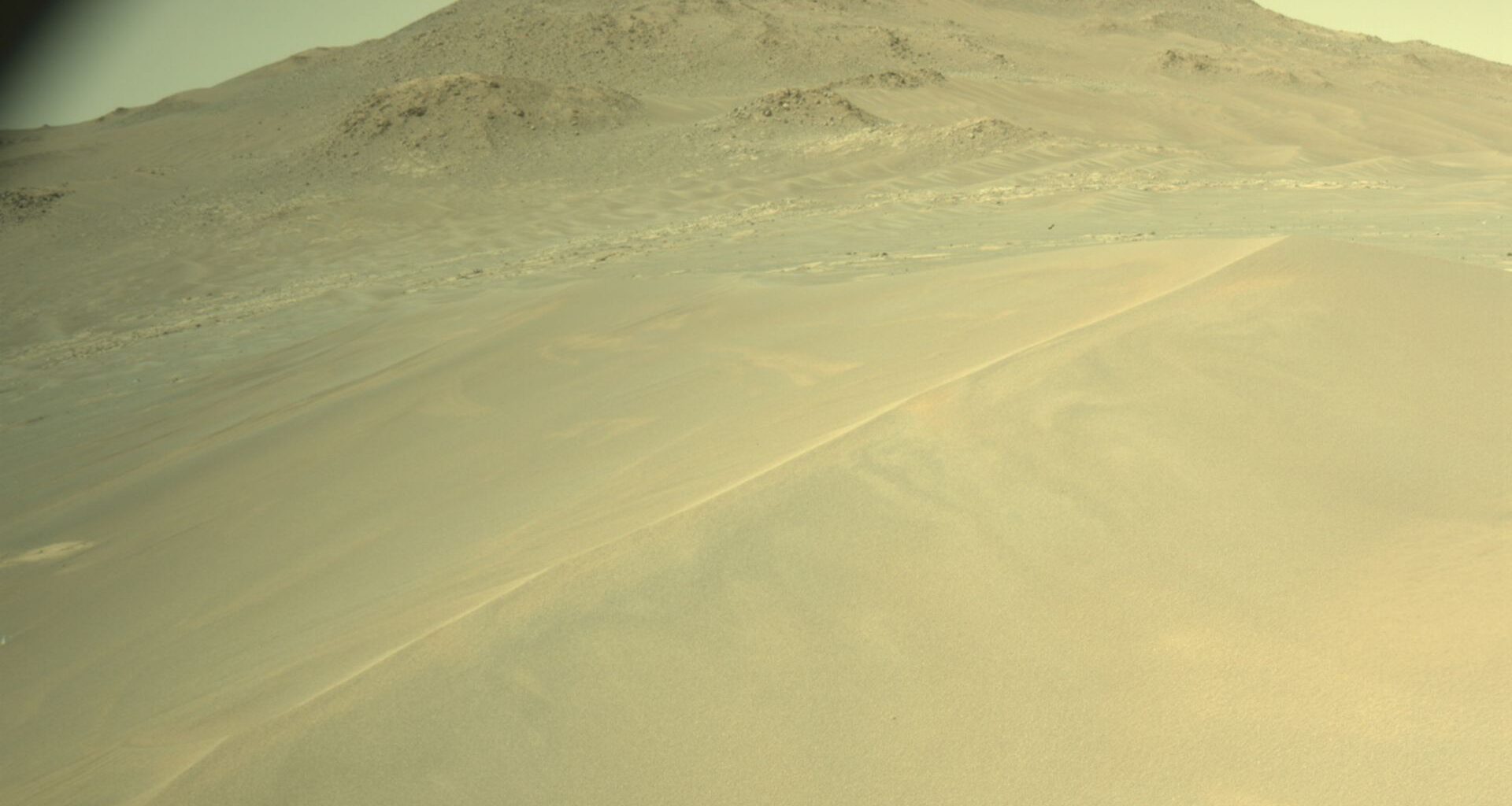
In a mission update late last month, Perseverance team members described the rover’s most detailed look yet at a class of features called aeolian megaripples, oversized ripples of sand that can rise to around 6.5 feet (about 2 meters) tall. Unlike smaller ripples that may shift readily, megaripples on Mars are often treated as “mostly inactive,” preserving clues about older wind patterns and atmospheric conditions that helped shape the landscape of the Red Planet. In the recent update, the mission team shared an image of a giant wind-formed sand ripple nicknamed “Hazyview.”
But megaripples can become stubbornly resistant to motion. The mission team noted that, when atmospheric water interacts with dust on a ripple’s surface, it can help form a salty, dusty crust. That crust increases cohesion — essentially “locking” grains together — so that ordinary winds struggle to move the deposit. In that sense, many Martian megaripples function like time capsules: They may record past wind regimes and episodes of water-dust interaction rather than constantly updating with every gust.
You may like
Some megaripples on Mars show hints of movement, raising the possibility that rare periods of strong winds could erode crusts or partially reactivate the sand, shifting the surface again. To study this further, Perseverance moved to the “Honeyguide” ripple field.
Where is it?
The “Hazyview” megaripple was seen in the “Honeyguide” ripple field found near the rim of Mars’ Jezero Crater, which Perseverance has been exploring since its February 2021 touchdown.
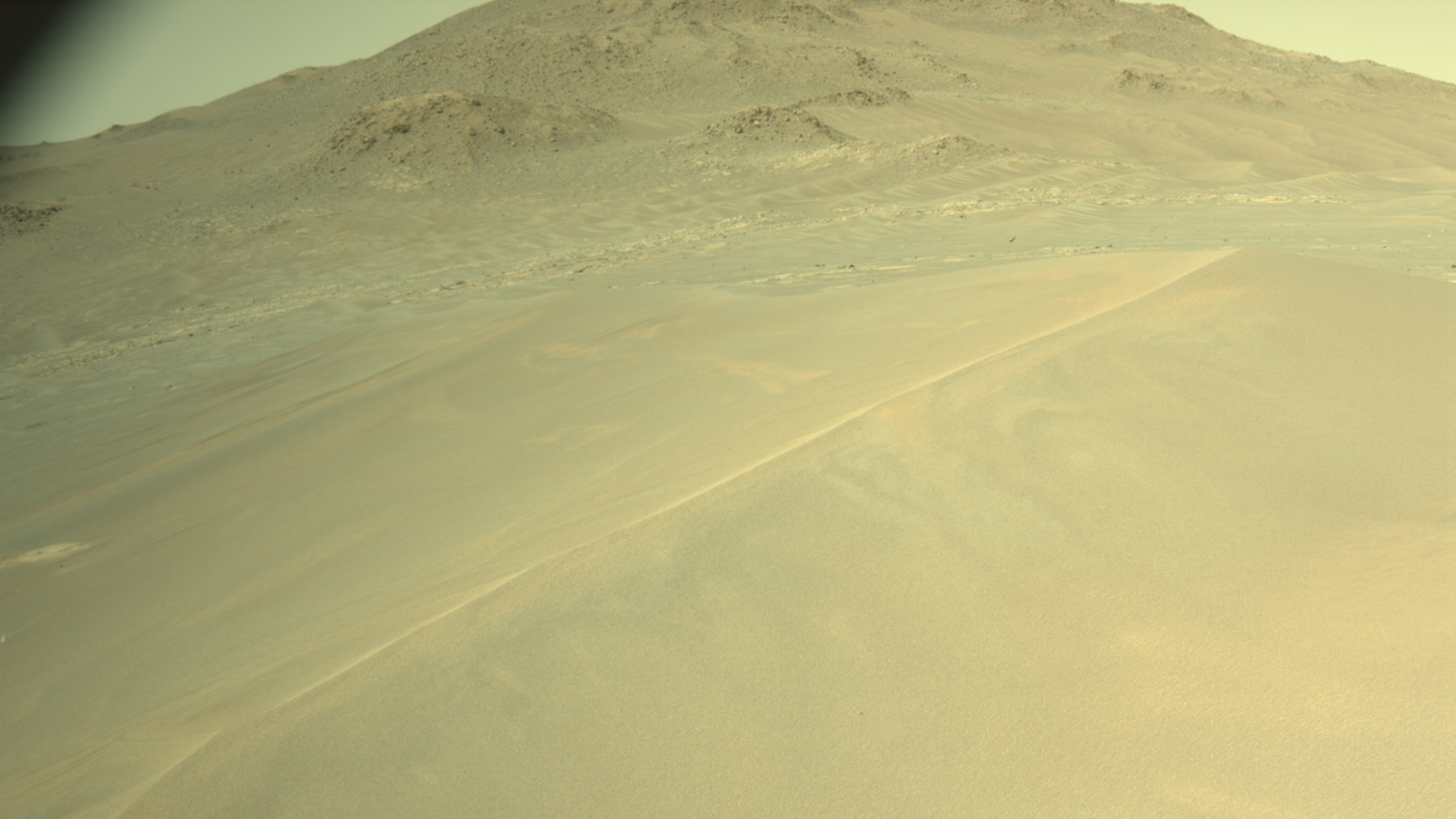
The “Hazyview” megaripple could provide key clues to Mars’s ancient geologic history. (Image credit: NASA/JPL-Caltech)Why is it amazing?
Within “Honeyguide,” Perseverance conducted an especially intensive study of the megaripple dubbed “Hazyview.” The research team reported that the rover collected more than 50 observations using a wide cross-section of its payload — SuperCam, Mastcam-Z, MEDA, PIXL, and WATSON — to investigate how the ripple is built and whether it is truly dormant.
Studying sand might sound like a side quest next to searching for signs of ancient Mars life, but megaripples connect directly to both Mars science and human exploration planning.
Scientifically, they offer a window into the most recent chapter of Martian surface evolution. If megaripples are inactive, they preserve a record of earlier winds and water-dust chemistry. If they can be reactivated, they demonstrate that even modern Mars — cold and thin-aired — can still reorganize its surface in meaningful ways.
And, on a more practical note, the mission team emphasized that the chemistry and cohesion of Martian soils will shape future operations: how vehicles gain traction, how dust behaves around hardware, and even how accessible certain resources might be for in-situ use. Both studying the past of the Red Planet hidden in its rocks and preparing for future missions to its surface keep Perseverance busy as it continues to traverse Mars.
Want to learn more?
You can learn more about NASA’s Perseverance rover and Mars.