
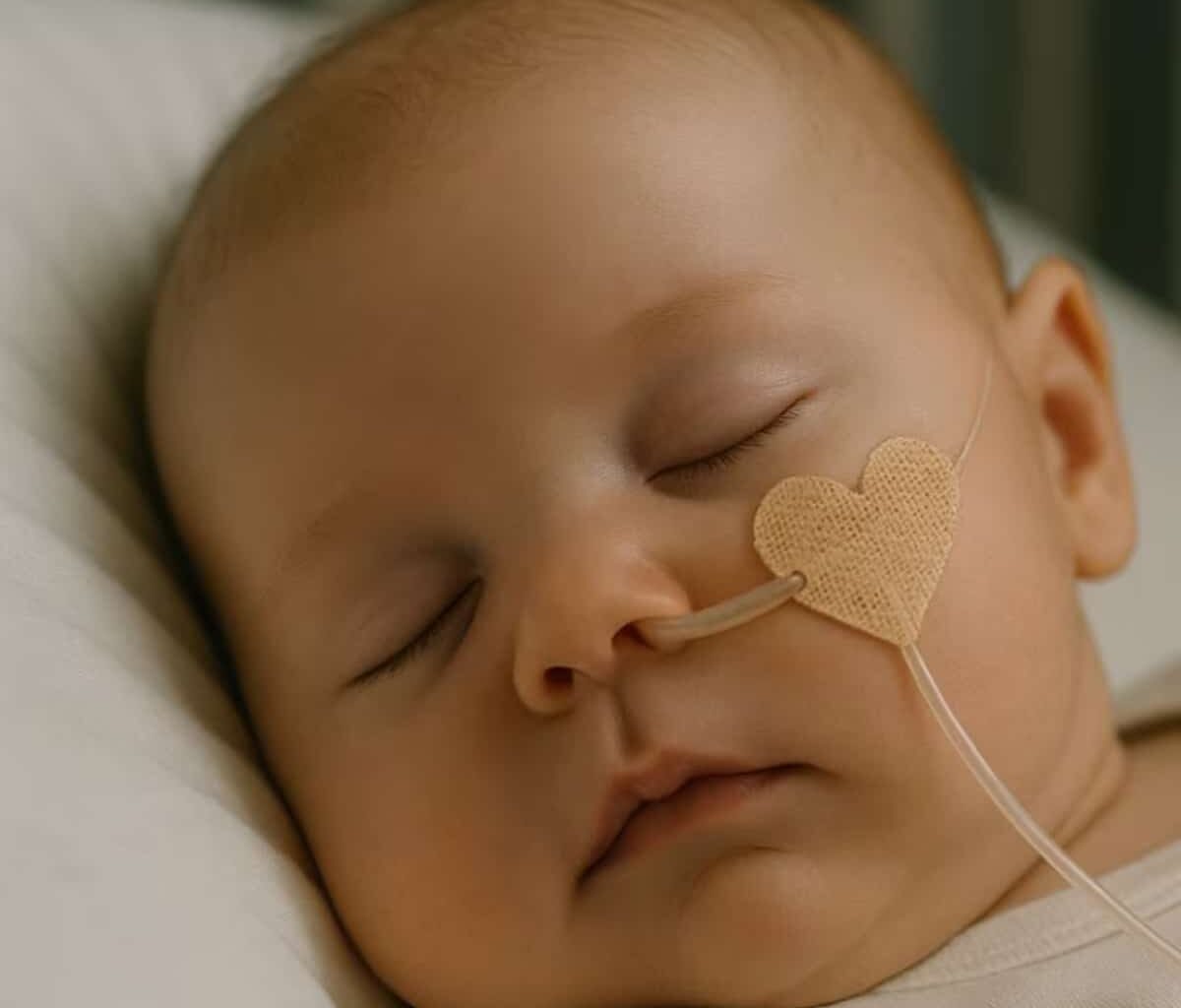
For the first time in history, doctors have successfully used a personalized gene-editing therapy to treat a rare genetic disorder. The patient, a baby named KJ, was born with a condition called CPS1 deficiency — and this groundbreaking procedure could one day transform healthcare.
At just nine months old, KJ became the first patient of any age to undergo a custom-designed gene-editing treatment. The achievement, published May 15 in the New England Journal of Medicine, took place at the Children’s Hospital of Philadelphia. The infant, nicknamed KJ by his family, suffers from carbamoyl-phosphate synthetase deficiency, a rare liver disorder that affects roughly one in 1.3 million newborns worldwide.
Half of Affected Babies Die Quickly
CPS1 deficiency occurs when mutations disable a gene responsible for producing an essential liver enzyme. Without it, the body can’t remove toxic compounds such as ammonia, which then build up in the blood and damage the brain. Most patients need a liver transplant to survive — yet only half live long enough to receive one. The condition often causes serious developmental and cognitive delays.
Doctors initially prescribed KJ medication to reduce ammonia levels, along with a strict low-protein diet. But waiting months for transplant eligibility carried growing risks of brain injury or death. That’s when Dr. Rebecca Ahrens-Nicklas, a pediatrician and researcher working with a new CRISPR-based technique called base editing, proposed a different path.
Base Editing: Tested on Humans for the First Time
Standard CRISPR technology works by cutting DNA entirely at a chosen site. While it’s been used to treat certain genetic diseases, those therapies target groups of patients with similar conditions. KJ’s case required something far more precise — editing a single genetic “letter” out of three billion in the human genome without severing both strands of DNA. That’s what base editing allows.
After decades of research — much of it funded by the U.S. government — the technique had never been tested on humans. Dr. Ahrens-Nicklas believed it was time. She presented the idea to KJ’s parents, Nicole and Kyle Muldoon, who agreed. Within six months, an international team of scientists and clinicians created a customized therapy, encapsulating the genetic material in fatty lipid molecules to ensure it reached the liver safely.
CHOP & @PennMedicine have delivered the first-ever personalized gene editing therapy for a patient with CPS1 deficiency, marking a major milestone in the application of CRISPR-based treatments.
Learn more about KJ & the future of personalized medicine: https://t.co/A9DTcNmxrR. pic.twitter.com/2LzGiRxGqN
— Children’s Hospital (@ChildrensPhila) May 15, 2025
An Unprecedented Pace
Developing such a treatment would normally take years. “Achieving clinical-grade CRISPR at this speed for a genetic disease is unprecedented,” said Fyodor Urnov, a molecular therapeutics professor at UC Berkeley.
The first infusion — a very small dose — took place on February 25. Soon after, KJ could eat as much protein as a healthy infant, though medication was still required. Twenty-two days later, he received a second infusion. According to Dr. Ahrens-Nicklas, his progress was remarkable: his medication dose was halved, and he overcame viral infections that would typically cause ammonia spikes. A third infusion has since followed. It’s too early to call it a cure, but the doctor says KJ is already showing “early signs of benefit.”
Although the treatment’s cost can’t be precisely calculated — many companies offered their expertise for free — this achievement could redefine medicine. The same method could one day correct DNA mutations unique to individual patients, bringing hope to thousands living with rare genetic diseases.
Kiran Musunuru of the University of Pennsylvania summarized it best: “If we can design a personalized gene-editing therapy for one patient in a matter of months, we can do it for others too.”
Lucie Petit
Journalism student
I’ve been passionate about science since childhood, growing up in the countryside with a strong love for nature. Inspired by my grandfather’s inventive spirit, I developed a curiosity for understanding and sharing knowledge. After earning a science-focused diploma, I chose journalism to make complex topics accessible. I’m now studying at ISCPA in Lyon and interning at Futura, where I’m excited to turn this passion into a profession.