
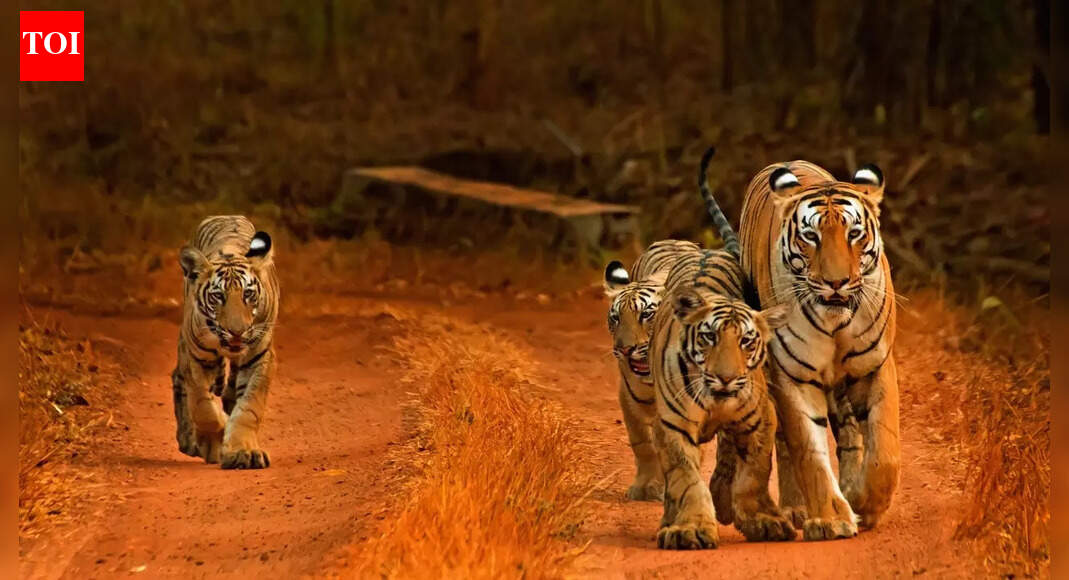
 Tigress and her cubs in a national park in India The tiger has fallen from its erstwhile strong position of being spread across much of Asia to today remaining only in a handful of countries. The species had been pushed to the very brink over the course of the last century due to habitat loss, poaching, and human expansion. Finally, it became one critical question: which country has the world’s largest wild tiger population today-China, India, or Russia?Based on official national data from the National Tiger Conservation Authority (NTCA) and globally accepted conservation assessments, the answer is clear. India is home to the world’s largest wild tiger population, far ahead of both Russia and China, and now carries the greatest responsibility for the species’ future.
A 2022 report on tigers by National Tiger Conservation Authority published in 2023
India: Global stronghold of wild tigers
According to the 2022 tiger estimation report released by the NTCA under the Ministry of Environment, Forest and Climate Change, India’s wild tiger population is estimated at around 3,682 individuals, within a scientifically assessed range of 3,167 to 3,925 tigers. This makes India the single largest habitat for wild tigers anywhere in the world. 
Areas with most tigers as per National Tiger Conservation Authority
With this figure, India accounts for approximately three-fourths of the global wild tiger population, a proportion consistently supported by international conservation organisations and global tiger range country assessments. No other country comes close in terms of absolute numbers or habitat diversity.India’s tigers are spread across 58 notified tiger reserves, spanning an extraordinary range of landscapes, from the dense forests of central India and the Himalayan foothills to grasslands, wetlands and the mangrove ecosystems of the Sundarbans. This ecological diversity has made it possible to have different populations of tigers.The revival of tigers in India has become one of the most successful conservation stories of the 21st century according to wildlife experts, taking into account its high human population density.
Why India’s numbers matter globally?
The tiger is a top predator, meaning that they occupy the highest level in the ecosystem. A balanced tiger population always translates to balanced forests. This is because forests that support tiger populations have the necessary components of a balanced ecosystem. These include other animals.With nearly 75 per cent of the world’s wild tigers living within its borders, India is no longer just a participant in global conservation efforts, it has become the primary custodian of the species’ survival. Any major decline in India’s tiger population would have immediate and severe implications for global tiger numbers.
How India reversed the tiger decline
India’s conservation success did not happen overnight. It is the result of five decades of sustained policy, enforcement and scientific monitoring, beginning with Project Tiger, launched in 1973.According to conservationists, there are several major reasons for the increase in the tiger population:Tough legislation against poaching and efforts to enforce the legislation through units that focus on wildlife crimesConservation of key habitats and re-establishing forested corridors between protected areasInvolvement of Communities and Relocation from Important Tiger Habitats in various areasSophisticated surveillance methods, such as camera traps, DNA analysis, and AI-based population modelingThe NTCA’s four-yearly national estimation exercise is now ranked as one of the strongest wildlife monitoring programs in the world. States like Madhya Pradesh, Karnataka, Uttarakhand, and Maharashtra have regularly figured in India’s list of top tiger-bearing States in the country. 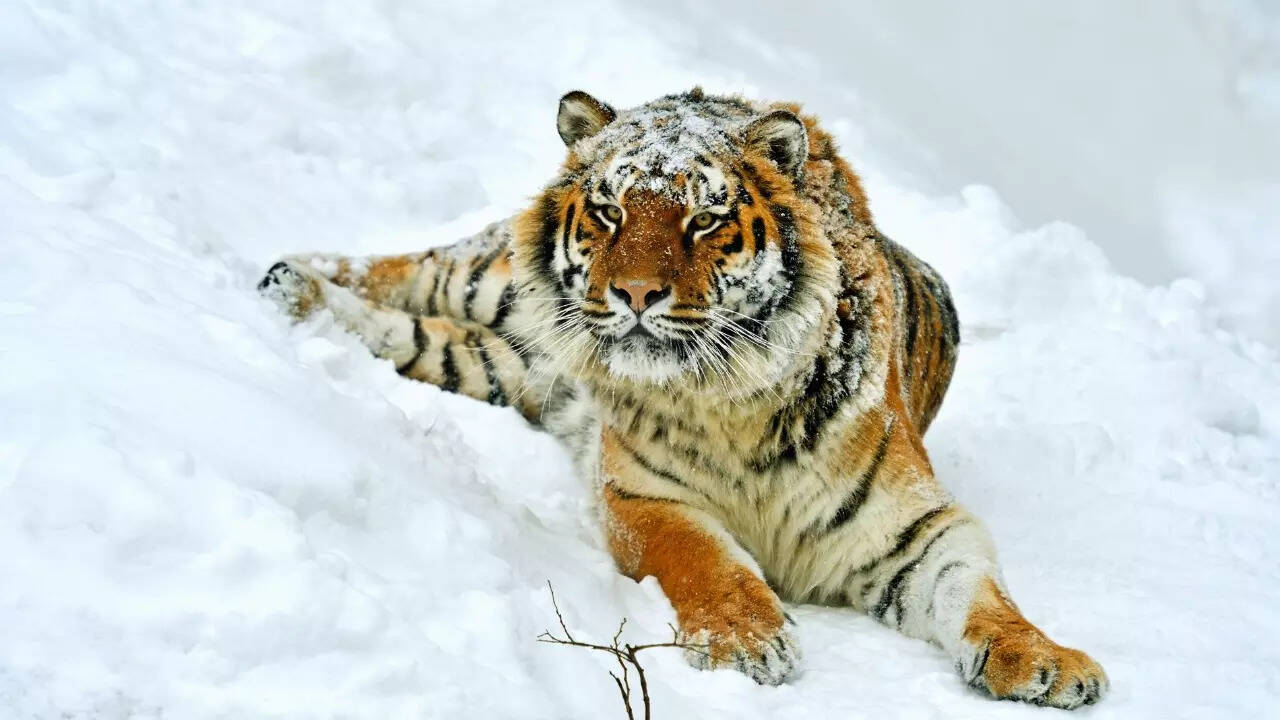
Amur or Siberian tiger
Russia: Second-largest tiger population
Russia is the second-largest range country for wild tigers in the world. Despite this second position, the number of tigers in Russia is much lower than in India. Russia is mainly known for the Amur tiger or the Siberian tiger range (500-750 in the wild). The habitat for the Amur tigers is the cold forests of the Russian Far East.The estimated number of tigers in Russia is in the hundreds, making it the second-largest population of tigers in any country. The conservationist community has taken notice of Russia’s work in protecting one of the world’s rarest and geographically unique subspecies of tigers. But due to unfavorable climatic conditions, range, and food availability, Russia is unable to grow its tiger population in proportions similar to those of India.
China: Minimal wild tiger presence
China had several subspecies, but habitat destruction and human expansion have reduced the number of wild tigers to a lesser extent over the past decades. At present, it does not have a notable population of free-ranging wild tigers. Current efforts in China focus largely on habitat restoration, prey recovery and long-term conservation planning, rather than managing large, stable wild populations. As a result, China does not feature prominently in global rankings of wild tiger numbers.While India’s tiger population is the world’s largest, conservationists caution against viewing the numbers in isolation. Rising tiger populations bring new challenges, particularly human–wildlife conflict, habitat fragmentation and climate-related pressures.As the tiger population grows and wildlife expands beyond conservation areas, so does interactions with people and cattle. However, conservation leaders emphasize that the future must focus on living alongside tigers, such that local people are not left to foot the bill for conservation.The tiger saga in India illustrates that extinction need not occur. From the time when the number of tigers reached critically low levels, they have since recovered with devoted conservation efforts. With a current estimate of approximately 3,682 wild tigers according to the latest official data from NTCA, India is presently the most crucial range for tigers worldwide.In the global comparison between China, India and Russia, the conclusion is unequivocal: India leads by a wide margin.