
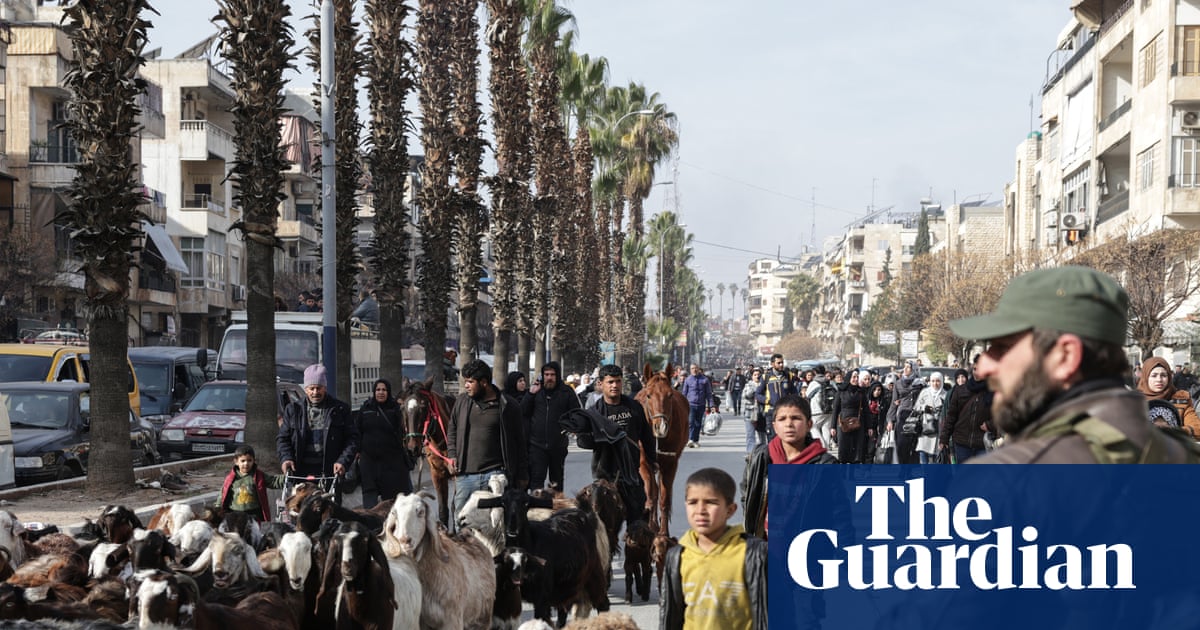
Syria’s government has announced a ceasefire after three days of clashes with Kurdish fighters in Aleppo, which has led to more than 140,000 people being displaced.
The pause in the fighting, which was the most intense in the country for more than six months, came into effect at 3am local time (midnight GMT). Under the terms of the ceasefire, Kurdish militants were to leave the three contested neighbourhoods of Sheikh Maqsoud, Ashrafieh and Bani Zaid, where clashes were happening. They would be provided safe passage to the north-east of the country, which is controlled by the Kurdish-led Syrian Democratic Forces (SDF), and be allowed to take light arms with them.
Whether the deal would hold remained unclear, as the SDF has yet to announce its agreement to the truce and similar ceasefires have collapsed in the past. According to Reuters, the Asayish, the internal security forces of the SDF, denied that its forces had requested safe passage and had asked that Damascus withdraw its soldiers instead.
A resident of Aleppo said the fighting appeared to cease overnight and footage from within the contested neighbourhoods showed that gunfire, which was constant over the last few days, had stopped. Members of the government security forces posted videos showing clearing operations being conducted in some of the neighbourhoods, as well as videos of underground tunnels being inspected that the SDF have used to transport fighters and weapons beneath Aleppo.
The US special envoy for Syria, Tom Barrack, confirmed the deal in a post on X, stating the US “warmly welcomes the temporary ceasefire”, and thanking both sides for their “restraint and goodwill that made this vital pause possible”.
Relations between the Syrian government and the SDF, which holds about a third of Syria’s territory, have worsened in recent months. The two sides signed a deal for the SDF to be integrated into Syria’s new army by the end of last year, but negotiations to implement the agreement ground to a halt.
The government in Damascus has styled the SDF as a separatist entity undermining the unity of the Syrian state, while the SDF has described the new government as “jihadists” and expressed fears about the safety of ethnic and religious minorities under its rule.
Aleppo, where the SDF controlled a pocket of Kurdish-majority neighbourhoods otherwise surrounded by the Syrian government, had been a flashpoint for months. The latest round of fighting has deepened divisions between the two sides, with the SDF leader, Mazloum Abdi, warning that the last few days of conflict had undermined “the chances of reaching understandings”.
The Syrian government also said in a statement that government control needed to be extended over the entirety of Syria and the monopoly of violence remain with the state, to “preserve the unity of Syria”.
Both sides have accused the other of committing war crimes over the last three days, with the SDF saying Damascus was guilty of ethnic cleansing and the crime of forced displacement by ordering civilians to leave their homes ahead of shelling. The government in Damascus claimed the SDF was using civilians as human shields and of sniping people who attempted to leave the neighbourhoods via the humanitarian passages set up by the government.
The SDF is backed by the US, which for years equipped and armed the Kurdish force to assist it in its fight against the Islamic State (IS) in Syria. The US has tried to mediate a merger between the SDF and the new government in Damascus for months, but little has changed on the ground since the fall of President Bashar al-Assad last year.
Turkey, one of Damascus’s key backers, views the SDF as an extension of the Kurdistan Workers’ party (PKK), a Kurdish separatist group with which it has fought a gruelling 40-year insurgency. Turkey has said it is ready to assist the Syrian government if it requests it.
“The SDF’s insistence on protecting what it has at all costs is the biggest obstacle to achieving peace and stability in Syria,” the Turkish foreign minister, Hakan Fidan, said in a press conference on Thursday.
The status of the SDF and the vast swathes of the country it holds, remains a sticking point with Damascus, which is seeking to fully consolidate its control over Syria.