
DELAND, Fla. — A DeLand operation is quietly doing life-saving work one venomous bite at a time.
What You Need To Know
The Reptile Discovery Center and Medtoxin Venom Laboratory in DeLand houses some of the most dangerous snakes on Earth, extracting venom used for antivenom, pharmaceuticals, and global research
Director Carl Barden says venom from “about 25 or 30 different species” is processed and shipped worldwide, turning deadly toxins into lifesaving treatments
The work comes with real risk—Barden has survived 11 snakebites, including a cobra bite that nearly killed him—but he says the danger is comparable to other high-risk jobs
The center is also open to the public, offering live venom extractions, educational exhibits, and up-close views of snakes responsible for bite problems around the world
The Reptile Discovery Center and Medtoxin Laboratory is home to some of the most dangerous snakes on the planet, where venom is carefully extracted, studied, and transformed into life-saving treatments around the world.
When you visit this laboratory, it’s a good idea to keep a safe distance.
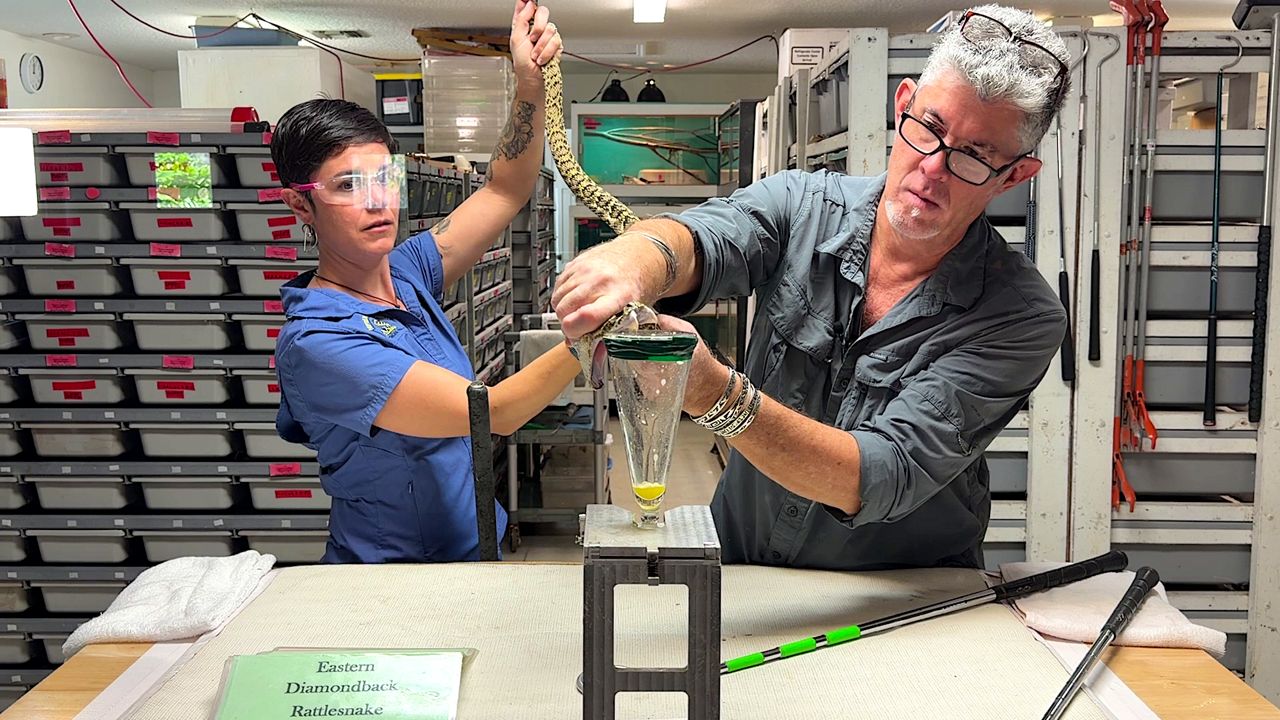
Here, some of the world’s most deadly snakes are laid out, and venom is methodically extracted from one dangerous snake at a time.
“Venoms are produced here from about 25 or 30 different species, and they are processed and shipped all around the world,” said Carl Barden, director of Medtoxin Laboratories at the Reptile Discovery Center.
Barden and his wife, Mara Barden, work as a team, safely guiding the reptiles to naturally bite down so venom can be collected.
“We’re passionate about the work that we do here. It has a real-world impact—antivenom and a lifesaving drug,” Carl Barden said.
That venom is used for antivenoms, pharmaceuticals, and research, with refrigerators full of compounds ready to be shipped.
“This is the antivenom refrigerator,” Carl Barden said. “And this is where we store snakebite serums — antivenom from all over the world.”
Some of that serum is kept solely in case Barden himself is bitten, and antivenom he would take with him to a nearby hospital to save his life, and it’s happened before.
“I’ve had 11 snakebites in the last 35 years of collecting snake venom,” he said. “One of those was a cobra bite. That particular bite almost killed me, put me on a ventilator for 14 hours.”
Despite the danger, Carl Barden believes the risk is no different from other professions.
“If you look at the deaths from snake bites and snake handlers, the numbers are actually fairly low,” he said.
Medtoxin is more than just a snake lab.
Visitors are welcome to learn about reptiles and their role around the world, watch venom extractions from a front-row seat, and explore an outdoor walking trail home to various creatures.
“So, things like king cobras and black mambas, kaboom vipers, puff adders,” Carl Barden said. “All of those snakes are on display at the Discovery Center, so people can come and see animals that are responsible for snake bite problems around the world.”
Snakebites are a fascinating paradox: Snake venom, while deadly, holds the key to its own lifesaving treatments.
The Reptile Discovery Center is open to the public Thursday through Sunday.
Admission is $13.50 for adults, $12.50 for children ages 4 to 17, and free for children 3 and under.