
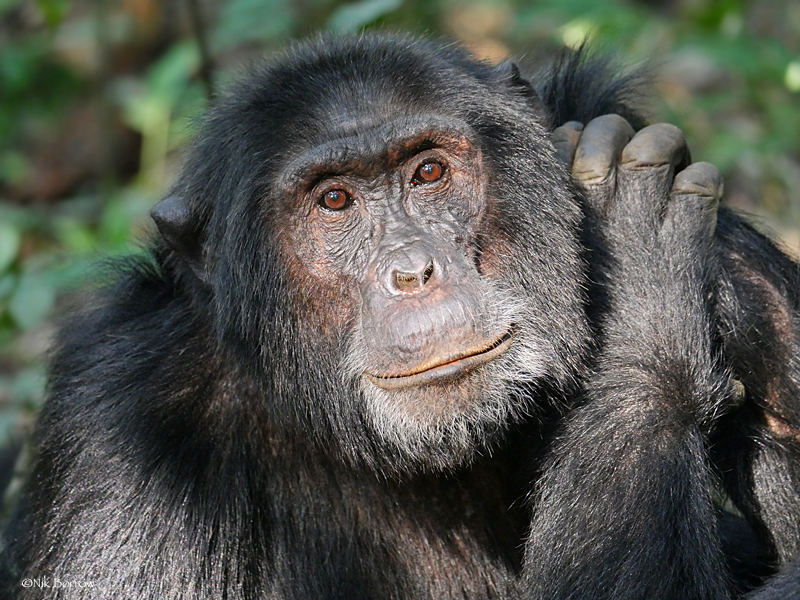
A new report finds thousands of African primates, including chimpanzees and gorillas, are being traded both legally and illegally.Most of the legal trade in great apes is for scientific and zoo purposes, but the report raises some concerns on the legality of recent trade instances for zoos.Chimpanzees topped the list of the most illegally traded African primates, as the exotic pet trade drives the demand for juveniles and infants.
See All Key Ideas
Between 2000 and 2023, more than 6,000 African primates were traded internationally in 50 countries, according to a newly published report. Endangered chimpanzees (Pan troglodytes) and critically endangered western gorillas (Gorilla gorilla) were among the 10 most-traded species, according to data from CITES, the global wildlife trade agreement.
African primates are traded as trophies, for scientific research, and to be kept in zoos. Hunting monkeys and apes for food and body parts used in charms and rituals is widespread in many parts of Africa. Infants and juveniles are also captured live for the exotic pet trade.
The report by U.S.-based nonprofit Pan African Sanctuary Alliance (PASA) is the first to try to capture the scale of the trade, the geographic hotspots, and the species targeted. It draws on data from the CITES trade database, seizure records from the wildlife trade monitoring NGO TRAFFIC, media reports, and other published research to present a picture of the global legal and illegal trade in African primates.
“The intention is for this report to serve as both a diagnostic tool and a call to action,” lead author and wildlife crime specialist Monique Sosnowski told Mongabay by email.
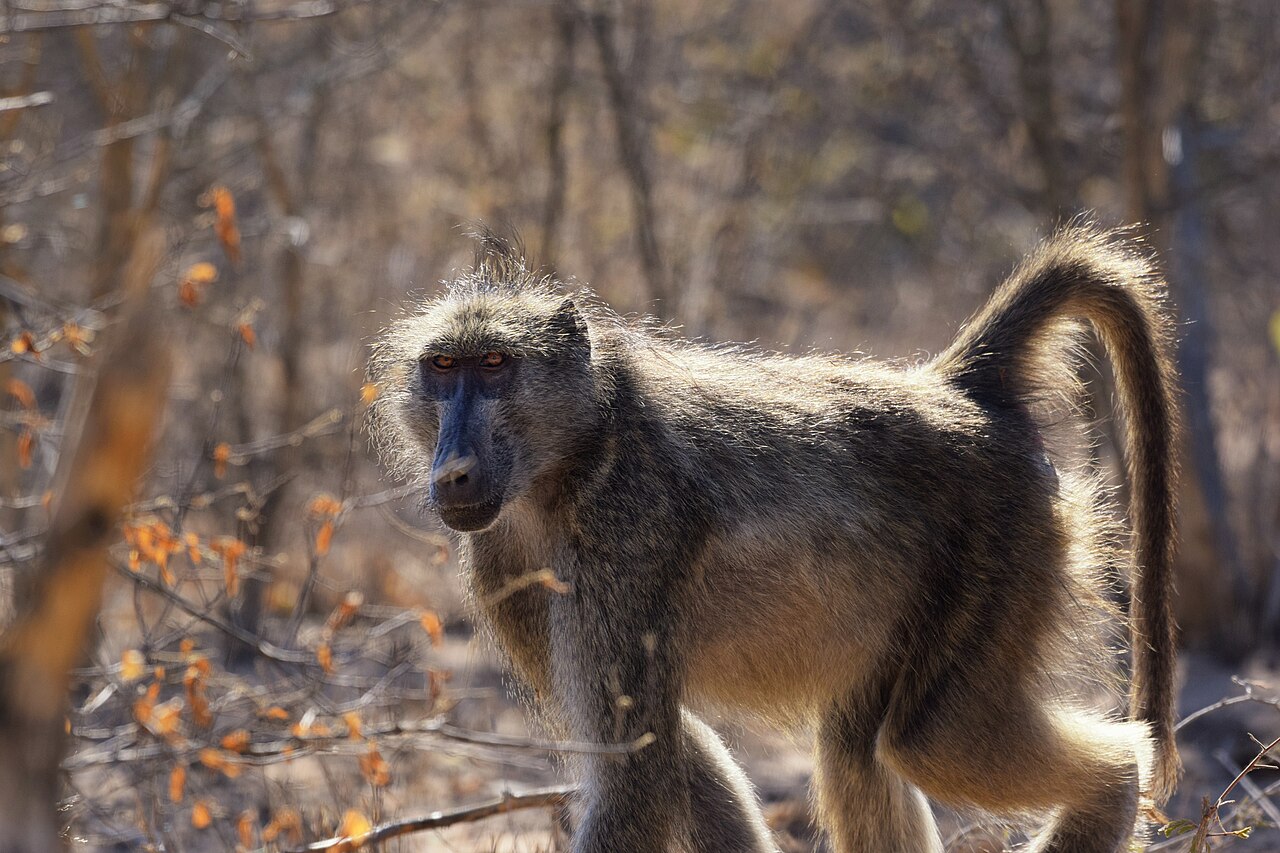 A chacma baboon in South Africa. The report found that these monkeys are the most traded species legally, mostly as hunting trophies. Image by Martie Swart via Wikimedia Commons (CC BY 2.0).
Although the report captures international trade in primates from Africa, it doesn’t account for domestic trade, which is driven by food and other traditional uses. It also relies on seizure data, which typically constitute a fraction of the actual trade, to estimate the scale of illegal trade. The numbers presented in the report are likely underestimates.
Trophy hunting, mostly of monkeys like chacma baboons (Papio ursinus), dominated the legal trade across borders as recorded by CITES. Chimpanzees and gorillas were primarily traded for scientific research and zoo transfers.
In a case study on the chimpanzee trade, the report presents 418 trade transactions recorded by CITES, of which 138 involved live individuals. Some 182 records indicated the chimpanzees were wild-sourced. Gabon exported the largest number of chimps, followed by Uganda. Germany ranked first among importers, followed by the U.S. and Denmark. The report says some chimps were traded commercially, despite a ban on their international commercial trade.
Iris Ho, PASA’s head of campaigns and policy, said the analysis turned up a few concerning trade instances that require further examination to confirm they were not illegal.
One of those is the export of a bonobo (Pan paniscus) from Iraq to the UAE in 2023. CITES records show this individual was declared “captive born.” But the report casts doubt on this, as Iraq has never previously imported a bonobo, and there are no known breeding facilities for the endangered ape in the country. In 2024, this bonobo was reexported to the controversial Vantara zoo in India, according to PASA’s report. A few other records had discrepancies in the number of individuals traded and their origins.
Such discrepancies may not indicate illegal trafficking, Sosnowski said, adding that they may also result from inaccurate or incomplete details in permits issued by importing and exporting countries.
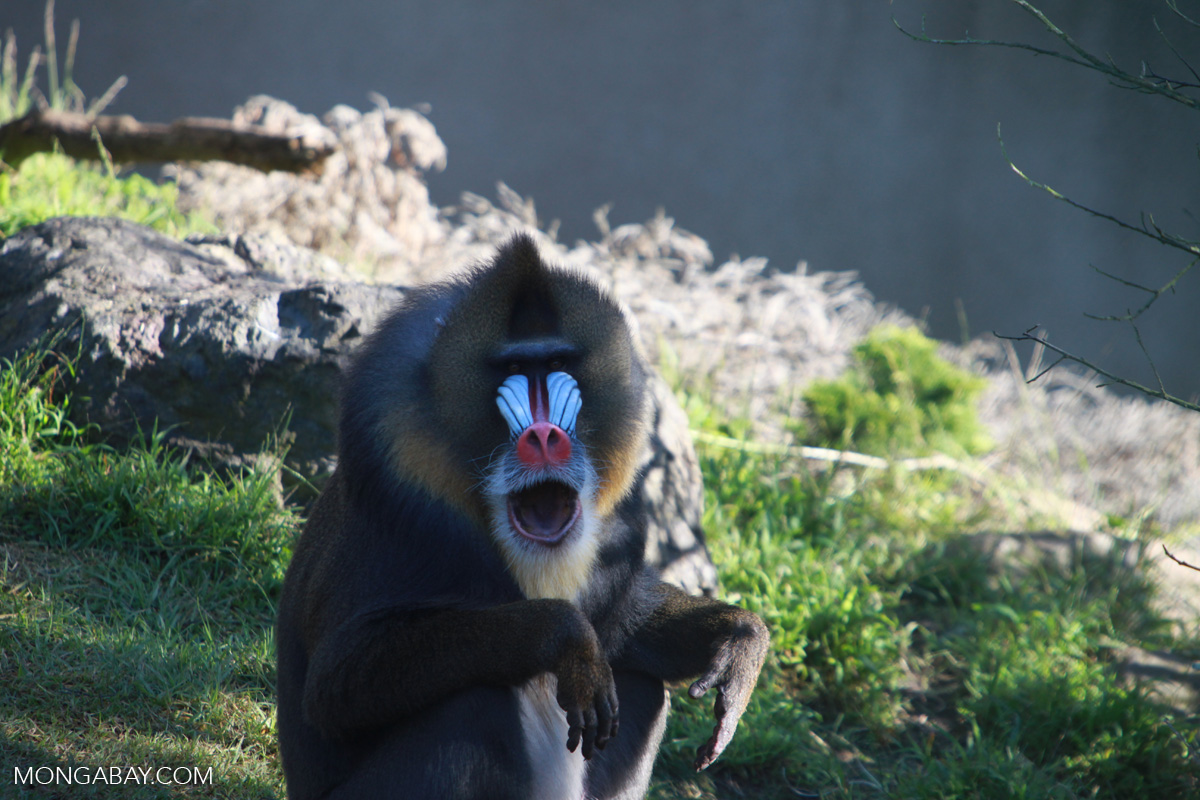 Mandrills, considered one of the most colorful mammals , are the most seized monkeys in the illegal trade. Image by Rhett A. Butler/Mongabay.
Ofir Drori, founding director of the EAGLE Network, an NGO specializing in wildlife investigations and law enforcement in Africa, told Mongabay that the report’s findings indicate that the legal trade in great apes is prevalent and increasing.
“[Traders] are using loopholes of [CITES] convention to have mass exports of great apes and we see that as the new danger,” said Drori, who was not involved in producing the report. He added the report didn’t delve into the role of corruption, through which CITES is turning “from a tool for wildlife protection to a trafficker’s best friend.”
In addition to the legal trade data from CITES, the report also analyzed data from 183 seizure incidents involving African primates between 2020 and 2023. Chimpanzees were the most intercepted primate, accounting for 37% of all seizures, followed by mandrills (Mandrillus sphinx). Combined, they accounted for nearly half of all seizures.
Ho said primate trafficking is driven by the demand for exotic pets, mostly from outside Africa. Countries in Asia, the Middle East and Europe, as well as the U.S., drive this demand, the report notes, adding that smuggled great apes and primates are also kept in private collections and unregulated zoos to attract visitors.
“For great apes specifically, their rarity, perceived prestige, and extremely high black-market prices make them a target for organized trafficking networks,” Sosnowski said. Most of the victims of this trade are juveniles, likely taken from the wild after their close-knit family members are killed.
 A Western lowland gorilla in Gabon. The report found that gorillas are the second-most traded great ape for zoos and scientific research. Image by Rhett A. Butler/Mongabay.
When great apes are removed from the wild, the impact is felt beyond individual animals. As seed dispersers, they play a vital role in regenerating forests. Since most apes live in complex hierarchical societies, killing an individual can disrupt the whole troop. Apes are long-lived mammals that produce just one offspring every four to six years, so their numbers don’t bounce back easily after a fall. “For slow-reproducing apes, even small offtakes can push populations towards irreversible decline,” Sosnowski said.
At the recently concluded CITES summit in Uzbekistan, parties decided to reestablish the Great Apes Enforcement Task Force, an international coordination network to strengthen law enforcement against the trafficking of gorillas, chimpanzees, bonobos and orangutans.
“Great apes are our closest relatives in the animal kingdom … monkeys are so overlooked. I just hope that this report can start driving awareness of how we are treating monkeys and great apes for human greed,” Ho said.
Banner image: An eastern chimpanzee in Uganda. Image by Nik Borrow via iNaturalist (CC BY-NC 4.0)
Spoorthy Raman is a staff writer at Mongabay, covering all things wild with a special focus on lesser-known wildlife, the wildlife trade, and environmental crime.
DRC government directive triggers panic in ape sanctuaries amid ongoing conflict
FEEDBACK: Use this form to send a message to the author of this post. If you want to post a public comment, you can do that at the bottom of the page.
