
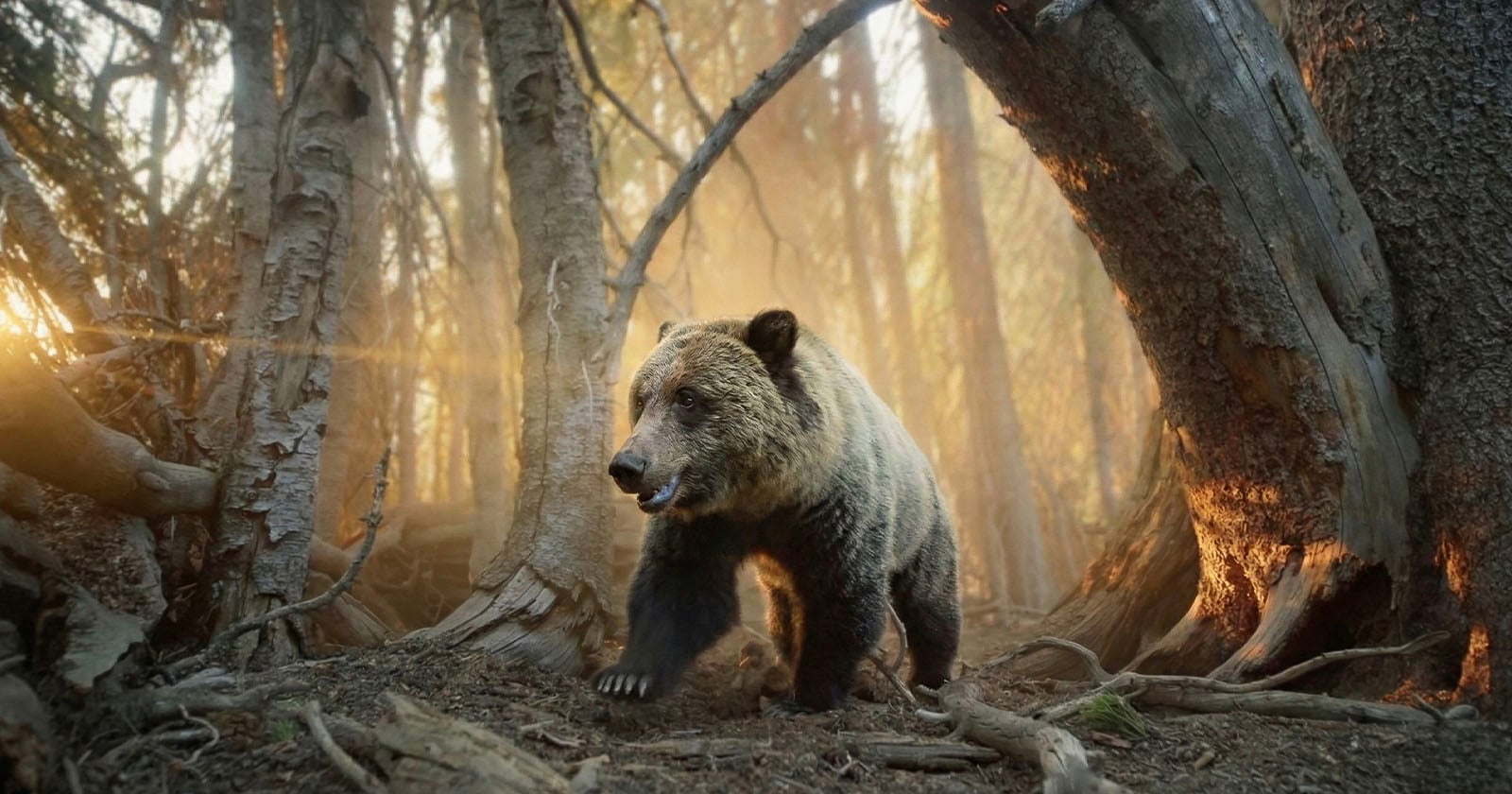
A Nat Geo and BBC cinematographer has put together a beautiful wildlife documentary that tells the story of grizzly bears interacting with red squirrels in Yellowstone.
While it may seem like an unusual meal for a grizzly bear, whitebark pine trees produce cones that are packed full of nutritious seeds and are actually one of the most calorific foods for the apex predators.
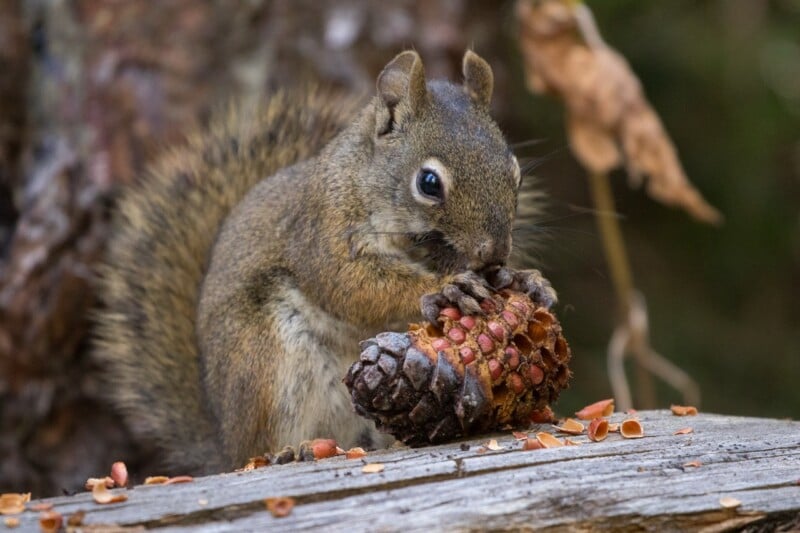 They may look small, but the seeds hidden in these pine cones are an excellent food source for bears.
 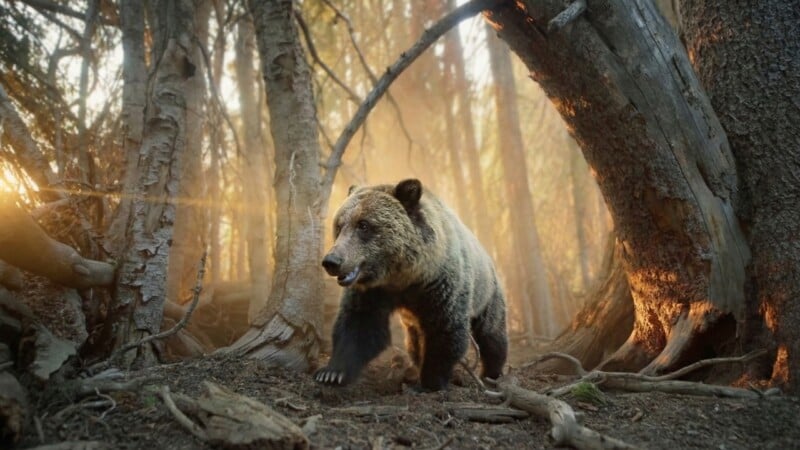 Jake Davis caught this bear entering the squirrels’ midden.
Jake Davis, who previously captured rare footage of a wolf kill also in Yellowstone, set up 10 Sony a7S IIIs around a red squirrel’s midden, the area where they stash their food.
It’s a marvelously shot, edited, and crafted documentary that is propelled by Davis’ expert knowledge of the Yellowstone ecosystem.
“The bears use their nose to sniff out the hidden cones, and you can actually hear them doing it,” explains Davis.
“The idea of a grizzly bear, this big apex predator, working so hard for a pine cone seemed crazy to me at first.
“But when you look at how nutritious the seeds are, it does start to make sense. They’re a near-perfect food: more than 50% fat, 20% protein; they’re one of the most calorie-dense foods in a grizzly’s diet.”
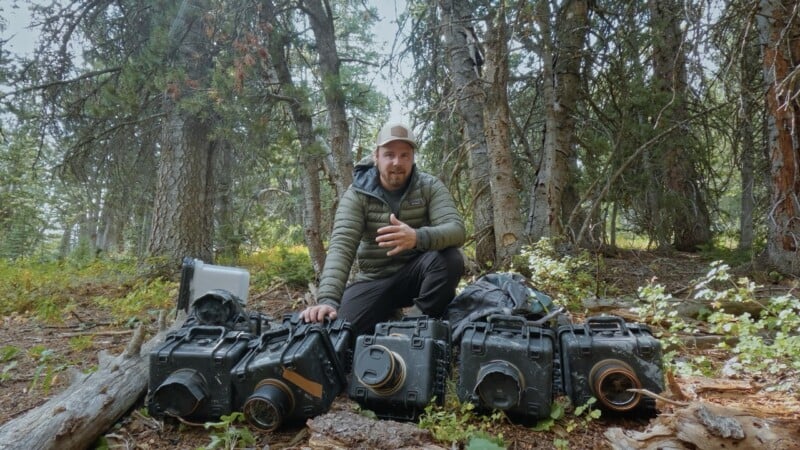 The trigger for all of his cameras is actually a heat-based sensor; as soon as an animal is in the area it will trigger all 10 cameras to start recording.
 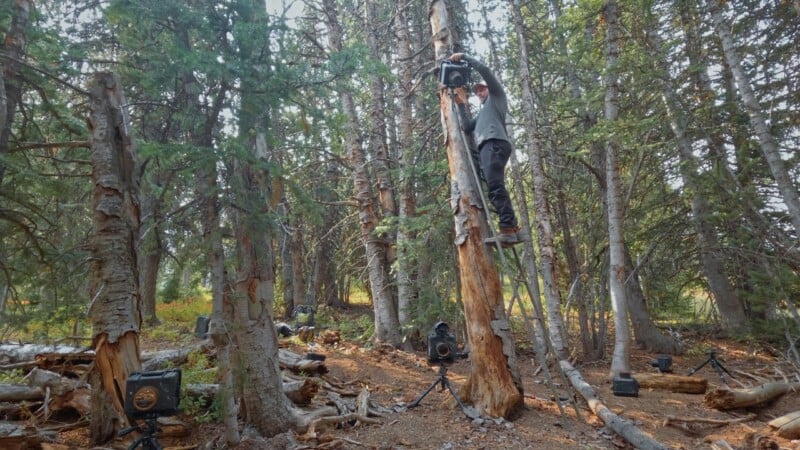 This camera went up a tree to get a “squirrel’s view.”
 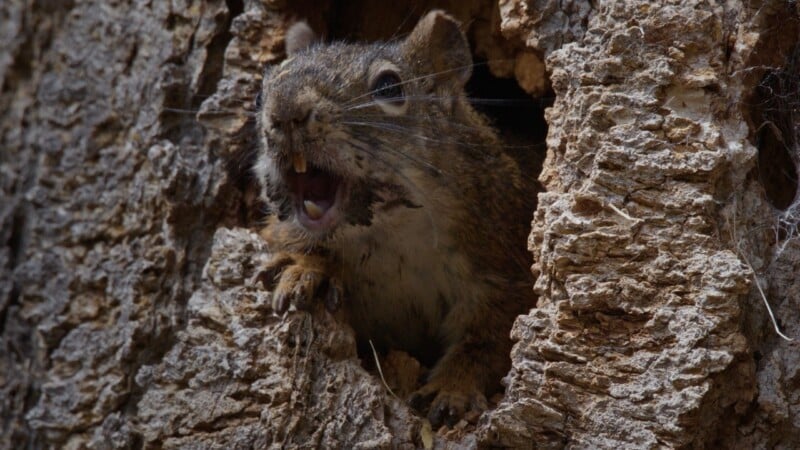 “The squirrels work tirelessly during this season,” says Davis. “Up to 80% of their daily activity is spent on harvesting and caching cones. And these giant cones are not easy to handle.”
Davis, who has been working on this project for 10 years, found that it wasn’t just grizzly bears attracted to the area — martens and long-tailed weasels are also interested in the squirrel’s cache of cones.
The plucky critters also have to fend off owls that will occasionally swoop at them. In fact, the middens attract all manner of animals, and the squirrels’ cone-stashing activity is an essential part of the forest’s ecosystem.
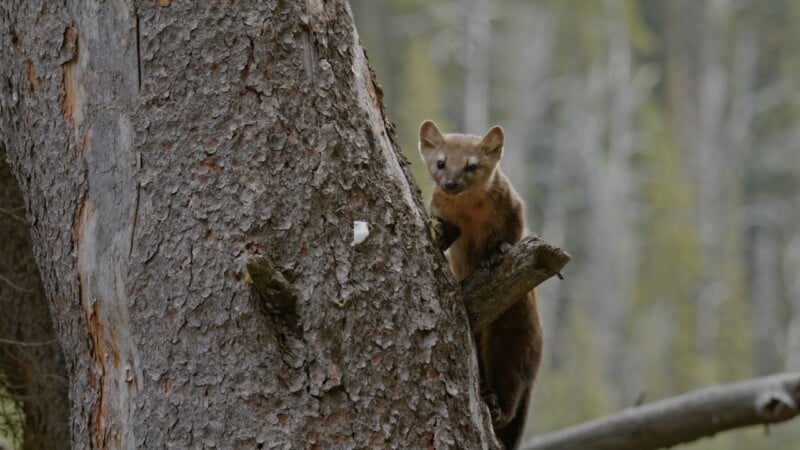 Martens also pose a threat to squirrels.
But even after all those unwanted visitors, the squirrels stash so many cone seeds that they still have plenty to get through the harsh winter.
“This project is really where my career began,” says Davis. “I first set out just wanting to film grizzly bears, but it quickly grew into a much larger story about the forest and the relationships that shape it. I’ve been working on it for more than a decade now, and in many ways it’s how I developed my craft. The forest hooked me early on. I keep coming back to see what’s changed, what’s happening each year. It helped me fall in love with telling stories about the natural world.”
Image credits: Photographs by Jake Davis