
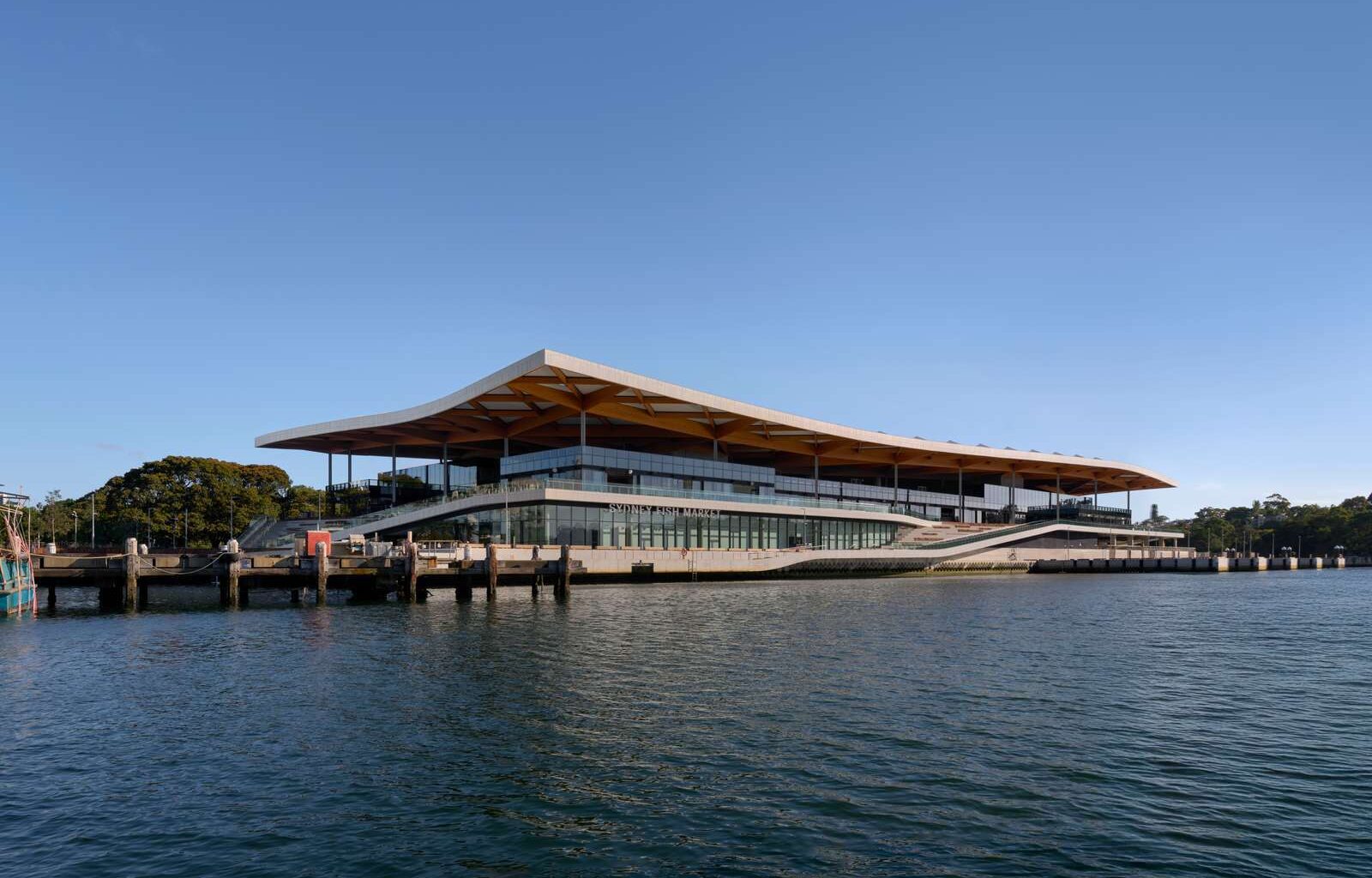
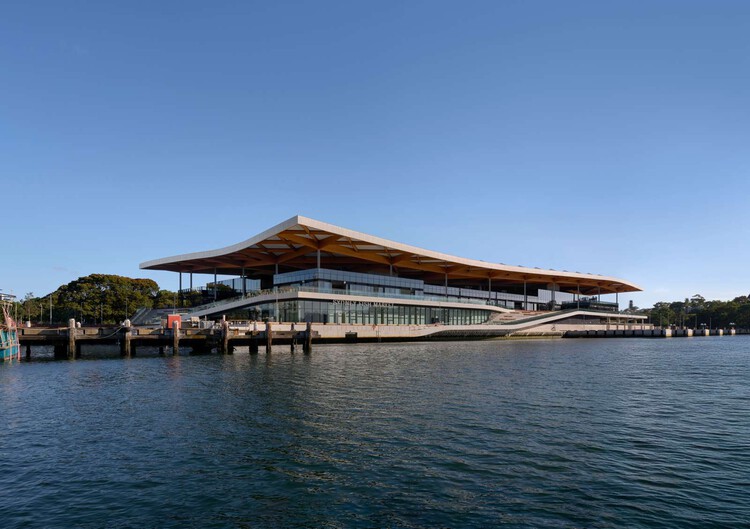
 Sydney Fish Market by 3XN. Image © Tom Roe
Share
Or
https://www.archdaily.com/1037650/3xns-sydney-fish-market-to-open-first-completed-project-in-blackwattle-bays-renewal
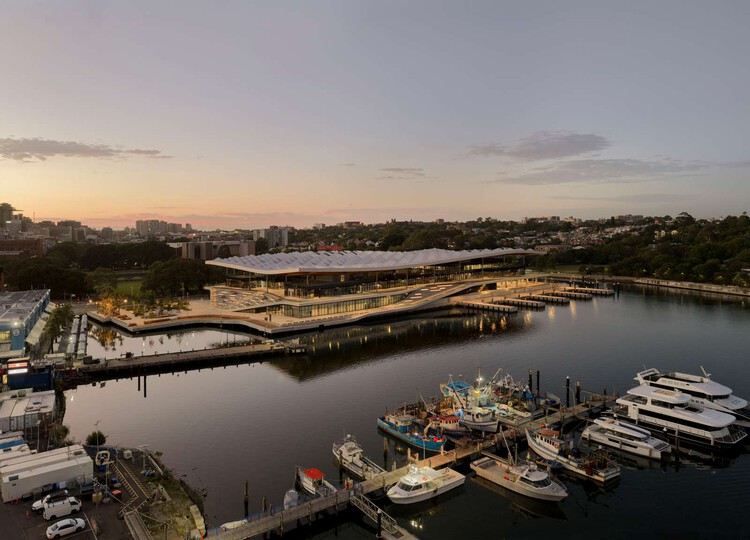
Set to open on January 19, 2026, the Sydney Fish Market marks the first completed project within the broader renewal of Blackwattle Bay on Sydney‘s inner harbour. Designed by 3XN in collaboration with BVN and Aspect Studios, and delivered by Multiplex, the purpose-built facility replaces the former market with a contemporary structure that combines an operating wholesale fish market with retail, dining, and publicly accessible waterfront spaces. Positioned approximately one mile southwest of Sydney‘s central business district, the project reframes one of the world’s largest fish markets by volume as both working infrastructure and a civic destination.
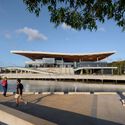
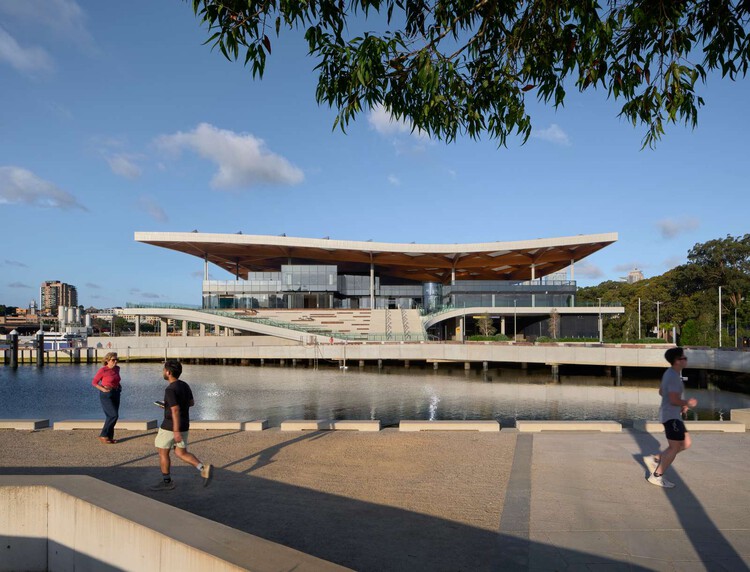 Sydney Fish Market by 3XN. Image © Tom Roe
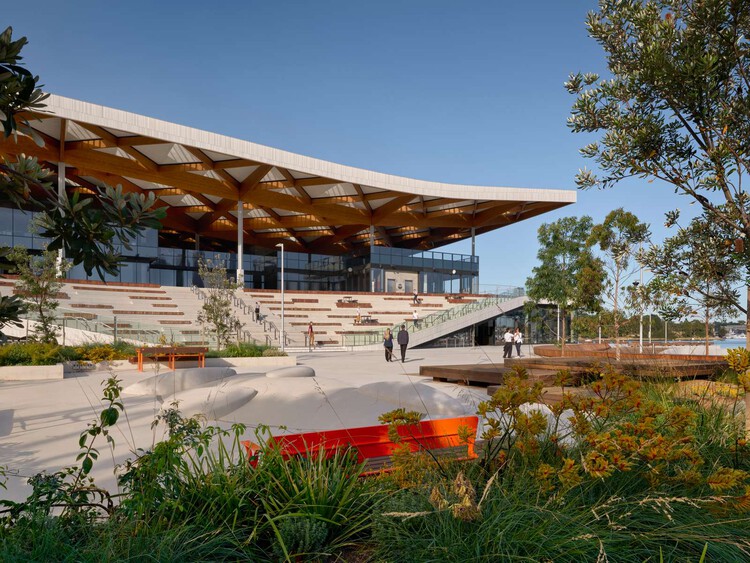
The design reinterprets the traditional market hall through a large, undulating roof canopy that references wave forms and fish-scale patterns, establishing a strong visual identity along the harbour edge. The roof spans approximately 20,000 square meters, including a 200-meter-long canopy assembled from 594 glulam beams and 407 prefabricated roof cassettes, forming a continuous sheltered space beneath. Within this structure, the market maintains the openness and human scale associated with historic market typologies, organising vendor stalls and operational functions within a semi-open environment that emphasises daylight, ventilation, and spatial continuity
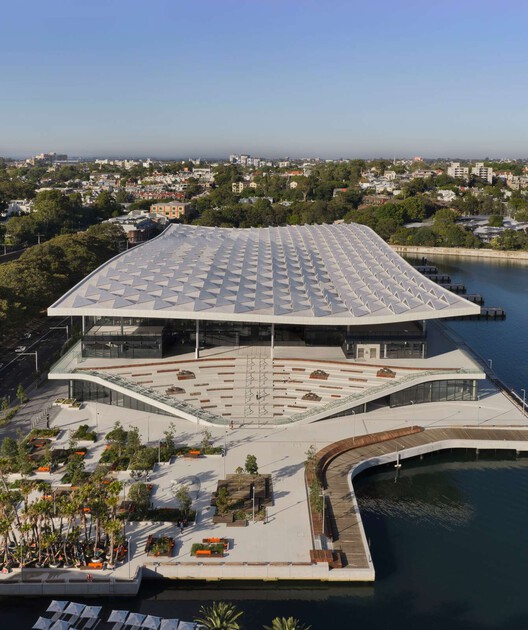 Sydney Fish Market by 3XN. Image © Tom Roe
Rather than fully separating market operations from public areas, the building is structured around visual permeability. Circulation routes and gathering spaces allow visitors to observe the working processes of the wholesale market from a safe distance, offering indirect engagement with the building’s core functions. A stepped tribune connects the ground-level plaza to the public market areas, functioning simultaneously as seating, an informal event space, and a transition between the urban fabric and the waterfront.
Related Article Barangaroo South Masterplan by RSHP and Lendlease Completes a 15-Year Transformation of Sydney’s Western Waterfront
Public access is further extended through more than 6,000 square meters of open space, delivered as part of the Blackwattle Bay renewal strategy. A new waterfront promenade links the site to Sydney’s broader 15-kilometre foreshore walk, connecting Rozelle Bay to Woolloomooloo. Plazas at either end of the market and landscape interventions by Aspect Studios integrate wetland planting and biofiltration systems designed to manage stormwater and support the site’s ecological conditions.
 Sydney Fish Market by 3XN. Image © Tom Roe
Environmental strategies extend beyond the building envelope to the harbour itself. Seabin units installed during construction have filtered billions of litres of water and captured millions of plastic items, while seawall tiles, coral panels, and hanging fish habitats have been introduced to support marine biodiversity along the foreshore. Replacing a mid-20th-century warehouse adapted for market use, the new development reorients the Sydney Fish Market toward the harbour, prioritising public access, visibility, and connection to the waterfront while maintaining its operational role within the seafood industry. As the first completed component of the Blackwattle Bay transformation, the project establishes a framework for future development across the precinct, positioning infrastructure, public space, and landscape as interconnected elements of the renewed urban edge.
 Sydney Fish Market by 3XN. Image © Tom Roe
In other construction updates, facade installation has begun at OPPO’s new headquarters campus in Shenzhen’s Greater Bay Area, marking visible progress on the project designed by Zaha Hadid Architects. Meanwhile, Coldefy, in collaboration with Relief Architecture, has completed the Robert Badinter Secondary School in northern France. In Germany, construction has commenced on the Innovation Park Artificial Intelligence (IPAI) Campus in Heilbronn, designed by MVRDV, a 30-hectare development planned as an international hub for research and work in responsible AI.