
NEED TO KNOW
The northern lights could light up skies across parts of the northern U.S. tonight, Jan. 9, and tomorrow, Jan. 10, thanks to heightened solar activityAccording to NOAA, fast solar wind streams combined with incoming coronal mass ejections are expected to trigger geomagnetic storms
The latest forecast shows 10 U.S. states above the aurora view line, weather permitting
Another day, another round of auroras!
In case you needed a reason to make it a magical weekend, the northern lights could make another dazzling cameo, illuminating skies across northern parts of the United States tonight, Jan. 9, and tomorrow, Jan. 10.
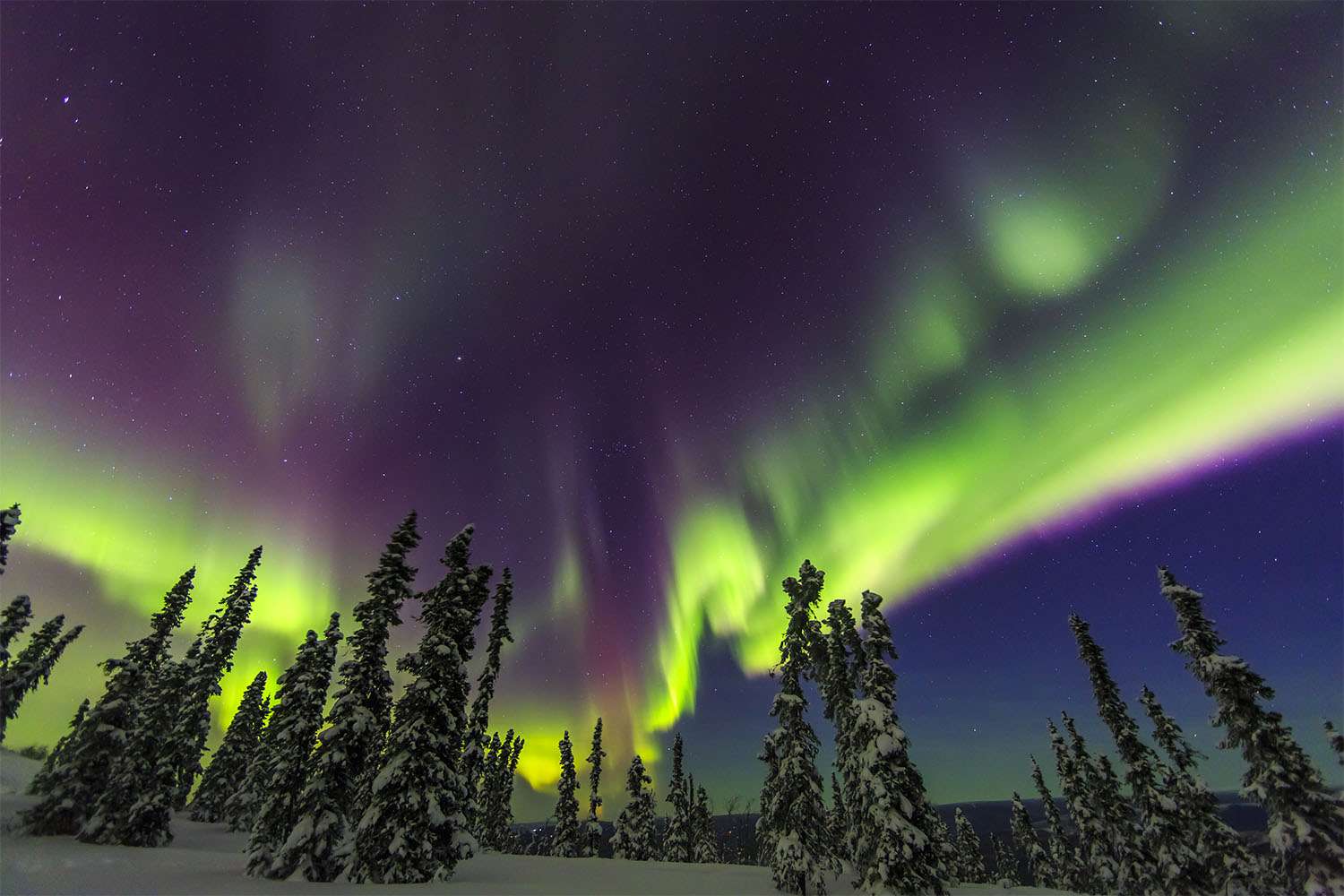
The aurora borealis (northern lights) is caused by geomagnetic storms, which occur when charged particles from the sun collide with gases in Earth’s atmosphere, creating brilliant waves of light in the sky.
According to the National Oceanic and Atmospheric Administration’s (NOAA) Space Weather Prediction Center (SWPC), a stream of fast solar wind peaked early in the week, with speeds reaching up to 700 km/s.
With a series of CMEs (coronal mass ejections) expected to impact Earth’s magnetic field, space forecasters are closely monitoring geomagnetic conditions. Intense wind speeds, together with the potential impacts of CMEs, are forecasted to spark minor (G1) storm levels.
NOAA’s current forecast, however, is for a Kp index of 4.67 between 9 p.m. this evening and into Saturday. So, if you’ve ever wanted the pleasure of witnessing colorful ribbons shimmer across the northern horizon, be sure to look up this weekend.
Here’s everything you need to know about how, when and where to watch the northern lights.
When will the northern lights be visible?
northern lights over Mefjord.
Getty
According to NOAA, a Kp index at a high of 4.67 is forecasted between 9 p.m. Friday, Jan. 9, and midnight on Saturday, Jan. 10. For best visibility, head out between 10 p.m. and 2 a.m. local time.
If you’re feeling adventurous, travel as far north as possible to a high, north-facing vantage point away from light pollution.
Where will the northern lights be visible?
Northern lights in Sweden.
Leon Neal/Getty
According to the latest update on NOAA’s aurora forecast map, 10 U.S. states could catch a glimpse this weekend, including Idaho, Montana, North Dakota, Minnesota, Wisconsin and Michigan on Friday, Jan. 9, while NOAA’s predicted viewline dips further south into Washington state, South Dakota and Maine on Saturday, Jan. 10.
Do keep in mind that they don’t call the aurora borealis otherworldly for nothing — the northern lights are fickle by nature. So be sure to check for updates to the forecast data in case conditions strengthen.
How to watch the northern lights?
Auroras in Norway.
Getty
How to take photos of the northern lights?
Remember, patience goes a long way! Besides, you can’t catch a rare glimpse of the northern lights without taking a photo to prove it.
The good news is your smartphone will do the trick. Just switch on Night Mode in your settings and aim your lens at the sky.
However, for those with more advanced gear, like a DSLR or mirrorless camera, use a tripod and shoot in manual mode for the best results.