
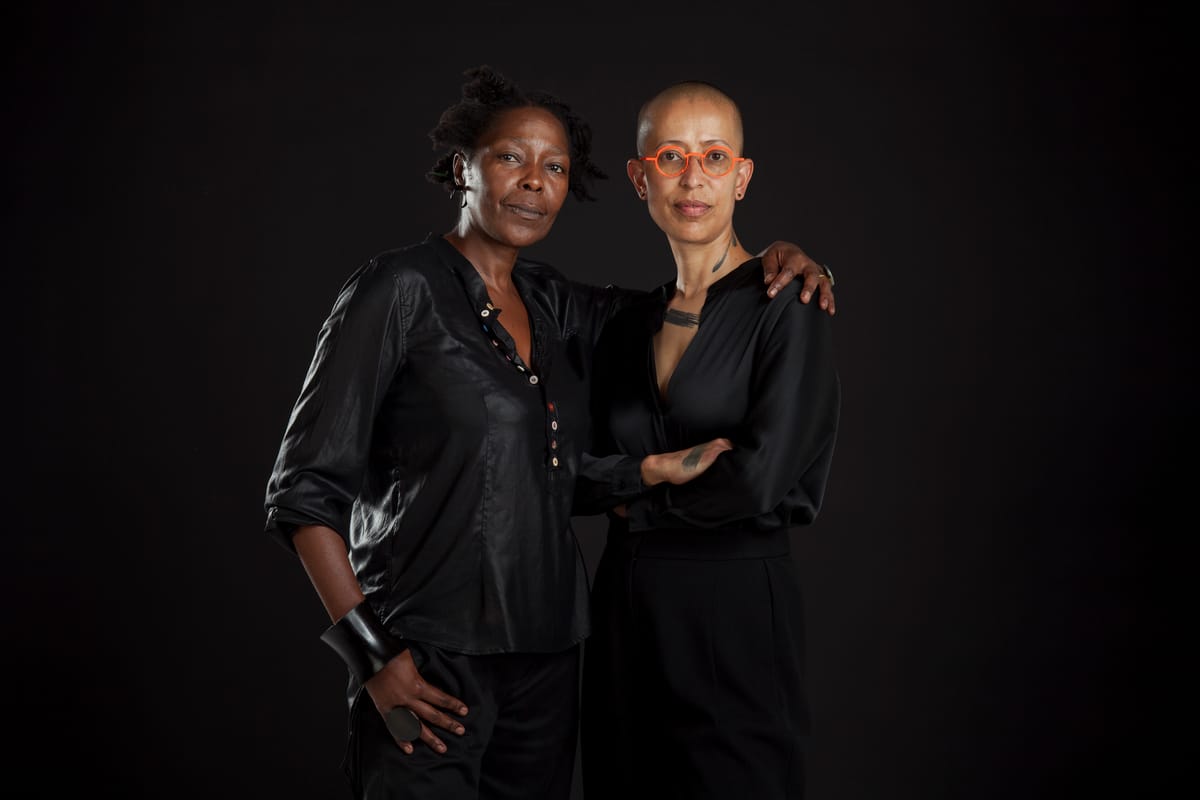
South Africa has scrapped a performance mourning victims of Israel’s war on Gaza that was selected for the country’s 2026 Venice Biennale pavilion. In a statement to Hyperallergic, a spokesperson for the nation’s Department of Sport, Arts and Culture said the pavilion “should not be used to amplify similarly divisive global disputes that do not center South Africa’s own story,” adding: “We need to use our platforms to sell our country to the world.”
Artist Gabrielle Goliath and curator Ingrid Masondo’s proposal for the South African presentation, titled Elegy after Goliath’s decade-long vocal performance series, had been chosen for the Biennale by an independent committee in December. According to reporting by the South African publication Daily Maverick, the decision to reject the artwork originated from the Department of Sport, Arts and Culture’s minister, Gayton McKenzie, the founder of the right-wing Patriotic Alliance party.
Goliath’s pavilion performance would have addressed the “unfolding crisis of displacement and death in Gaza,” according to a representative of her studio, reached via email by Hyperallergic. The performance was also expected to address the Israeli military’s killing of the Palestinian poet Hiba Abu Nada, the femicide in South Africa, and the Herero and Nama genocide perpetuated by Germans in Namibia in the early 20th century.
However, according to the Daily Maverick, McKenzie took issue with the proposal’s content regarding Israel and Gaza, writing in an internal letter in December that the subject was “highly divisive in nature and relates to an ongoing international conflict that is widely polarising.” He then reportedly threatened to withdraw South Africa from the international art event if the work was not removed, a move decried by the country’s pavilion selection committee as unconstitutional.
In a January 8 open letter, the members of the appointed Biennale selection committee defended their decision to accept Elegy.
“We affirm our continued and unequivocal support for the artist, the curator, and their project in the face of political pressure and attempts to silence free expression and compromise artistic integrity,” reads the statement, signed by Greer Valley, Molemo Moiloa, Nomusa Makhubu, Sean O’Toole, and Tumelo Mosaka.
“We further reject all forms of censorship and intimidation that seek to curtail critical artistic practice or undermine the autonomy of cultural production,” the letter continues. The group characterized Elegy as concerning “intimacy, care, and listening, [and] creating space for reflection on loss and remembrance.”
Organizers of the country’s pavilion were reportedly notified of McKenzie’s request to remove the performance series on January 2. The South African government had appointed the organization Art Periodic to lead the fundraising and production of the pavilion; however, the nonprofit said in a statement that it no longer “holds a mandate to proceed with the project.” Art Periodic had appointed the selection committee that chose Elegy.
South Africa Friends of Israel posted a video on Facebook that apparently shows McKenzie rejecting that a genocide was unfolding in Gaza, a claim that contradicts the official characterization of the United Nations and several human rights groups. He also vowed to “stop the ICJ case,” likely referring to South Africa’s genocide charge against Israel in the United Nations’ International Court of Justice, if he were to become president. (Hyperallergic has not independently verified the video clip.)
In an email statement sent to Hyperallergic, a spokesperson for South Africa’s Department of Sport, Arts and Culture rejected the allegations of censorship and stated that McKenzie wished for the pavilion not to become a “proxy arena for geopolitical conflicts.”
“His concern relates solely to the fact that South Africa is currently the subject of highly contested and politically charged narratives internationally, including being falsely labelled a ‘genocidal state,'” the spokesperson said, possibly referring to comparisons between Israel and Apartheid-era South Africa.
The spokesperson also claimed that a “foreign country was funding or partly funding this exhibition,” but did not immediately clarify which nation they were referring to.
Goliath and Masondo have appealed the decision to the country’s president, Cyril Ramaphosa, and the South African Department of International Relations and Cooperation, the artist’s studio told Hyperallergic in an email.
According to the Maverick, communications from McKenzie suggested he would favor works for the pavilion that portray South Africa more positively. The United States Department of State issued a similar nationalistic requirement for its pavilion proposal guidelines last year.
“I have said it many times: my work is not about violence, but rather foregrounds practices of mourning, survival, and repair, within and despite this normative disregard,” Goliath told the Maverick. “At a moment in which sustaining hope is a political imperative, I think it is all the more crucial to emphasise my work as life-work rather than death-work, and as rooted in a decolonial black feminist project of care and radical love.”
The spokesperson for South Africa’s Department of Sport, Arts and Culture said the nation will still participate in the upcoming Venice Biennale, but that the department had retained control of “administration and curation.”
Hyperallergic has contacted Art Periodic and the Venice Biennale for comment.