
Ten years ago, an espionage thriller series became the talk of the town for a good few weeks, especially in the U.K.
“The Night Manager,” a BBC/AMC co-production and adapted from John le Carré’s novel, starred Tom Hiddleston as Jonathan Pine, a hotel employee and ex-soldier hired to infiltrate the inner circle of Hugh Laurie’s dastardly arms dealer, Richard Roper.
It was — at the time — unlike anything usually produced in the U.K., an expensive, high-octane and extremely glitzy globe-trotting showcase of major set pieces and exotic locations (and in one sex scene, much to the enjoyment of the British press, Hiddleston’s bum — controversially cut from the U.S. broadcast). Several execs joked at the time that the intro alone probably cost more than the average budget of a U.K. TV series. Thankfully, “The Night Manager” was hugely well received — winning a major haul of awards, including two Emmys (one for Suzanne Bier, who directed the whole series) and three Golden Globes (for Hiddleston, Lawrie and Olivia Colman, marking her very first major honor in the U.S.). Naturally, having successfully flexed his suave spy muscles on TV screens, Hiddleston immediately became the bookies’ top choice to take over as James Bond, not that they were looking back in 2016.
Much has changed in the last decade.
Big-budget TV in the U.K. is no longer a rarity, with studios and streamers having since flocked across the Atlantic to set up major local bases (“The Night Manager” actually launched eight months before Netflix’s game-changer “The Crown”). Colman is also now an Oscar winner, while who will become the next 007 is expected to be announced very soon (although the bookmakers’ current favorite is Callum Turner). And le Carré sadly passed away in late 2020 at the age of 89.
But “The Night Manager” is finally back for a second outing, this time on the BBC and Amazon Prime, where it launches Jan. 11. 10 years on, Hiddleston’s Pine is still in the secret service, but now under a different alias and running a surveillance unit in London (Colman also returns too). Naturally, things quickly go awry and he’s soon attempting to infiltrate a Colombian arms cartel, but now under orders from a post-Brexit U.K. where there are questions of national identity and who’s working for who.
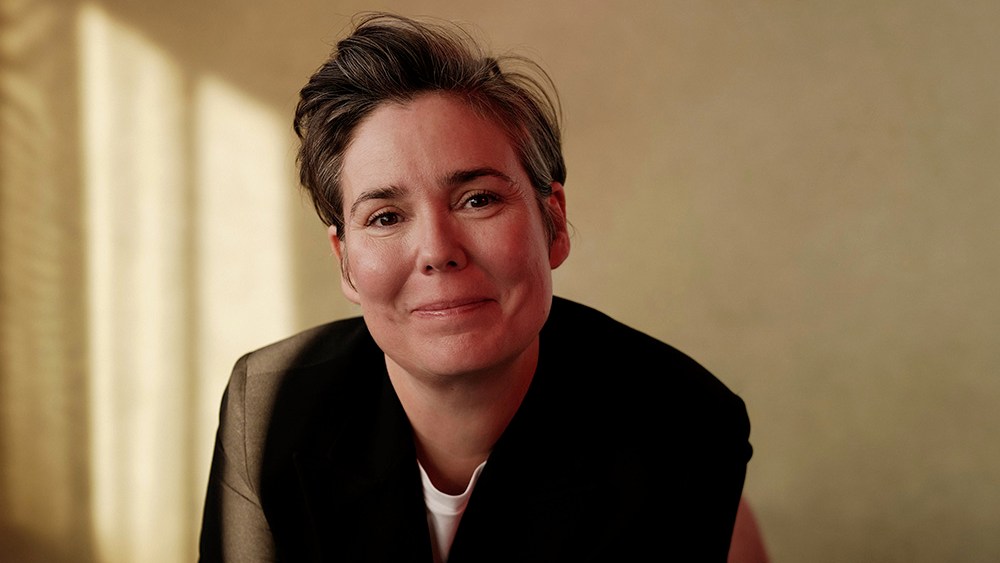
In the directors seat for the full six-part return — shot in the U.K., Colombia, Spain and France — is Georgi Banks-Davies, best known for directing “I Hate Suzie” for Sky Atlantic and Netflix’s “Kaos.”
Speaking to Variety, Banks-Davies discusses picking up a series 10 years on, taking over from the “incredible” Bier, and how season two of “The Night Manager” marks the first time that le Carré’s spy world has been expanded beyond his novels — a move he fully gave his blessing.
How did you get involved in this — it seems very different from your previous work?
It was actually two years ago today. I got an out of the blue phone call from my agent saying, ‘Guess what, they want to see you for The Night Manager.’ And honestly, my first reaction was, ‘Oh my God, incredible.’ I’m a huge le Carré fan, a huge espionage fan and a huge fan of thrillers. I’ve always wanted to make action but my career had not necessarily pointed in that direction. So to be kind of given that opportunity, it felt out of the blue. Then I went on to meet the producers at The Ink Factory — le Carré’s kids — and the writer David Farr. We talked about the big thematics of the show, what’s it’s politically saying on a bigger platform. But what struck me were the characters he’d formed. For me, the characters have to come first. And then I met Tom (Hiddleston) and were excavating the character ¬— what does Jonathan Pine look like 10 years later? Finally they said, “Do you want to direct it and direct all of it.”
I think this is the closest thing to cinema you can do as a TV director. Right from the start, I was basically told: This is a six-hour movie. So it’s shot all at the same time, it’s edited all at the same time — it’s made like a six-hour movie. There’s a lot of pressure, but also so much freedom creatively. And I still cannot believe I got to make it.
Season 1 of “The Night Manager” was adapted from le Carré’s novel, but is this the first time they’ve expanded on one of his books?
Yeah, it is. And there’s a lot of question marks around that. But they’ve been very conscious about how they’ve done it. And le Carré was aware of it before he passed away.
So he gave it his blessing?
Yeah, he’d given it his blessing — he wanted them to do it. And we had the same writer [as Season 1] in David Farr, who’s an aficionado of le Carré and understands how to inhabit that world. For me, it’s like you have to trust that there is a DNA in the project, which is literally le Carré’s family. There will be nothing that would harm that or harm what their father would have intended. I never got to meet him, but I had to kind of make that assumption that it all comes with good blessing. But I’m pretty sure I read somewhere that le Carré said that a film adaptation is an adaptation of the film, not the book. And by that, he meant when he was working on stuff he really gave creative freedom to the writers and the directors. So if you look at the first book and you look at the TV show, it changed the time period, setting and some of the characters. He was always very empowering of that in the adaptation.
It seems rare to get a sequel to a series that came out 10 years ago. I don’t want to remotely suggest that 2016 was a more innocent and carefree time, but a lot has happened since then. Do you think this story reflects how the world has changed in the last decade?
Yeah, 100%. We live in a post-truth world now. We’ve been through a huge, seismic political shift. And I think the show was always to me about an identity crisis. The characters are so often grappling with who they are. And I think in this moment that we live in, who we are and all the things that make us who we are, whether that is our race, religion, gender, where we were born, where we want to live — everything about us feels so much more prevalent and so much more judged. In one moment, it can make us safe, and in the other it can make us entirely unsafe. I feel every day it’s on a knife edge. The things that you take for granted — like as a woman, as a queer person — they can be taken away from me. The fundamental human rights that I would assume are human rights are currently so in the balance, are currently so for the taking. And the show goes on to kind of really examine the idea of who we are based on where we come from and the ideals that we hold.
When the first season came out it was a huge deal. It came before the rush of very expensive high-end drama here in the U.K., before the streamers set up huge bases here. I remember at the time people noting how glitzy it looked in comparison to most U.K. productions. Given that so much has changed in the U.K. and it’s now an epicenter for global TV did it feel a little a little daunting to take that on?
I’d be lying if I say it wasn’t daunting, but equally, that feeling had to be pushed straight away. You can’t ignore what’s come before and you can’t ignore the fan base, and you can’t ignore success like that. But if you try to replicate it, or if you let it infiltrate you, you will fail. For me as a filmmaker, I then have to ask, ‘Why am I doing this?’ I’m doing this purely because I’m responding to the material. You’ve just got to trust the material and believe in it, and also believe that instinct that made you want to tell this story and want to do it in a unique way. The other thing I was quite surprised with was the amount of autonomy I was given to do that. I was told: You don’t need to repeat anything that’s come before, there is no house style, there is no way in which it has to be shot. There is no way in which it has to sound. There is no way in which the story has to be told. It’s like: we like your instincts.
You’re following in some illustrious footsteps, with Suzanne Bier having directed the first season — and winning an Emmy for it. Did you speak to her at all?
I’m a massive admirer of her, of her work, she’s brilliant. And in this industry, as a woman, you can’t ignore how incredible Suzanne is and how much she’s paved the way for so many women directors. But then you’ve got to go: Ok, thanks. So we did speak, but not before we shot — we talked afterwards. And I actually loved that, because it’s like we’d been two soldiers who’d gone to different battles, and then we exchanged the war stories.
If I remember correctly, Olivia Colman was pregnant with her third child when she shot the first season. So they must be double digits now.
I know! Isn’t it excellent? What an amazing mascot of the show.
Following the first season, as is always the case whenever a British actor of a certain age picks up a gun, there was a lot of noise about Tom Hiddleston being the next James Bond. At the time, they obviously weren’t looking for a new 007. But 10 years on — they very much are. Do you think this might reignite calls for Tom to become Bond?
I have no idea! That is a question for Tom. But what I would actually say is that people might start thinking, if they were to do a “Night Manager” prequel, who gets to play Jonathan Pine. I’d like that to be the conversation — who’s going to lead the early years Pine.
Has there been any talk of continuing into a third season?
There was a third season that was always in the offing. David is writing it now — he’s at the coalface and in the early stage. But yeah, when the the second season came the plan was to go to three. So when you see our whole series, you’ll see it can sit entirely alone but can also sit very much as the second book in the trilogy.
What next for you? Where do you go after directing Tom Hiddleston in a 6-hour espionage film?
There are a few things, but right now my focus is actually on film projects. One is an adaptation of a book about a young woman and one is a sports movie, a period race car move, which is my great passion, and about a woman in the driving seat. So they’re the focus at the moment and hopefully one will be moving forward soon.