
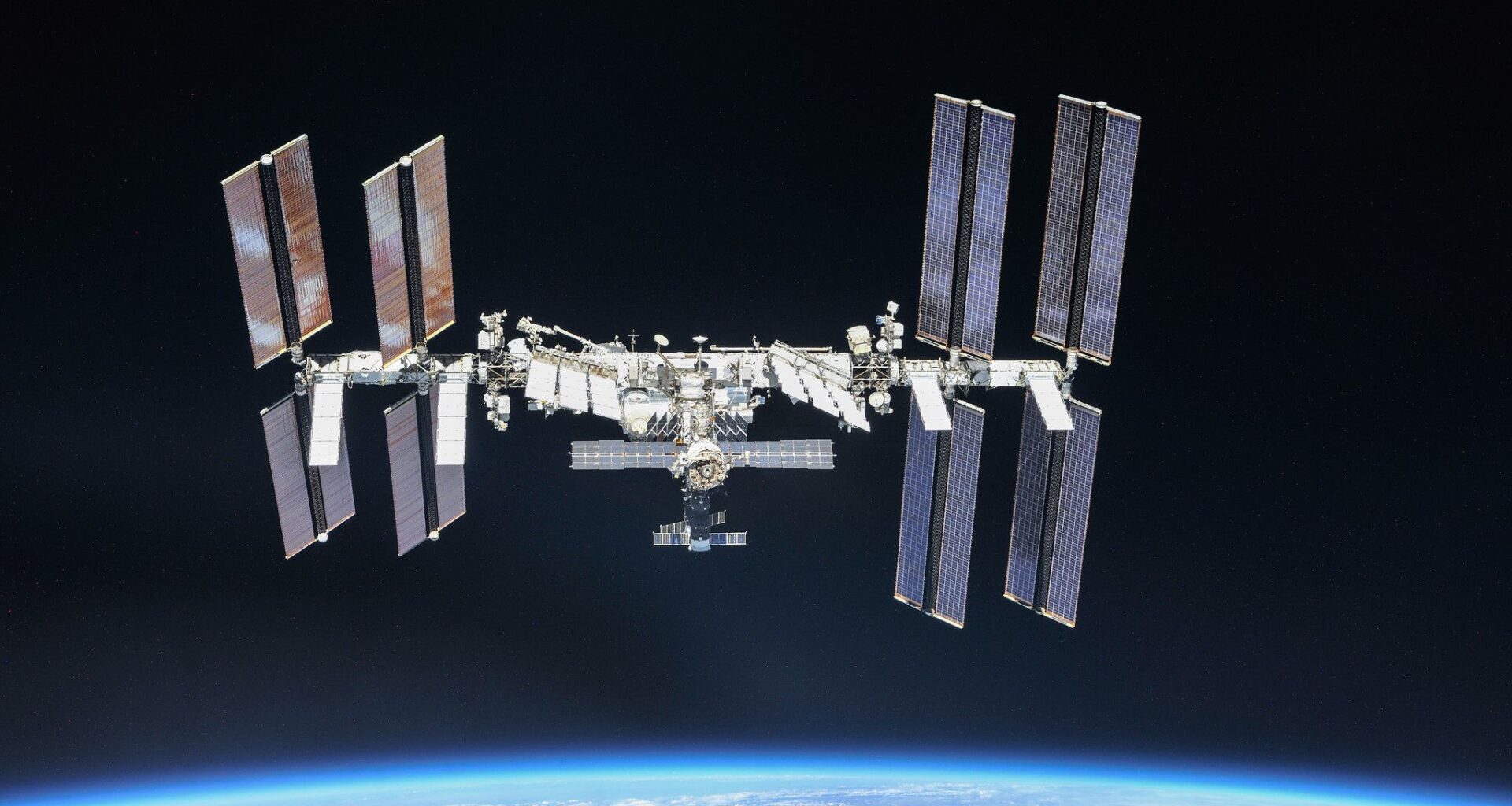
The International Space Station will soon be down to a skeleton crew.
On Thursday (Jan. 8), NASA announced that it will bring the four astronauts of SpaceX’s Crew-11 mission back to Earth early to deal with a health issue with one of the crewmembers. We don’t know yet when this will happen; an update is expected in the next day or so.
The quartet’s departure will leave the International Space Station (ISS) with just three resident astronauts — NASA’s Christopher Williams and Sergey Kud-Sverchkov and Sergei Mikayev of the Russian space agency Roscosmos. While the medical evacuation will be a first for the ISS, a three-person crew is far from unprecedented.
You may like
Since 2020, the nominal crew size for the ISS has been seven astronauts. The previous baseline, established in 2009, was six. But the standard before that, which held for nearly a decade, was three.
Williams will be the only astronaut on the American segment of the ISS after Crew-11 departs, but NASA is confident that he can handle the responsibility.
“Chris is trained to do every task that we would ask him to do on the vehicle,” NASA Associate Administrator Amit Kshatriya said during a press conference on Thursday afternoon (Jan. 8).
He noted that Williams will have a considerable amount of help.
“Of course, we also do a lot of the operations of the vehicle from our various control centers all over the world, including commercial control centers that operate a lot of our research payloads,” Kshatriya said. “So, he will have thousands of people looking over his shoulder, like our crews do all the time to help ensure that they continue the groundbreaking science.”
Kud-Sverchkov and Mikayev — who flew to the ISS on Nov. 27 with Williams aboard a Russian Soyuz spacecraft — could also lend a hand if needed, according to Kshatriya.
“The Russians that are on board with him — first of all, they’ve trained tightly together. They’re a great team; they work really well together,” Kshatriya said. “But they also have qualification to operate the U.S. systems in an advisory mode or an assistant mode and can, if needed, be called upon, with the assistance of MCC [Mission Control Center] Houston or MCC Moscow, to assist in any operations.”
You may like
Shifting to skeleton-crew mode will of course have some impacts on ISS operations. Not as much science work will get done with just three astronauts on board rather than seven, for example.
And NASA won’t be able to perform any spacewalks, which are two-person jobs. So the ISS will be more vulnerable to contingency situations such as hardware malfunctions, as former Canadian astronaut Chris Hadfield noted.
Speaking of spacewalks: The medical issue arose in the leadup to a now-canceled Jan. 8 extravehicular activity (EVA), which was to have been conducted by NASA’s Mike Fincke and Zena Cardman.
Fincke are Cardman are Crew-11 astronauts. Their two crewmates on the SpaceX mission are Japan’s Kimiya Yui and cosmonaut Oleg Platonov.
The agency has not identified which Crew-11 astronaut experienced the health problem, citing privacy concerns, but did say it had nothing to do with the EVA or preparations for it. NASA wants to get the affected crewmember home early to diagnose the problem using the more advanced and extensive medical hardware available here on Earth.
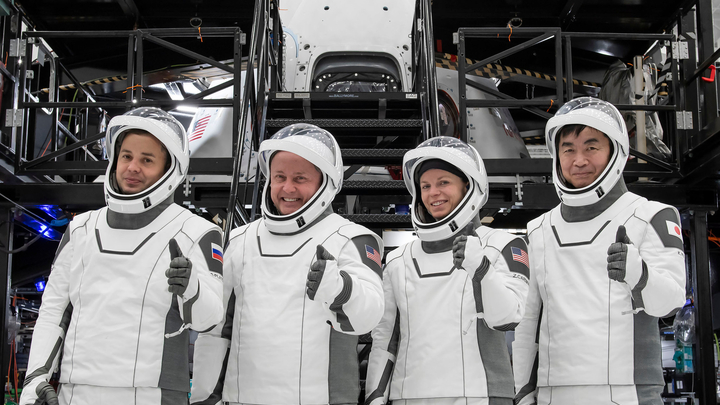
The crew of NASA’s SpaceX Crew-11 mission pose for a photo during a training session before their launch to the International Space Station. From left: Oleg Platonov, Mike Fincke, Zena Cardman, and Kimiya Yui. (Image credit: SpaceX)
Crew-11 arrived at the orbiting lab on Aug. 2 aboard a Crew Dragon capsule and is most of the way through its planned six-month mission.
The Crew-11 astronauts were supposed to stay aboard the ISS until the arrival of the four-person Crew-12. Crew-12 is currently targeted to launch in mid-February, but NASA is looking into moving the liftoff up.
Since we don’t have a firm departure date for Crew-11 or a clear launch date for Crew-12, it’s unclear how long Williams, Kud-Sverchkov and Mikayev will have the orbiting lab to themselves. But skeleton-crew operations — a trip down memory lane for the ISS — could end up lasting a month or so.