
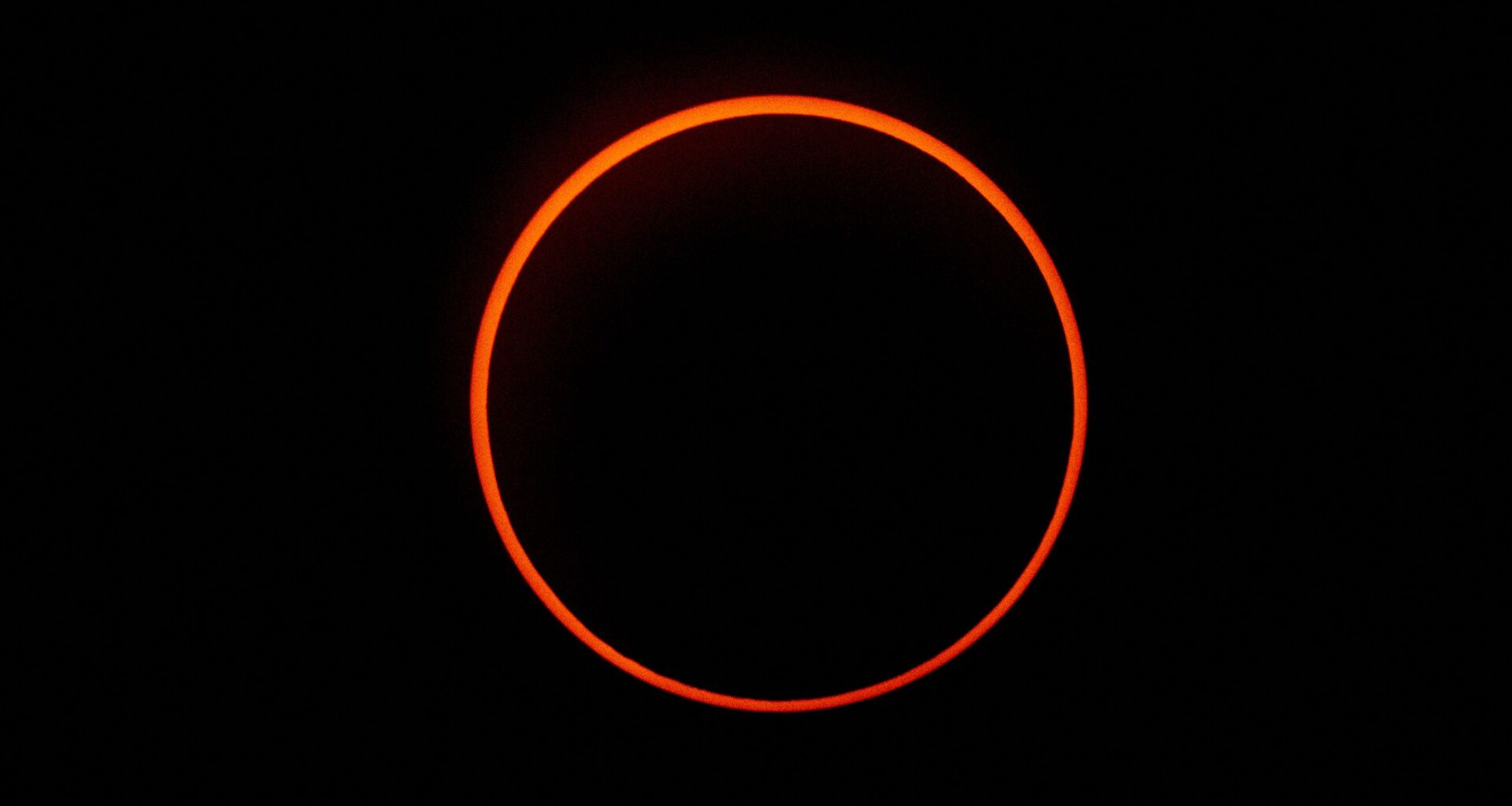
The next solar eclipse will be an annular solar eclipse on Feb. 17, 2026, and will be visible from a remote part of Antarctica.
A solar eclipse occurs when the moon is positioned between Earth and the sun and casts a shadow over Earth. They can only occur during the phase of the new moon and make for an interesting skywatching target.
You may like
First solar eclipse of 2026
The first solar eclipse of 2026 will be an annular solar eclipse on Feb. 17, 2026.
It will be visible from Antarctica, forming a “ring of fire” for up to 2 minutes, 20 seconds as the moon eclipses 96% of the sun’s center.
Very few people will be in a position to witness this eclipse in person.
Second eclipse of 2026
The second solar eclipse of 2026 will be a total solar eclipse on Aug. 12.
Visible in Greenland, western Iceland and northern Spain, the 2026 total solar eclipse will bring a maximum of 2 minutes, 18 seconds of totality the day before the peak of the annual Perseid meteor shower.
Remember, NEVER look at the sun without adequate protection. Our how to observe the sun safely guide tells you everything you need to know about safe solar observations. The guide also informs you on what solar targets you can look out for and the equipment needed to do so.
Types of solar eclipse
There are four types of solar eclipses depending on how the sun, moon and Earth are aligned at the time of the event. A solar eclipse always occurs about two weeks before or after a lunar eclipse.
You may like
Total solar eclipse: The sun is fully obscured by the moon.Partial solar eclipse: The moon doesn’t fully block the sun so only a portion of the sun is obscured. Here the moon appears to take a “bite” out of the sun.Annular solar eclipse: The moon is centered in front of the sun but doesn’t cover the entirety of the surface (as seen in a total solar eclipse). A “ring of fire” shines around the moon.Hybrid solar eclipse: The rarest solar eclipse is a combination of a total and annular eclipse (sometimes known as an A-T eclipse) and is produced when the moon’s shadow moves across Earth. These begin as one type of eclipse and transition to another.
According to the educational website SpaceEdge Academy, 28% of solar eclipses are total, 35% are partial, 32% are annular and only 5% are hybrid.
Solar eclipse FAQs answered by an expert
We asked Jamie Carter, Editor of WhenIsTheNextEclipse.com and author of The Complete Guide To The Great North American Eclipse of April 8, 2024 some frequently asked questions about solar eclipses.

Jamie Carter
Science journalist, author and solar eclipse expertAre solar eclipses dangerous?
Partial solar eclipses are dangerous to look at and require solar eclipse glasses. Binoculars, telescopes and cameras need to have solar filters. However, if it’s a total solar eclipse, during the brief period of totality — when all of the Sun is blocked and it gets dark — it’s perfectly safe to remove eye protection.
In fact, you must remove eye protection during totality to see the sun’s corona! Nothing is sadder than seeing someone wear eclipse glasses during totality, though either side of totality is a partial solar eclipse, during which extreme care must be taken. There’s no need to panic about this because it’s very easy to tell when it’s safe; you will know when totality is imminent, and when it gets dark it’s safe to remove eclipse glasses.
What’s the best way to see a solar eclipse?
The best way to see a solar eclipse is to wait for a total solar eclipse and travel to a location within the narrow path of totality that has the greatest chance of a clear sky. Totality is a spine-tingling, indescribable feeling that must be experienced at least once, but it can take significant effort, organization and funds to do.
Are solar eclipses rare?
Solar eclipses are not rare. In fact, they happen between two and five times each year.
However, most are partial solar eclipses, which very few make any effort to see. Total solar eclipses — in which all of the sun is blocked by the Moon — happen only once per year and occur in geographically very narrow corridors called a path of totality. These are the events eclipse-chasers travel to experience. In some years they total solar eclipses don’t occur at all, so on average they happen every 18 months or so. On average, a total solar eclipse occurs on any one location on Earth every 375 years — southern Illinois experienced totality on August 21, 2017 and will again on April 8, 2024.
Future solar eclipsesSwipe to scroll horizontallyUpcoming solar eclipses
Year
Date
Type of solar eclipse
2026
Feb. 17
Annular
2026
Aug. 12
Total
2027
Feb. 6
Annular
2027
Aug. 2
Total
For more eclipse information check out our article on the top total solar eclipses to look out for over the next decade
How to view the sun safely
NEVER look at the sun with binoculars, a telescope or your unaided eye without special protection. Astrophotographers and astronomers use special filters to safely observe the sun during solar eclipses or other sun phenomena. Here’s our guide on how to observe the sun safely.
To safely observe the sun or watch an eclipse, you need special protective eyewear or eclipse glasses. Basic sunglasses, even those with UV protection, will not sufficiently protect your eyes. If you’re planning to document the eclipse with any photo equipment, there are special solar filters you can add to make sure the remaining ring of sunlight doesn’t take a toll on your vision.
The safest way to observe an eclipse is indirectly by using a pinhole camera that you can make easily at home.
If you must document one of these events, a simple, wide-angle snap should capture the moment, even if you’re using your smartphone camera.
Today’s best deals on eclipse glasses:
Editor’s Note: If you snap an amazing solar eclipse photo and would like to share it with Space.com’s readers, send your photo(s), comments, and your name and location to spacephotos@space.com.
Follow us on Twitter @Spacedotcom and on Facebook.
Additional resources
Want to look further ahead? You can find a concise summary of solar eclipses through to 2030 on NASA’s eclipse website. Read more about solar and lunar eclipses on Eclipse Wise — a website dedicated to predictions of eclipses. Learn about eclipses on other planets with this short article from Cornell University’s astronomy department.
Bibliography
April 20 hybrid eclipse. Timeanddate. Retrieved October 27 from https://www.timeanddate.com/eclipse/solar/2023-april-20
October 14 annular eclipse. Timeanddate. Retrieved October 27 from https://www.timeanddate.com/eclipse/solar/2023-october-14
October 14 annular eclipse. NASA. Retrieved October 27 from https://solarsystem.nasa.gov/eclipses/2023/oct-14-annular/overview/
Fred Espenak. Solar eclipses 2021-2030. NASA. Retrieved October 27 from https://eclipse.gsfc.nasa.gov/SEdecade/SEdecade2021.html
Konstantin Bikos. What is a hybrid solar eclipse? Timeanddate. Retrieved October 27 from https://www.timeanddate.com/eclipse/hybrid-solar-eclipse.html