
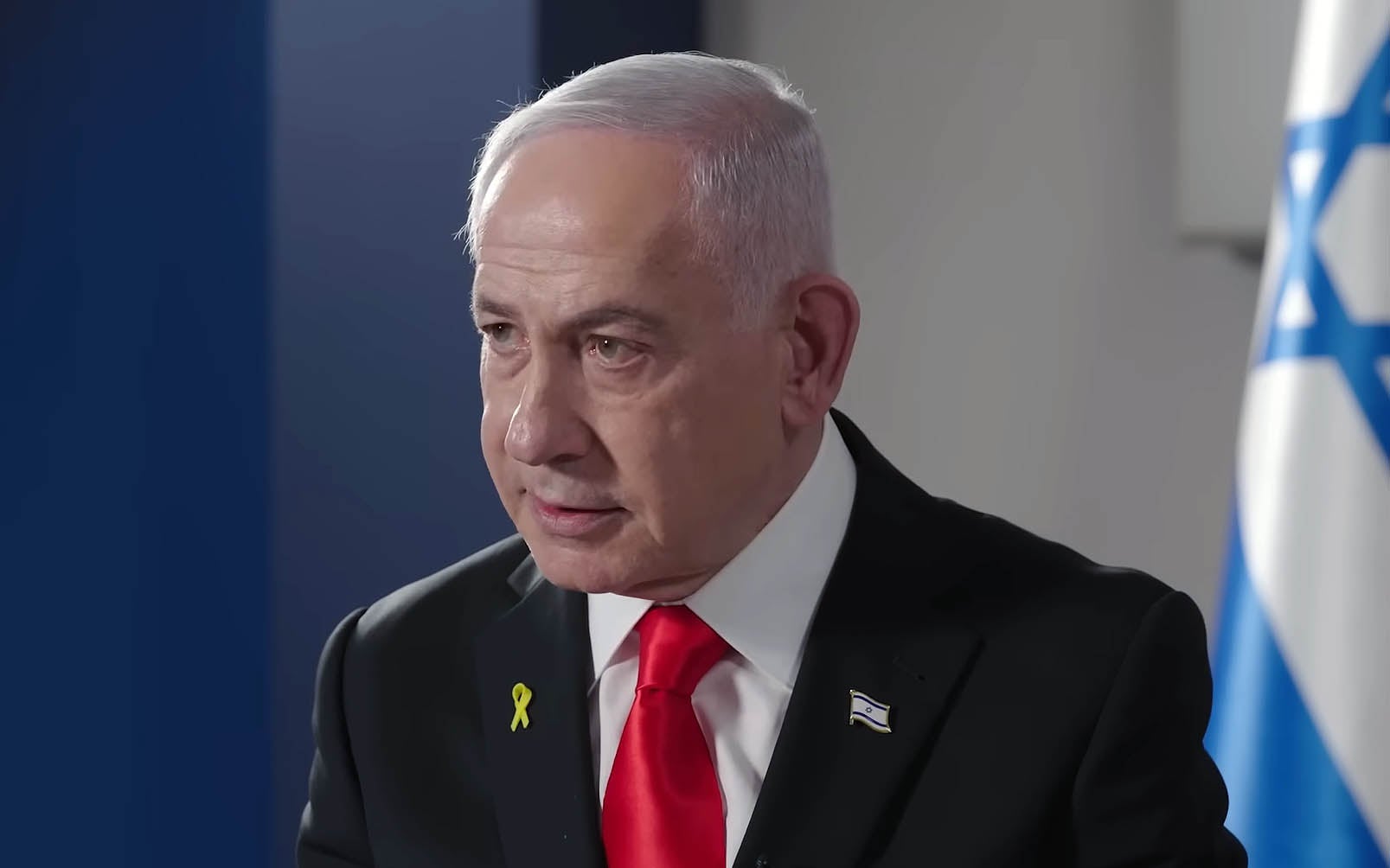
Prime Minister Benjamin Netanyahu has said he seeks to end US military aid to Israel within a decade, earning praise from a key ally of US President Donald Trump, whose voter base has splintered over the issue.
“I want to taper off the military aid within the next 10 years,” Netanyahu said in an interview with The Economist that was conducted Thursday and published Friday. Asked if he meant “to taper it off to zero,” Netanyahu said yes.
Under a military aid package negotiated in 2016, Israel receives some $3.8 billion annually from the US, mostly in the form of subsidies to buy American-made arms. The aid package, which took effect in 2018, is set to expire in 2028.
Netanyahu said he would not seek its full renewal.
“We want to be as independent as possible,” he stated. Referring to his meeting with the US leader in Florida late last month, Netanyahu added: “In my visit to President Trump, I said we very deeply appreciate the military aid that America has given us over the years, but here too we’ve come of age, and we’ve developed incredible capacities.”
Get The Times of Israel’s Daily Edition
by email and never miss our top stories
By signing up, you agree to the terms
US Senator Lindsey Graham, chairman of a US Senate subcommittee that oversees military aid, welcomed Netanyahu’s commitment to wean Israel off US assistance and vowed to present a proposal “to dramatically expedite the timetable.”
Binyamin Netanyahu says he wants to reduce Israel’s reliance on American military aid to zero within ten years. In an interview with The Economist, the Israeli prime minister said while it was “much appreciated”, his country had “come of age” and its economy would soon reach “a… pic.twitter.com/DCvUY2Z9aJ
— The Economist (@TheEconomist) January 9, 2026
“The aid we have provided to Israel has been a great investment keeping the IDF strong, sharing technology and making their military more capable — to the benefit of the United States,” the South Carolina Republican wrote on X. “Apparently, there is a desire by Israel to change that dynamic because they have a roaring economy.
“I will always appreciate allies who are trying to be more self-sufficient and believe that, given what the Prime Minister said, we need not wait ten years,” he said, adding that termination of aid for Israel would save US taxpayers billions that could then be “plowed back into the US military.”
As head of the US Senate Appropriations Subcommittee on State, Foreign Operations, and Related Programs, Graham said, “I will be presenting a proposal to Israel and the Trump administration to dramatically expedite the timetable.”
Axios reported in November that Israeli-US discussions on the next military aid package had begun in recent weeks, after delays due to the war against Hamas in Gaza. According to that report, Israel was not only seeking to renew the aid package with the US, but to expand it to 20 years.
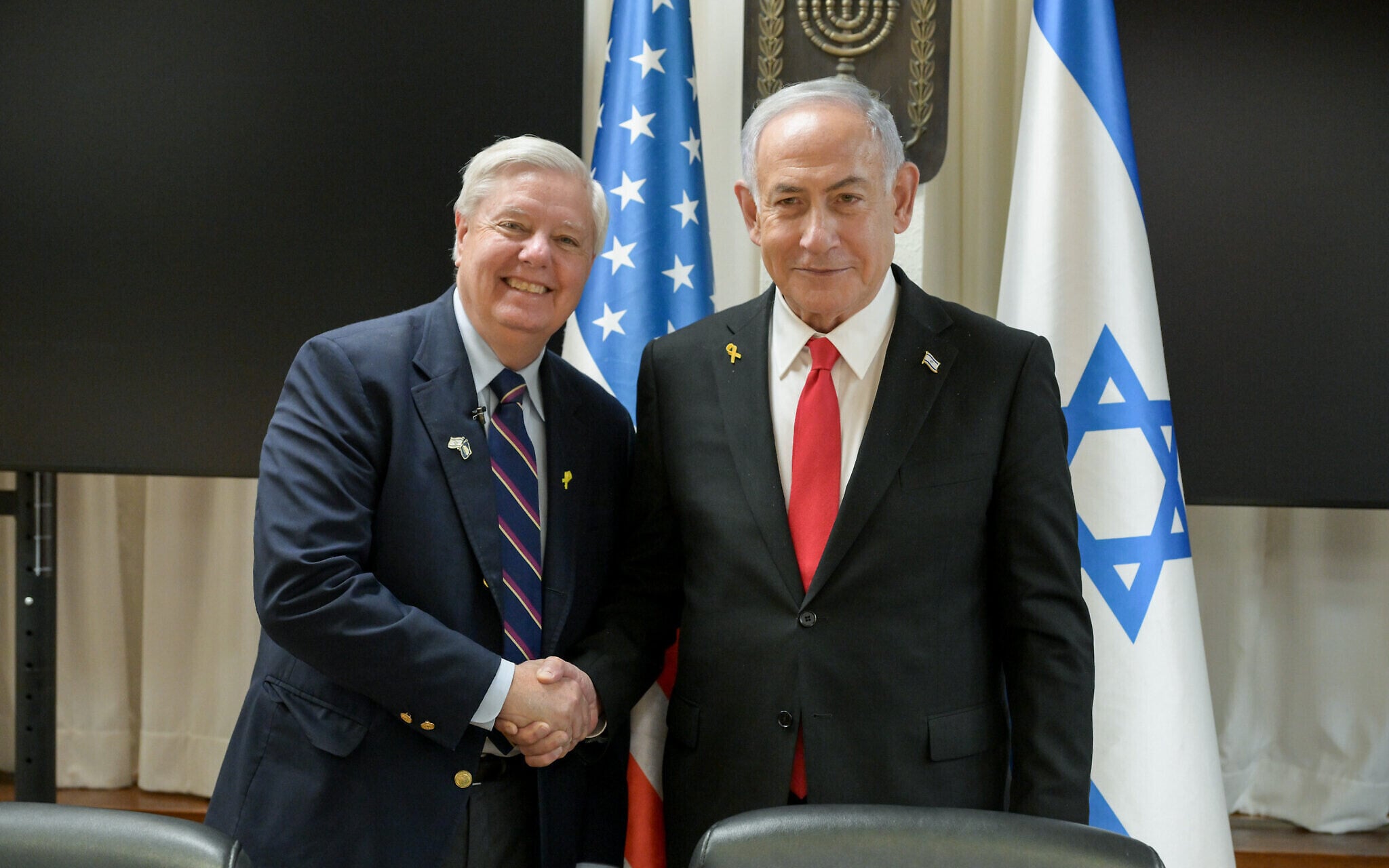
Prime Minister Benjamin Netanyahu (right) meets with US Senator Lindsey Graham in Tel Aviv, February 17, 2025. (Maayan Taof / GPO)
The Axios report, which cited US and Israeli officials, noted that discussions were complicated by growing isolationism in Trump’s base.
At the time, Netanyahu denied the Axios report, saying, as he did in his new interview with The Economist, that he thinks “it’s time to ensure that Israel is independent.”
The US committed to providing billions in military assistance to Israel and Egypt each year when they signed their 1979 US-brokered peace treaty.
While US aid once made up a significant chunk of Israel’s military spending, the percentage it makes up of those funds has significantly declined in recent years as Israel’s economy has flourished.
Under the 2025 budget, the Defense Ministry’s budget alone swelled to a record NIS 110 billion ($29 billion) out of a total defense budget of NIS 136 billion ($36.9 billion).
Part of Israel’s push to end aid stems from frustrations during the Gaza war when several allies halted arms supplies, including the Biden administration which held up the transfer of some munitions.
Lazar Berman contributed to this report.
Is accurate Israel coverage important to you?
If so, we have a request.
Every day during the past two years of war and rising global anti-Zionism and antisemitism, our journalists kept you abreast of the most important developments that merit your attention. Millions of people rely on ToI for fact-based coverage of Israel and the Jewish world.
We care about Israel – and we know you do too. So we have an ask for this new year of 2026: express your values by joining The Times of Israel Community, an exclusive group for readers like you who appreciate and financially support our work.
Already a member? Sign in to stop seeing this
You appreciate our journalism

You clearly find our careful reporting valuable, in a time when facts are often distorted and news coverage often lacks context.
Your support is essential to continue our work. We want to continue delivering the professional journalism you value, even as the demands on our newsroom have grown dramatically since October 7.
So today, please consider joining our reader support group, The Times of Israel Community. For as little as $6 a month you’ll become our partners while enjoying The Times of Israel AD-FREE, as well as accessing exclusive content available only to Times of Israel Community members.
Thank you,
David Horovitz, Founding Editor of The Times of Israel