
The post Meet the Massive Prehistoric Fish That Survived on Plankton appeared first on A-Z Animals.
Quick Take
Leedsichthys problematicus dominated the Jurassic seas as the largest bony fish, surviving exclusively on microscopic plankton.
Assessing Leedsichthys problematicus remains difficult because of the fragmentary nature of its Jurassic fossils.
This enormous giant contradicts assumptions by functioning as a gentle planktivore despite its intimidating dimensions.
Long before whales dominated the oceans, Earth’s seas were home to a fish so massive it continues to challenge our understanding of prehistoric life. Leedsichthys problematicus, an enormous filter-feeding fish from the Jurassic period, ranks among the largest animals ever to swim through our waters. Known only from fragmentary fossils, this elusive giant has fascinated scientists for more than a century, inspiring debate over its true size, appearance, and place in marine evolutionary history.
What makes Leedsichthys especially remarkable is not just its massive measurements, but how it lived. Despite its intimidating dimensions, this fish was a gentle planktivore, living off tiny organisms from seawater much like modern whale sharks and basking sharks. This article explores what scientists have uncovered about Leedsichthys problematicus. We detail its anatomy, diet, likely predators, and eventual extinction. Learn how one of the ocean’s greatest giants roamed the seas of the ancient world.
Meet Leedsichthys problematicus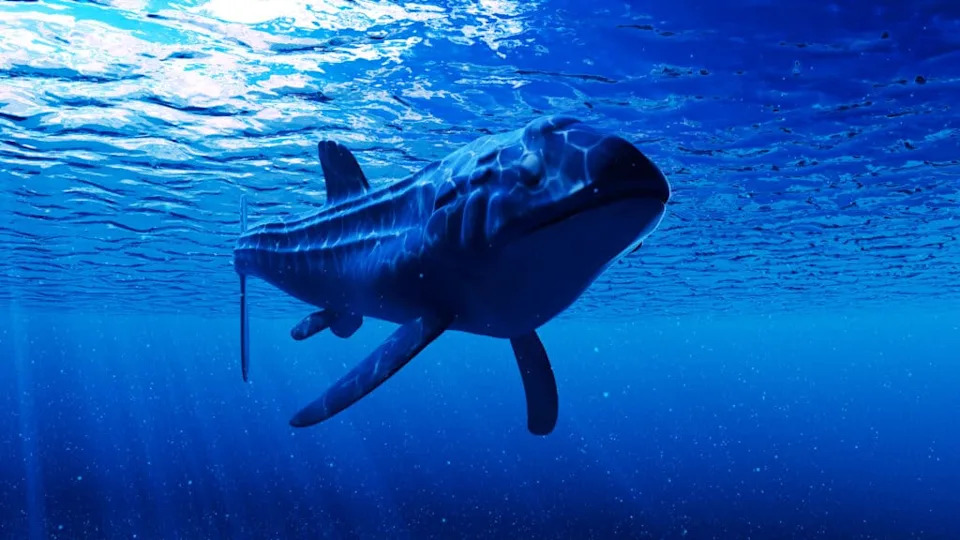
©SciePro/Shutterstock.com
According to the Guinness World Records, Leedsichthys problematicus is the largest bony fish to ever exist. These massive fish species lived about 165 million years ago in the Late Jurassic period and weighed between 15–30 tons, a behemoth compared to modern aquatic animals. In terms of length, Leedsichthys problematicus was once thought to grow to 90 feet, but new research in 2013 placed their length closer to 55 feet.
The Closest Modern Comparison to Leedisichthys problematicus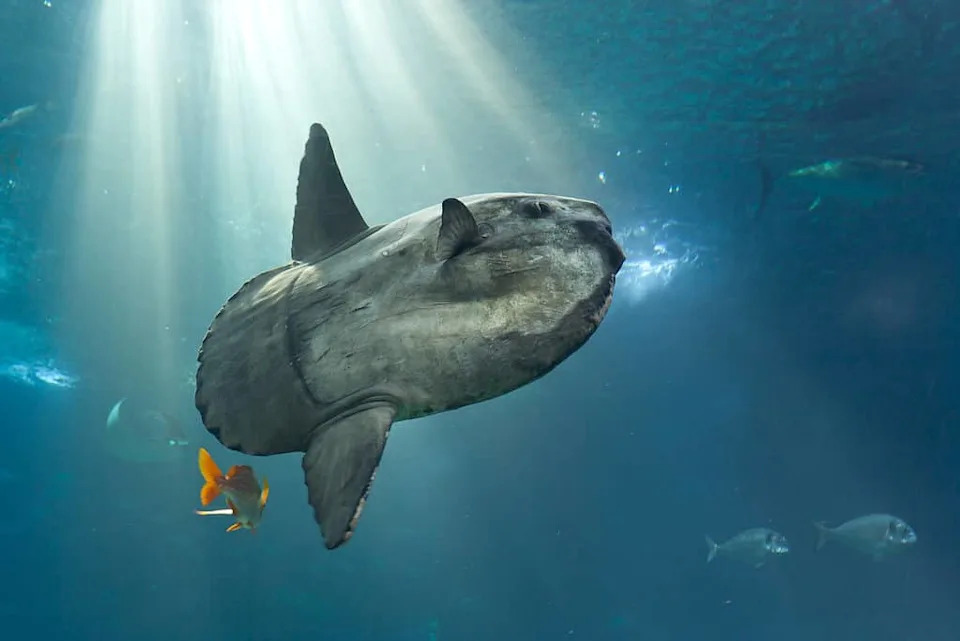
©Rui Manuel Teles Gomes/Shutterstock.com
Leedsichthys is an extinct genus of the family Pachycormidae, which roamed the ocean from the early Jurassic period to the Late Cretaceous period. In terms of evolution, this giant fish family was not a direct ancestor of modern bony fish but represented an evolutionary side branch. In present day, the closest bony fish to the Leedsichthys problematicus in size is the sunfish. According to news reports, the largest bump-head sunfish in the world weighs about 6,000 pounds. Though sunfish (Mola mola) are large, they are not anatomically or ecologically similar to Leedsichthys problematicus.
What DidLeedsichthys problematicus Look Like?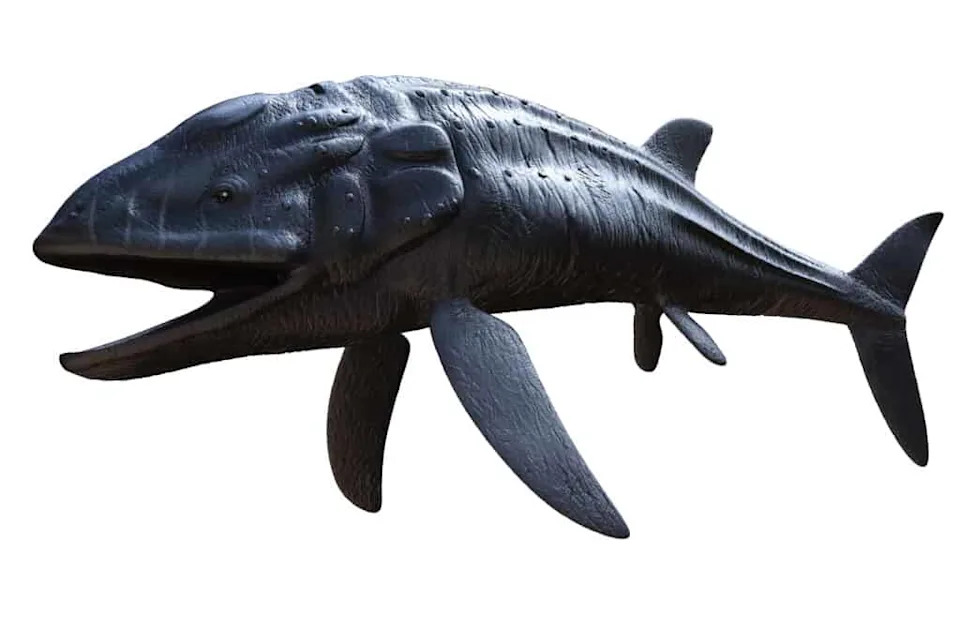
©Herschel Hoffmeyer/Shutterstock.com
Leedsichthys problematicus shares many of its features with the rest of its Pachycormidae family despite being the largest. Pachycormids have serrated pectoral fins, smaller pelvic fins, and a bony rostrum. Plenty about this animal’s anatomy is unknown, as an entire skeleton was never found.
From the fragments discovered, it was deduced that the front of its skull and part of its vertebrae were made of cartilage and not bone. Leedsichthys lacked bony scales and long vertical anal fins. Unsurprisingly, they featured a large head, a wide mouth, and thousands of gill rakers in lieu of teeth.
What Did Leedsichthys problematicus Eat?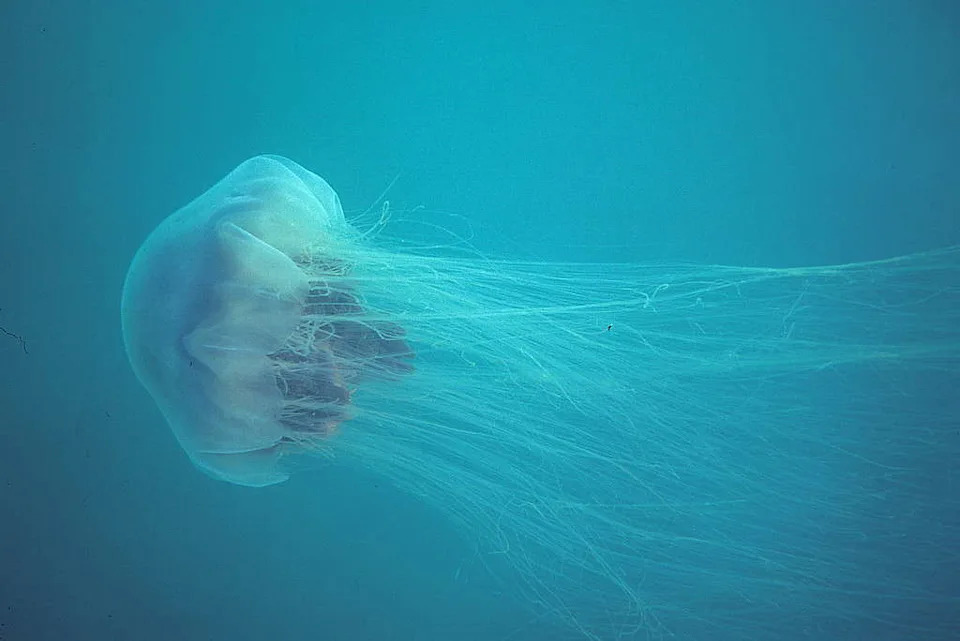
Had it existed in modern times, Leedsichthys problematicus would have been feared for its immense size. These huge marine animals would have been perfectly capable of hunting and feeding on humans. However, at the time they swam through the world’s oceans, they likely fed on plankton such as jellyfish, shrimp, and small fish.
How Did the Largest Bony Fish Forage?
©Esteban De Armas/Shutterstock.com
Despite existing millions of years ago, Leedsichthys problematicus shared foraging characteristics similar to whale sharks and basking sharks of today, in that they were also filter feeders.
Unlike predatory sharks, like the great white, that attack prey by biting and devouring, filter feeders leave their large mouths open as they swim. This allowed the giant fish to swallow plankton along with seawater. Based on reports, a layer of mesh-like material over their gills helped them filter plankton.
What Animals Preyed on Leedsichthys problematicus?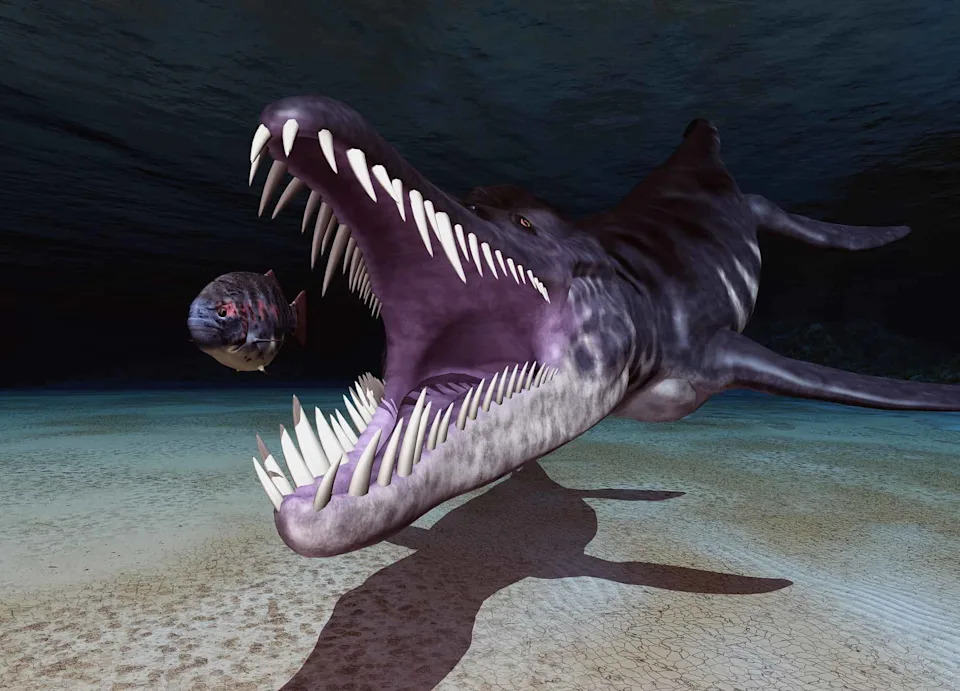
Leedsichthys problematicus were gentle giants. These large fish were not aggressive and did not attack prey. However, a variety of large species in the Late Jurassic period likely preyed on Leedsichthys problematicus.
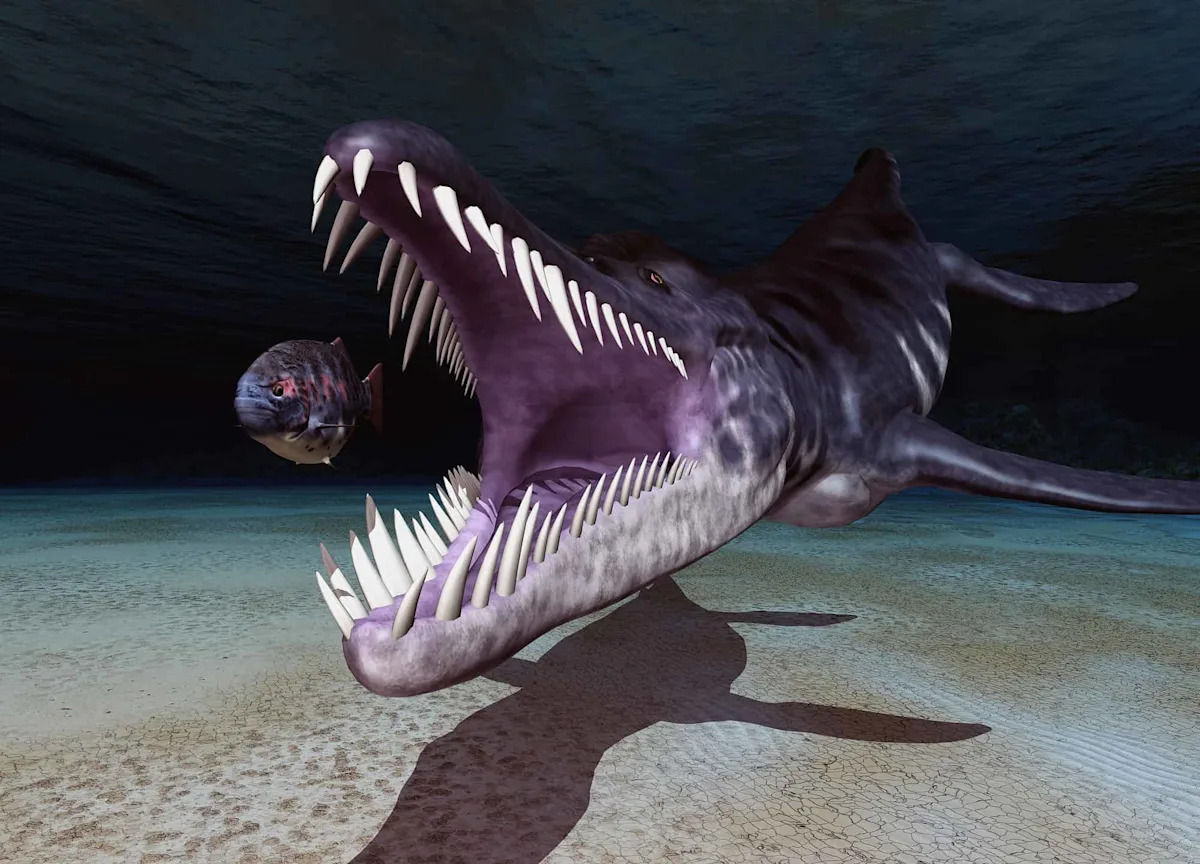
Some animals that preyed on the docile ray-finned giant were Liopleurodon and Metriorhynchus, which were abundant at the time. These marine crocodiles had sharp teeth that rivaled the tyrannosaur, but Leedsichthys problematicus could most likely survive an attack from these huge reptiles due to its sheer size. It would require a group hunt to take this fish down.
Extinction: When Did Leedsichthys problematicus Die Out?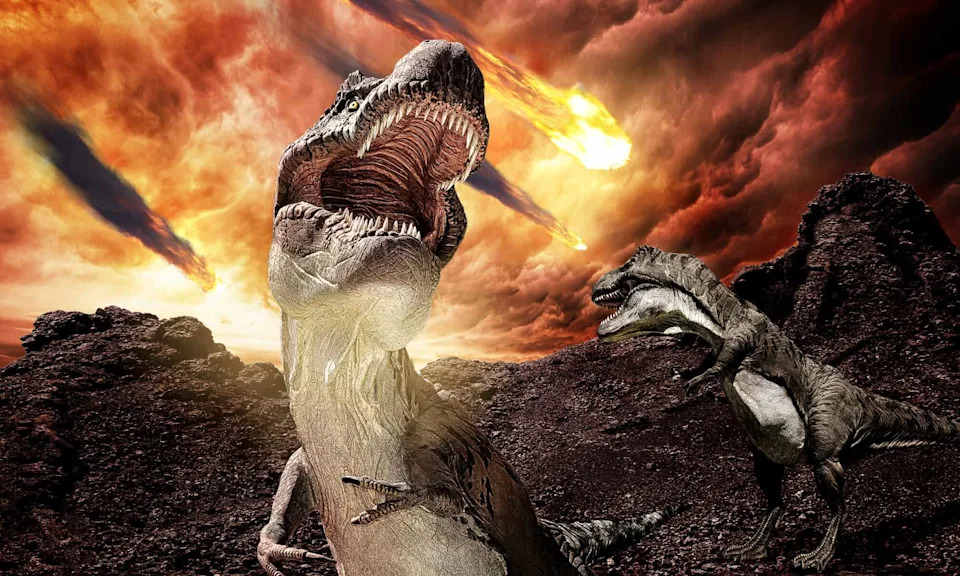
©serpeblu/Shutterstock.com
One theory is that Leedsichthys problematicus became extinct due to starvation. During the Jurassic period, the plankton population was aplenty, and the giant fish thrived. However, some speculate that plankton numbers fell drastically at the turn of the Cretaceous period, and the plunge coincided with the end ofLeedsichthys problematicus.
The post Meet the Massive Prehistoric Fish That Survived on Plankton appeared first on A-Z Animals.