
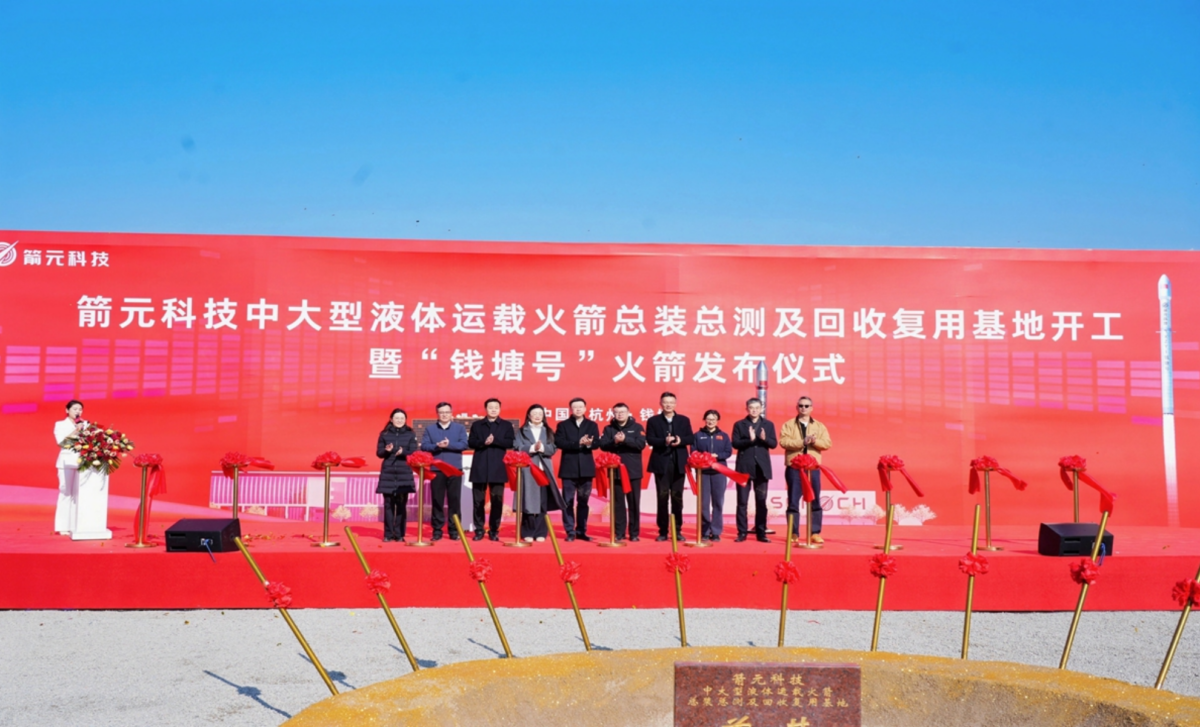
China is making significant strides in the commercial space industry with the launch of its first sea-recovery reusable rocket plant. On January 7, 2026, construction began in Hangzhou, marking a crucial step toward reducing the cost of space exploration. This ambitious project, led by Space Epoch, a Beijing-based space launch company, aims to produce reusable rockets that can be recovered at sea, an advancement set to revolutionize the way China conducts space launches. The project is expected to have far-reaching effects on both China’s commercial space sector and the global aerospace industry, according to CGTN.
China’s Bold Leap into Reusable Rocket Technology
China has begun the construction of its first sea-recovery reusable rocket plant in Hangzhou, aiming to strengthen its position in the commercial space sector. The 5.2 billion yuan ($740 million) facility, spearheaded by Space Epoch, is designed to produce medium-to-large liquid-fueled rockets that can be reused and recovered at sea, significantly reducing the cost of space launches. According to Wei Yi, the founder and chairman of Space Epoch, the new technology could help reshape how China and the world approach space exploration, allowing for more affordable and efficient satellite launches.
“A reusable rocket is like a taxi, satellites are the passengers, and a constellation of satellites is a busload of tourists,” Wei Yi shared in an interview with the local newspaper Hangzhou Daily.
This analogy encapsulates the vision behind the development of these rockets, highlighting the potential to create a more streamlined and cost-effective space travel system. The ability to recover rockets at sea could mirror the success SpaceX has had with its land-based recoveries, positioning China as a serious contender in the reusable rocket race.
According to CGTN, the facility is expected to manufacture up to 25 reusable rockets annually, with an emphasis on medium-to-large payloads, offering the kind of efficiency that could transform the space launch industry. This move comes at a time when other global players, such as SpaceX, are already dominating the reusable rocket market. With this new plant, China aims to capitalize on the growing trend of private aerospace firms leading the charge in space exploration and satellite deployment.
How China Plans to Revolutionize the Cost of Space Travel
One of the most notable aspects of this new plant is its potential to dramatically reduce the cost of space launches. Currently, the cost of launching a satellite on a mainstream rocket in China is between 80,000 to 100,000 yuan per kilogram. However, with the adoption of Space Epoch’s new “stainless steel + liquid oxygen and methane” solution, that cost is expected to drop to just 20,000 yuan per kilogram. This massive reduction in price will likely open the door to more frequent and affordable space missions, making space more accessible to both government and private entities.
The shift toward a more affordable space launch model could also have a ripple effect on global space exploration. As more countries and private firms gain access to low-cost rockets, the competitive landscape will shift, potentially leading to more rapid advancements in space technologies. China’s aggressive push into the commercial space sector signals its intent to become a global leader in space exploration and satellite technology.
🚀 China launches its first reusable rocket hub
Space Epoch has started building China’s first reusable rocket “super factory” in Hangzhou. The stainless-steel facility will assemble, test and recover liquid rockets, with annual output planned at 25 units. Its first locally made…
— China Biz Buzz (@ChinaBizBuzz88) January 8, 2026
The Growing Influence of Private Space Companies in China
While China’s state-backed space programs have been a major force in global space exploration, private companies are increasingly playing a critical role in the development of space technologies. Space Epoch’s new plant is a direct response to the growing demand for commercial space launch vehicles, with private companies leading the charge in the development of reusable rockets.
In addition to Space Epoch’s involvement, several other Chinese private space companies, including LandSpace, Space Pioneer, and Galactic Energy, are making significant strides in reusable rocket technology. Their efforts have included vertical takeoff and landing (VTVL) tests, near-orbit recovery, and key propulsion demonstrations. Though not all tests have been fully successful, the progress made by these companies reflects a broader shift in China’s space ambitions, where private sector innovation is driving advancements in aerospace.
According to a report by the 21st Century Business Herald, China’s commercial space sector is transitioning from isolated technical demonstrations to systematic, engineering-driven development. This transformation is in line with the global trend of increasing collaboration between private and public entities in the space industry. As China’s private space companies continue to develop and refine their technologies, the country is positioning itself as a serious player in the growing global space economy.
China’s Commercial Space Industry Takes Center Stage
The launch of this new sea-recovery rocket plant is part of a broader effort to expand China’s space capabilities, particularly in the commercial sector. In recent years, China has increasingly embraced the role of private companies in driving space exploration, a shift that mirrors the trends seen in the United States and other nations. While state-backed projects like the Long March 12A continue to play a prominent role in China’s space ambitions, the private sector is quickly emerging as a key player in the development of space technologies.
In addition to Space Epoch’s recent achievements, other Chinese companies have been working on reusable rocket projects since late 2025. The success of these initiatives could allow China to rival international leaders in space exploration, such as SpaceX, which has built a reputation as a leader in reusable rocket technology. By creating its own market for reusable rockets, China is positioning itself to be at the forefront of space exploration and satellite launches, with a clear focus on lowering costs and increasing efficiency.