
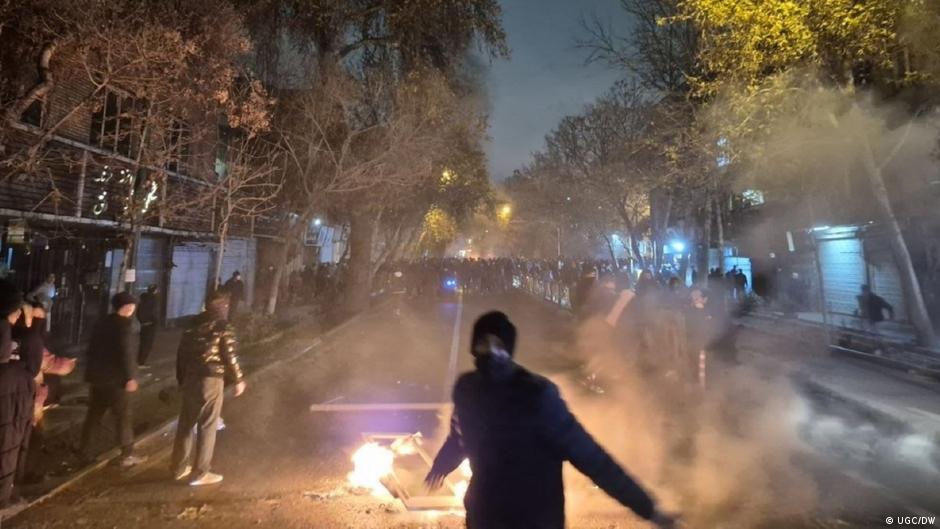
Unrest is continuing to grow in Iran, with street demonstrations raging in cities across the country amid an internet blackout.
Niloofar Gholami from DW’s Persian Service has been watching developments closely and provided her insights on what has been taking place.
“I was all up all night following the developments, and what I’m hearing and seeing is that the crowd are dramatically different from previous waves of protest, both in scale and in intensity,” Gholami said, adding that the numbers of protesters involved “is unprecedented compared to past years.”
And as the numbers of those involved in protests grows, the government’s response has become “significantly more violent,” Gholami said, pointing to the dozens reported to have been killed.
“Due to severe communication restrictions, verified deaths still [remain] extremely difficult to calculate and to obtain,” Gholami said.
On the question of government not backing down, Gholami said: “The scale of official threats have been extremely high. Authorities openly warn people that if live ammunition is used, they should not complain.”
Protesters have been “labeled as terrorists and agents of foreign enemies,” something Gholami said she had not seen happen before.
“Fear is no longer working the way it used to, despite these warnings and increasingly violent crackdown, people are still coming out,” Gholami said.
“I guess for many Iranians, the sense of injustice and desperation now outweighs the fear of repression,” Gholami said.
As to whether or not Reza Pahlavi, the exiled son of the last shah of Iran, has any sway on demonstrators and the situation in Iran, Gholami said: “Given his support base and the current situation in Iran, yes: today, anyone who can have an impact on the protests carries weight.”
“So Reza Pahlavi has the support of a significant portion of people inside Iran. But it is important to stress that not all protesters are his supporters,” Gholami pointed out.
She said that Reza Pahlavi stands out because “monarchists have a public figure, while other opposition forces do not.”