
Wealth is worthless when it can’t improve lives or conditions. Likewise, health is wealth. But it only pays when you know how to use it.
You can be healthy and still experience recurring patterns of exhaustion or illness. I haven’t been hospitalized in years, but I’ve been under stress that continuously drains my energy daily.
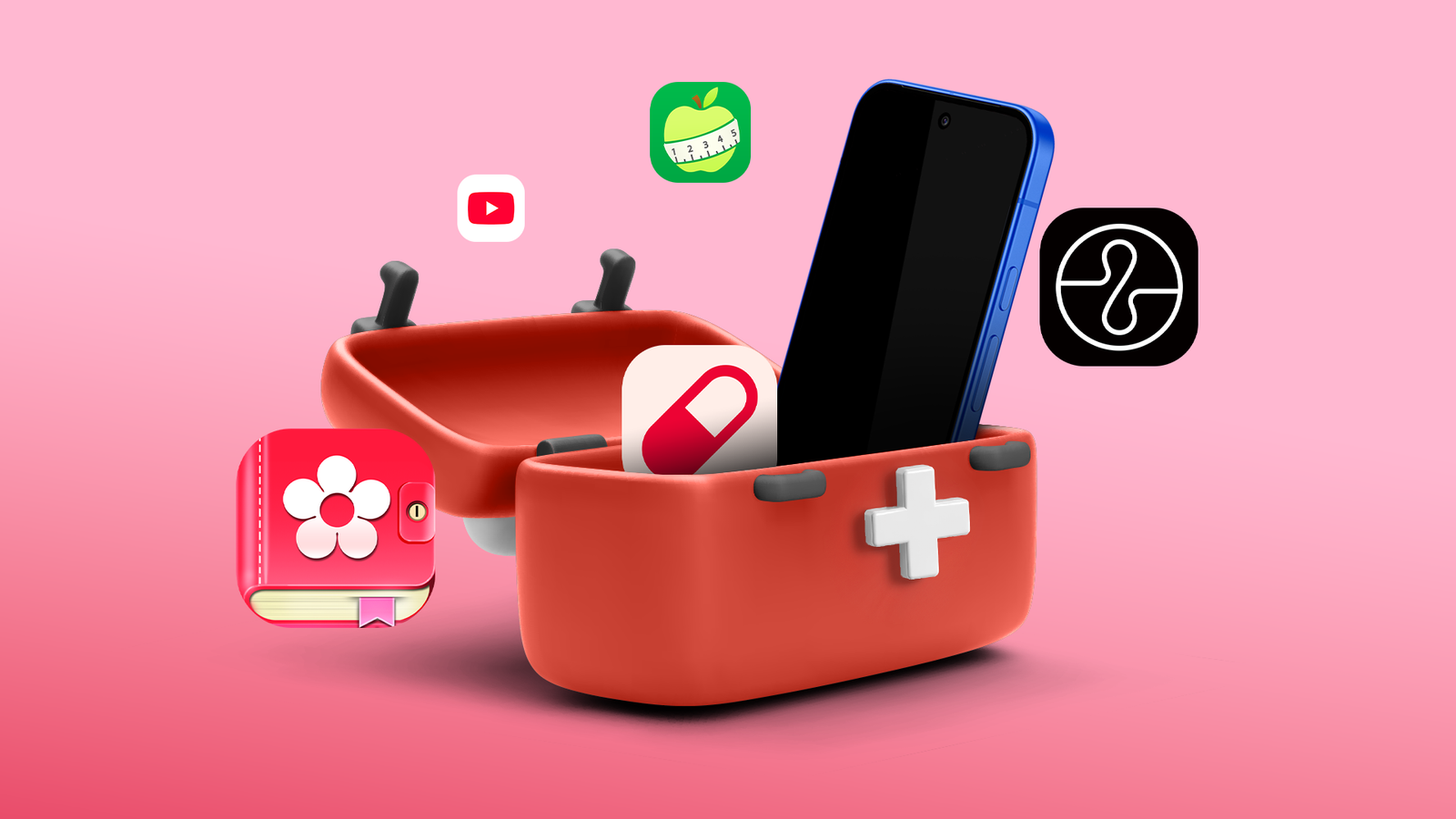
I’m now learning that my body is as agile as I’m aware of. So I’m more intentional about my habits. I’ve curated a suite of eight apps that support different parts of my wellbeing.
Each one plays a small role on my mobile device. But together, they’ve changed how prepared I feel when alarms go off in my system. They’ll help you too.
The listed apps are best used as aids for awareness and habit tracking. Do not use them for self-diagnosis or treatment.
If you have ongoing symptoms or worsening health issues, consult a professional.
Related
8 Android apps that rescue me from stress spirals when I’m having a complete meltdown
Close all open tabs in your mind
Calorie Counter: Measure your transformation
My body mass index (BMI) sat far below where it should have been for years. Also, my weight hovered stubbornly within the same range no matter what I did.
I have a fast metabolism, so merely eating wasn’t enough. I needed to eat strategically. Eventually, I stopped treating it like a willpower issue and sought help from a dietitian.
In combination with the meal plan they helped me build, I downloaded multiple apps to track my growth journey.
Calorie Counter stood out because it has everything in one app. I can record my diet, log water intake, track calories and macros, take progress pictures, and see how close I am to my goals.
There’s also a built-in shopping list and recipe-building feature, which makes it easier to plan ahead rather than improvising food when I’m already tired or hungry.
I can set a realistic weight goal and see the deficit or surplus I’m operating in. Between last year and now, I’ve successfully reached my target of gaining 0.6 kg monthly.
YouTube: Watch your body grow strong
YouTube is the only exercise app I need, and it’s free. My go-to channels include Juice & Toya, MrAndMrsMuscle, and MadFit.
Their programs range from strength training and low-impact cardio to HIIT and mobility.
The videos are roughly 15 to 60 minutes. I never skip leg and glute days because of how interesting they make the process.
I did give the gym a fair try for a month, but it wasn’t for me. I disliked the crowds and the constant awareness of shared equipment was overstimulating.
I already had basic equipment at home and control of my environment. So, I can work out comfortably and consistently with reminders.
Endel: Focus, relax, and sleep
Sleep is where the body does its repair work.
It’s also an underrated skincare tool that promotes blood flow and collagen production. These restore moisture to the barrier and balance hormones that directly resolve dullness.
I noticed a major difference when I committed to a consistent sleep routine. My under-eye area looked less hollow, and there’s an overall glow. Endel has contributed to my routine.
The app relies on adaptive soundscapes that nudge the brain into calmer states almost immediately. Personally, I prefer it over the Calm app.
You choose whether you want to focus, relax, sleep, or do something else. The app generates continuous audio that subtly transitions without breaking.
I passed out within five minutes on the first day I used it.
Period Calendar: Be ready for Aunt Flo’s visits
Periods are hardly punctual or pleasant for people who menstruate. The symptoms vary for everyone.
Hence, documenting them helps you make nearly accurate predictions and detect abnormalities in your cycle.
My Calendar makes logging such sensitive information easy. You’ll enter when cycle starts and ends, plus how your body feels with emojis.
There is cloud storage, but I avoid it. I prefer exporting my data via email attachment, which gives me control over where it goes and who sees it.
If you want, add your partner to the app and share your cycle journey. It helps them understand what you’re going through. You can also track a loved one’s cycle with consent.
If you have a doctor’s appointment, export your logs ahead of time in the app’s settings menu.
MyTherapy Pill Reminder: Your nudge to feel better
Forgetting medication is common and not always about carelessness. An overwhelmed mind or simply not seeing the prescriptions can make it easy to forget.
Still, skipping them reduces their effectiveness. Consistency is what stops symptoms from returning or worsening.
Use reminders or mobile pill organizers to prevent it. MyTherapy Pill Reminder, for instance, collects just enough information to automate your routine.
You’ll add a drug and tell it how frequently you take it, and at what time. Link the medication to a health condition for context and choose whether it’s for you or someone you care for.
When done, you enter how much medication you have. The app then tracks usage and alerts you when it’s time to take them, or if you’re running low. Tap the notifications to confirm you’ve taken them.
Waffle: Share your thoughts with loved ones
You’ve probably tried journaling before, but have you ever tried group journaling? It sounds invasive to your thoughts, but it’s actually fun with the right people.
Waffle is a private space where you’ll choose a small circle you trust. You all answer guided daily prompts and reflect together.
It takes the loneliness out of journaling without turning it into a performance like social media does. I wish I could eat the app because of how effective the concept is.
It matters more than you know because social health affects mental health. If your social world is empty or overwhelming, your mind won’t be at peace.
But when you’re supported, you’ll cope through anything and feel less anxious about challenges.
That said, group journaling on the app only works if you have real-life friendships. The most authentic way to make them is to put yourself in public spaces.
Try joining physical skill classes, clubs, volunteer groups, workshops, or any activity that brings the same faces together for familiarity to turn into friendship.
How We Feel: Name and understand those emotions
Many people may avoid mental health solutions if they feel too clinical.
It’s unsettling to be treated like something is wrong with you, instead of acknowledging that there’s simply something wrong.
How We Feel is among the few apps that avoid this trap. Its design alone is comfy. You’re invited to feel at home with your thoughts.
It prompts you to log your energy (high or low) and feelings (pleasant or unpleasant) daily. Then you’ll describe what activities you are doing at the moment.
Over time, you can analyze your emotions and take steps to improve them. The app also offers supportive tools.
Gratitude moments and animated exercises gently nudge you to regulate your state after you’ve checked in.
Google Weather: Predict your day before breathing it
One of the best environmental health tools has been sitting right under my nose. Google Weather was on my phone for years, but mostly ignored.
I kept it because it came preinstalled. The forecasts were mostly inaccurate, so I never took it seriously. Out of boredom and mindless scrolling, I opened it recently and studied it.
I was surprised to see it measured more than temperatures and rain. It also offers insight on air quality, Ultraviolet levels, heat warnings, pollution breakdowns, and even mosquito activity.
I watched YouTube explainers and visited different websites to understand what those numbers meant.
Since then, I’ve taken them more seriously. I think twice about going out without a mask when the air quality spikes. I also pay attention to UV exposure and wear my sunscreen accordingly.
Google Drive: Stash your body’s secrets
Credit: Lucas Gouveia / Android Police | klyaksun / Shutterstock
Google Drive is the best place I can think of to keep scanned copies of my medical records, alongside the physical originals.
The biggest reason is quick access.
When a document is in Drive, it’s available on every device I use. If I ever need a record urgently, I don’t have to go home and dig through my manila folder.
I’ll simply search for the specific file name and download it instantly or send it as a link.
Google Drive also lets you scan files directly before uploading them.
There are many other ways to scan documents on Android. My phone already has a built-in document scanner, so I don’t need a third-party app.
Related
Best nutrition and diet tracking apps on Android
You are what you eat
Check in before your body checks out
You can see now that health is a broad concept. A person is only completely healthy when their physical, mental, and social wellbeing functions well enough to support daily life.
Unfortunately, your body isn’t like your devices that always send notifications or misbehave when something is wrong. There could be silent threats.
Technology has made it easier to stay aware and care for ourselves. But it doesn’t replace regular checkups. If you haven’t been doing them for a while, here’s your sign.
A simple rule is to do a general health check at least once a year. It’s better to catch things early and prevent them than to wait until later, when there’s no remedy.