
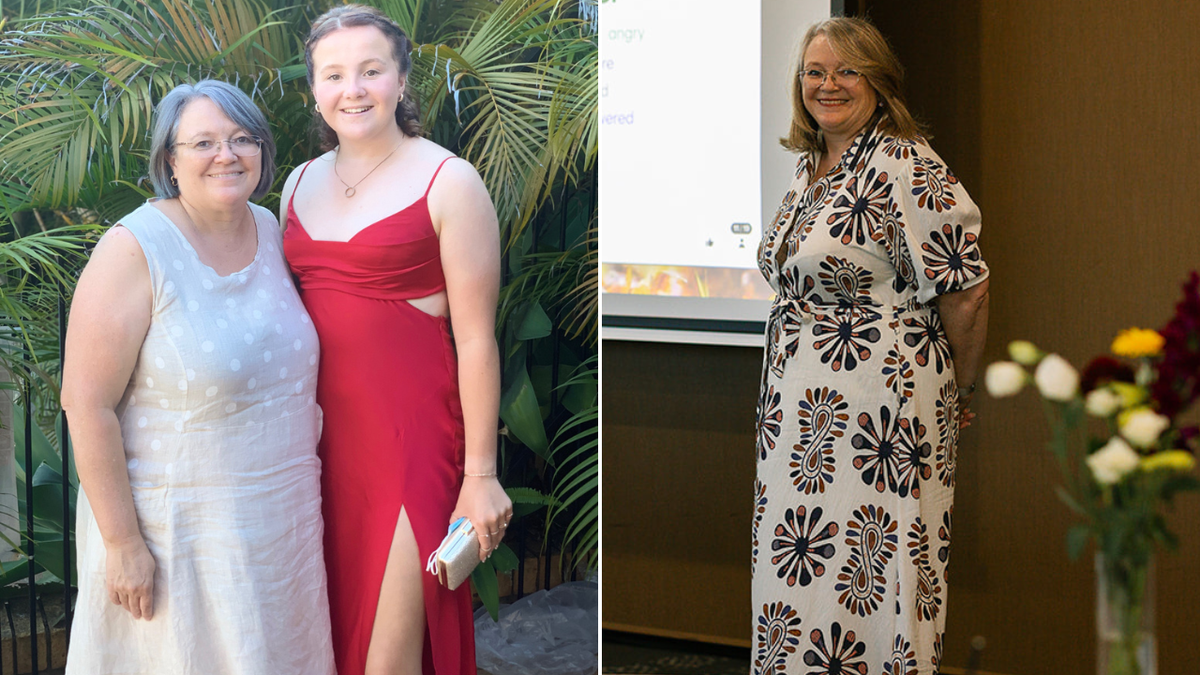
After years of trying different diets and exercise programs Susan Judd turned to weight-loss injections for help.
But only recently did the 58-year-old from Port Macquarie, NSW, learn that losing weight so rapidly with medication can come with hidden risks.
The use of weight-loss drugs such as Ozempic, Wegovy and Mounjaro is surging across Australia.
Know the news with the 7NEWS app: Download today Arrow
New research from Deakin University warns that rapid weight loss without strength-based exercise can lead to long-term health consequences for older people — including a loss of muscle mass, strength and bone density.
Judd lost 10kg in a matter of months, stabilising her weight and improving her overall health.
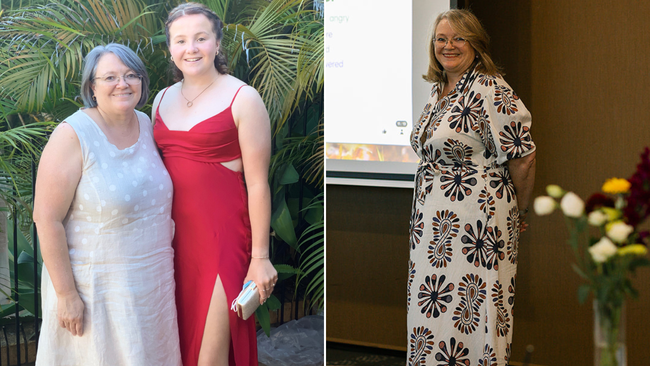 Susan Judd lost 10kg rapidly after turning to weight-loss injections. Credit: Supplied
 The use of weight-loss injections, including Ozempic, Wegovy and Mounjaro, are surging across Australia. Credit: AP
While she credits the injections with delivering dramatic results, she says the “miracle” drugs are not the end of the journey.
“I’ve always related my loss of muscle mass to menopause,” Judd told 7NEWS.com.au.
“I never really thought about it being Ozempic or Mounjaro.”
At the age of 27 Judd was diagnosed with type 1 diabetes, which is when the immune system destroys insulin-producing cells in the pancreas, leading to insufficient insulin and high blood sugar.
Patients with the condition need lifelong insulin replacement via injections or pumps.
After several rounds of IVF to have her children — now 18 and 20 — Judd entered perimenopause in her mid-40s.
“My hormones were out of kilter, my blood glucose sugars went haywire and I was accumulating body weight — even my bras wouldn’t fit me properly,” she said.
“It seemed like I put weight on overnight — everywhere.”
 At her heaviest, Judd tipped the scales at 95kg placing her in the obese category. Credit: Supplied
Judd said she tried everything to lose the weight, including running, at-home workouts and dieting.
“By the time I hit 50, nothing was working. Nothing,” she said.
“It didn’t matter what I did.”
At her heaviest, Judd weighed 95kg — a significant figure for her 162cm frame putting her in the obese category.
“Every time I went to the endocrinologist she put me on the scales,” Judd recalled.
“It was so depressing.”
Turning to weight-loss injections
Like many Australians, Judd became aware of Ozempic three years ago, as dramatic weight-loss stories dominated headlines and social media.
“People were really losing weight,” she said.
“I ran into a girlfriend who had gone from a size 18 down to a size 10 after using the medication.”
After discussing the option with her endocrinologist — and undergoing careful checks due to her type 1 diabetes — she was given clearance to use the treatment.
She dropped 10kg quickly but suffered severe gastrointestinal side effects, including constant diarrhoea and vomiting.
“I constantly felt nauseous,” she said.
“I couldn’t eat. I went off food, coffee — everything.”
While travelling to Turkey with her family in 2024, her condition escalated dramatically.
“I threw up all through the hotel foyer and into the garden,” she recalled.
“They called an ambulance and took me to the emergency room. I was put on a drip.”
After returning to Australia, her endocrinologist switched her to Mounjaro — and the difference was immediate.
 The Judds Credit: Lucy Humphries Photography/Lucy Humphries Photography
While her weight has stabilised at around 84kg, Judd said the biggest win has been her long-term health, rather than a dramatic transformation.
She explained the medication has suppressed her hunger and she no longer craves processed and fatty foods.
“My blood glucose levels, and my liver and kidney functions are perfect,” Judd said.
“These are the kinds of things type 1s have to worry about — but they’re all as good as they’ve ever been in 30 years, in the normal range.”
The missing piece: muscle and movement
Despite losing the weight and feeling healthier, Judd noticed she had lost strength.
She initially put it down to menopause, as it can decrease muscle mass and density due to declining estrogen.
But Judd has since learnt that the weight-loss injections could also play a part.
“I’m definitely not as strong as I used to be,” Judd said.
“But again, I’ve always linked that to ageing.”
The new data suggests people shedding kilos quickly on GLP-1 medications risk long-term chronic health issues if the weight loss is not supported by physical activity.
Research from Deakin University has found people who lose weight rapidly without exercising risk losing lean muscle mass, strength and bone density.
Australia’s peak physical activity body, AUSactive, says strength and weight-bearing exercise is critical to protect muscles, support bone health and reduce future health risks.
Now, Judd says she’s far more mindful of how she moves her body.
She practises Tai Chi several times a week, alongside strength training.
“I just love the grounding. It makes me happy,” she said. “It’s really good for my mental health.”
AUSactive CEO Ken Griffin said exercise is not optional for people using the drugs.
 AUSactive CEO Ken Griffin said exercise is not optional for people using the drugs. Credit: WALDECOMMS
“Structured physical activity, especially resistance training and weight-bearing exercise, is critical to protect and build muscle, protect bones and help keep the weight off safely,” Griffin said.
“For GLP-1 users, a fitness professional should be as familiar as their GP or pharmacist.”
AUSactive is backing the World Health Organisation’s warning that exercise must sit alongside medication – not come after it.
“Exercise isn’t optional,” Griffin said.
“It’s the safety net that protects muscle, protects bones, supports metabolism and prevents future hospitalisations.”
Injections don’t replace movement
While Judd, author of Hot, Foggy & Fabulous, expects to remain on Mounjaro long-term, she’s clear the medication isn’t a shortcut — and shouldn’t be treated as one.
 Susan Judd is now mindful of how she moves her body as she’ll most likely be on the weight-loss injections for life. Credit: Lucy Humphries Photography
“Am I going to be on it for the rest of my life? Probably,” she said.
“If I give it up, will I just skyrocket back up? I’m too scared to find out.”
As Australia’s use of weight-loss medications continues to climb, her message is simple: the injections can help but they don’t replace movement.
“You can’t fix one thing and ignore everything else,” she said.
“You still have to look after your body.”
A-lister flaunts transformation after confirming use of weight-loss drug
1 min read
Ozempic offers new hope for sufferers of alcohol addiction
3 min read