

Thousands of people in parts of Northern Ireland are being offered free testing for a disorder commonly known as the Celtic Curse.
Haemochromatosis is the most common genetic disorder in Northern Ireland and is mostly found in people of Irish and Scots ancestry.
The disorder means a person is more at risk of absorbing too much iron and it can start to damage other parts of their body.
Symptoms can range from chronic fatigue, joint pain, memory issues, abdominal pain and skin conditions. If left untreated it can lead to serious long-term health complications.
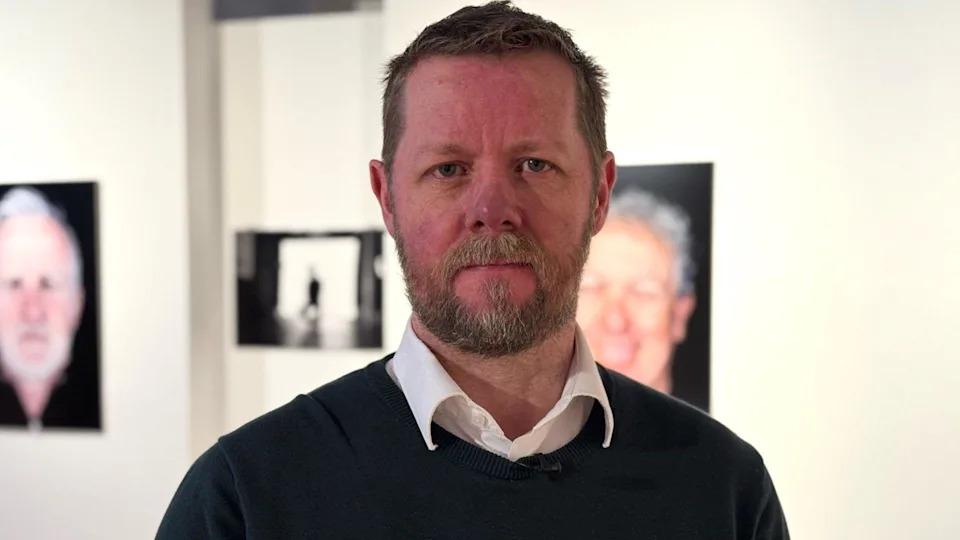
Neil Irwin works for Haemochromatosis UK and was diagnosed with the condition seven years ago [BBC]
BBC News NI previously reported on concerns that not enough people were being tested for it in Northern Ireland because of the cost.
The Department of Health’s current policy is to screen for genetic haemochromatosis when a patient shows symptoms.
But a charity has said it is hoping to capture more information on areas of Northern Ireland where people may be undiagnosed.
Haemochromatosis UK will offer up to 23,500 households free genetic screening in Irvinestown, Portadown, Ballymena and Magherafelt.
Neil Irwin works for Haemochromatosis UK and was diagnosed with the condition seven years ago.
He says early diagnosis is key to allow people access to effective treatments.
“In recent years we have had anecdotal evidence from areas like Mid Ulster where people have been contacting us saying their area seems to have high rates of haemochromatosis,” he said.
“But there is a lack of official data, so we’re looking to fill in some of those blank spots in Northern Ireland that have never screened before, to paint a more detailed picture of the prevalence of the condition.”
‘I knew something was wrong’
Collette McKnight is a mother of three who lives in rural County Down.
She was diagnosed with haemochromatosis in 2019.
“I would have had severe fatigue and pains, but I just would have put it down to being busy with the children and things like that, “he said.
“But then I started to develop heart palpitations and I knew something else was wrong.”
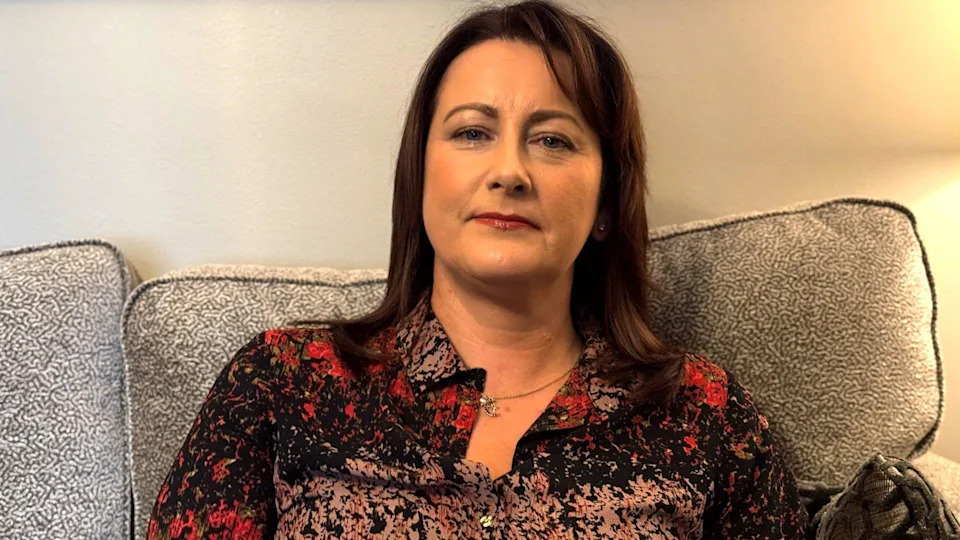
Collette McKnight was diagnosed with haemochromatosis in 2019 [BBC]
She added: “When the tests came back confirming haemochromatosis, I hadn’t a clue what it was.
“Everyday is different. Some days it’s joint pain, other days it’s breathing problems, but it’s always dealing with the severe fatigue and that can be very difficult.”
She is now treated with therapeutic blood removal, which helps lower iron levels and ease symptoms caused by the condition.
What is the Celtic curse?
The gene mutation that causes most cases of hereditary haemochromatosis is believed to have originated in the Celtic population of Europe.
DNA analysis of the genomes of a Bronze Age farmer on Rathlin Island off the coast of County Antrim showed that it was already established by that period.
Earlier still, the remains of a Neolithic woman found at Ballynahatty near Belfast show that she carried a different variant also associated with an increased risk of the disorder.
As part of the latest screening campaign, Haemochromatosis UK is bringing a touring photographic exhibition to Northern Ireland.
The exhibition, We are Overloaded, opens to the public at the Millennium Court in Portadown on 19 January.
It features a photographs of people living with haemochromatosis by Pulitzer Prize-winning photojournalist Cathal McNaughton.
Finbar Polin, from Gilford, is featured in the exhibition and was diagnosed with haemochromatosis during the pandemic.
Speaking to BBC News NI, he said: “I’d never heard of the Celtic curse until I was diagnosed.
“It’s scary initially because it affects you mentally; you don’t know where you are going with it, but being part of the charity and meeting other people with it has really helped.
“That’s where I think the exhibition is really powerful, each picture is a person with a story.”
On the issue of screening, the Department of Health said it was guided by advice from UK National Screening Committee (UK NSC).
Among its recommendations on haemochromatosis, UK NSC stated that there was “limited evidence on whether treatment is more effective in individuals without symptoms, compared with those who have symptoms”.
But Haemochromatosis UK believe it is important to create an accurate picture as possible of the number of people living with the condition.
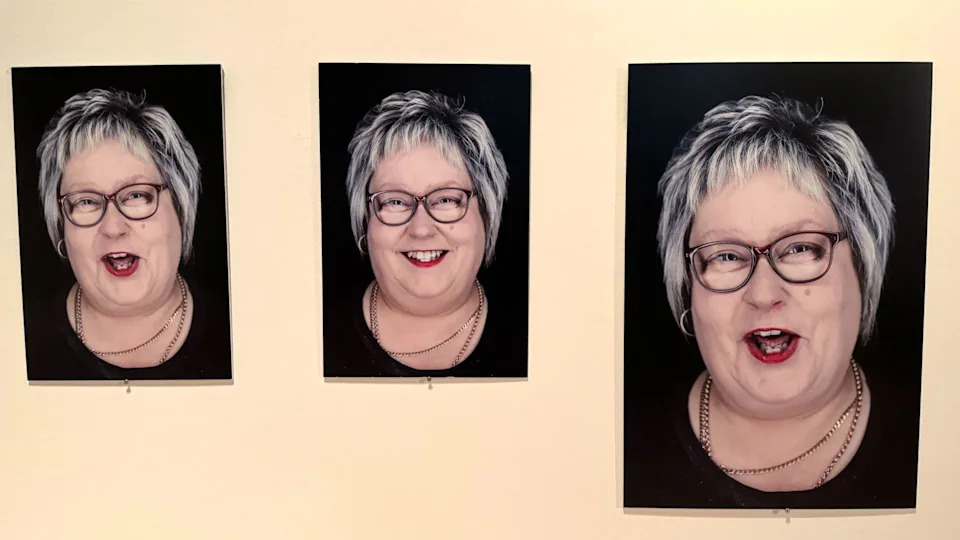
The We are Overloaded exhibition features the photos and stories of people living with haemochromatosis [BBC]
Previous research by the charity suggests that as many as one in 10 people are at risk in Northern Ireland of genetic haemochromatosis.
The charity previously ran a campaign to fund and offer thousands of households in Belfast, Carrickfergus and Londonderry with free self-test kits.
A Haemochromatosis UK genetic testing kit usually costs about £130.
The latest kits being rolled out by Haemochromatosis UK were purchased with donations and funding received by the charity.
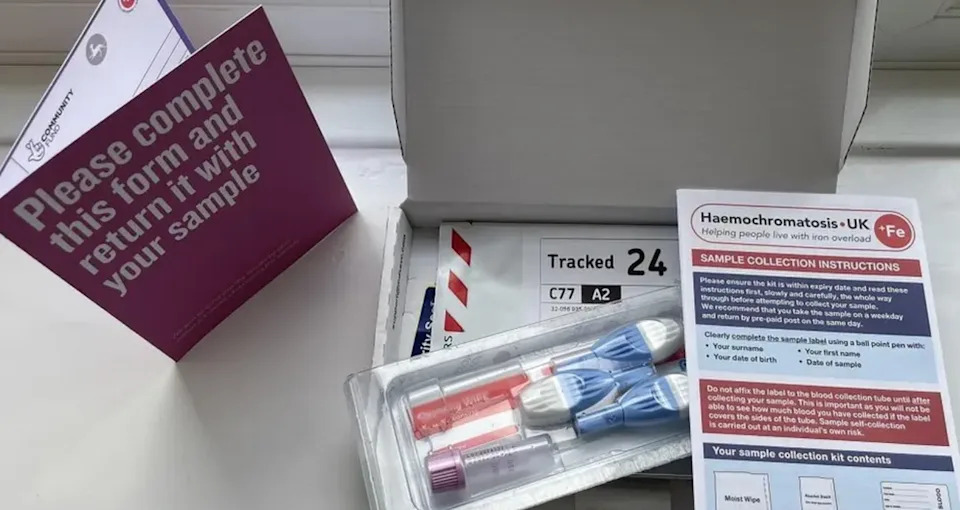
Haemochromatosis UK will offer up to 23,500 households free genetic screening [BBC]
Businessman James Hagan, founder of Hagan Homes, is one of the donors.
He said: “Someone very close to me was recently diagnosed with genetic haemochromatosis — despite having no symptoms.
“Their experience highlights exactly why this campaign is so important. Most people affected have no warning signs, yet the potential consequences can be extremely serious if the condition goes undetected.”
Haemochromatosis UK has said that in the coming weeks and months , households in the relevant postcodes will receive information about genetic haemochromatosis.
In the package they will be offered a free genetic test, alongside access to counselling to help them understand their results.