
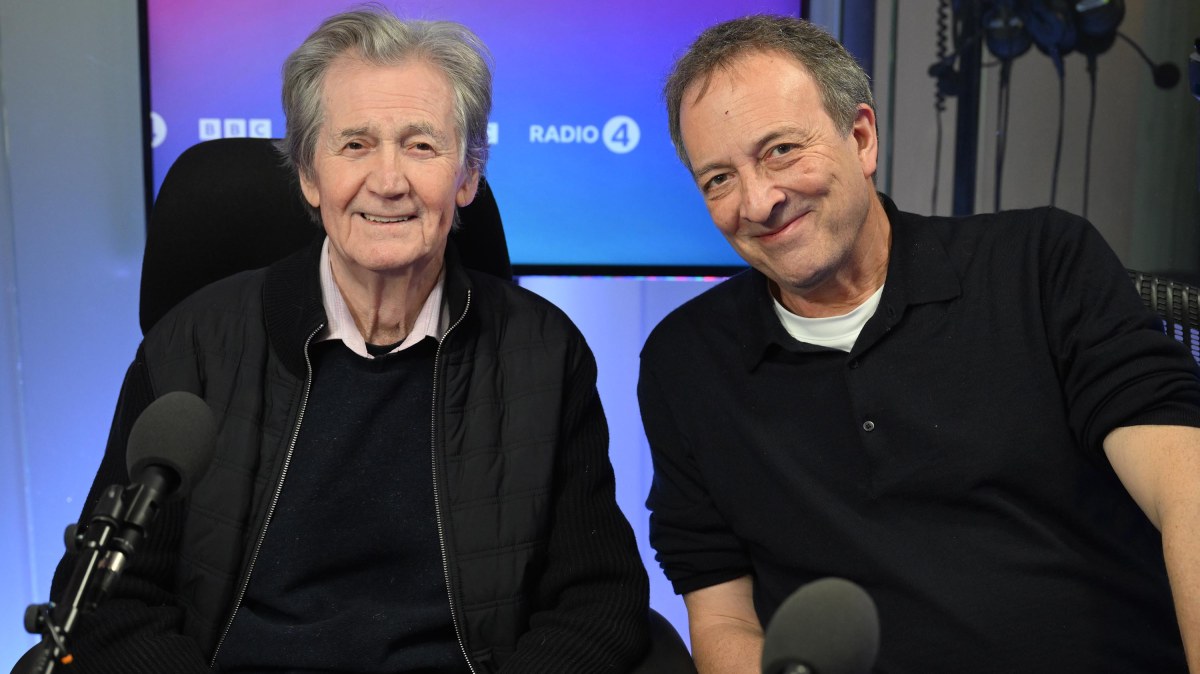
During his 27 years at the helm of Radio 4’s In Our Time, Melvyn Bragg bestowed on his discussion programme the unofficial motto, “Never knowingly relevant”. While many other radio shows strive for topicality and modern relevance, In Our Time has waltzed at will between intellectual explorations of plate tectonics, 17th-century vases, philosophical theories and Algeria’s 1871 Mokrani Revolt against French rule.
Misha Glenny, the man charged with filling Bragg’s well-worn shoes, feels that “never knowingly relevant” did a slight disservice to his predecessor’s work, guiding listeners through academic discussions on history, philosophy, science, art and more. “What I have always noticed is that it’s usually unknowingly relevant,” Glenny observes, shortly before his first programme is due on the airwaves on Thursday.
His point is that discussions about distant periods of history often contain “echoes” that resonate now, in a time of “great turmoil and great change — socially, politically, economically and technologically”. “If you’re talking about, say, the Reformation and the polarisation of society that took place very dramatically and violently in [the 16th century], you cannot help but hear the echoes about what we’re all experiencing today,” he says. “So I will be aware of that relevance, even if I want to keep it largely unknowing.”
This may provide some clue as to how Glenny, 67, plans to approach the task of anchoring a programme that was launched experimentally by Bragg in 1998 and has risen to become an institution of British radio.
On the face of it, the success of In Our Time, which reportedly attracts two million listeners a week, doesn’t make much sense. In the social media age, when we’ve all apparently had enough of experts, how does anyone find time to listen to a 45-minute discussion between three academics calmly chaired by a no-frills BBC host? Glenny says: “We are inherently curious. And if you can get somebody to explain something, which is actually a vital part of one’s experience but you’ve never actually understood it, in a way that makes it comprehensible, then you’re on to a winner.”
In Our Time has also become one of BBC Sounds’ most popular podcasts with those aged under 35. So much for dwindling attention spans, eh? “The attention span thing doesn’t just affect under-35s, it affects all of us,” says Glenny, who forces himself to separate from his mobile phone for at least two hours a day so he can read and concentrate.
• Melvyn Bragg at 85: ‘I don’t see the point of retiring’
“I know my attention span has been hammered since the advent of the smartphone,” he adds. “For young people, it must be exhausting following TikTok the whole time and all the other distractions that are going on — utterly shattering and exhausting. And just to listen and consider is a really valuable thing that this programme offers to the audience.”
So, who is In Our Time’s new frontman? Brought up in London and Oxford, the son of the Russian literature translator Michael, Glenny studied German and drama at the University of Bristol. He flirted with the idea of becoming an actor but “very sensibly, I decided against that”.
Instead, he pursued linguistics — he can speak German, Czech, Serbo-Croat, Portuguese and French, with “smatterings of Hungarian and Albanian” — before a career in journalism beckoned. He made his name reporting for the BBC on the Balkan wars and latterly as a writer of books. He wrote McMafia, about post-Soviet Union corruption, and was an executive producer on the BBC drama series of the same name, which starred James Norton.
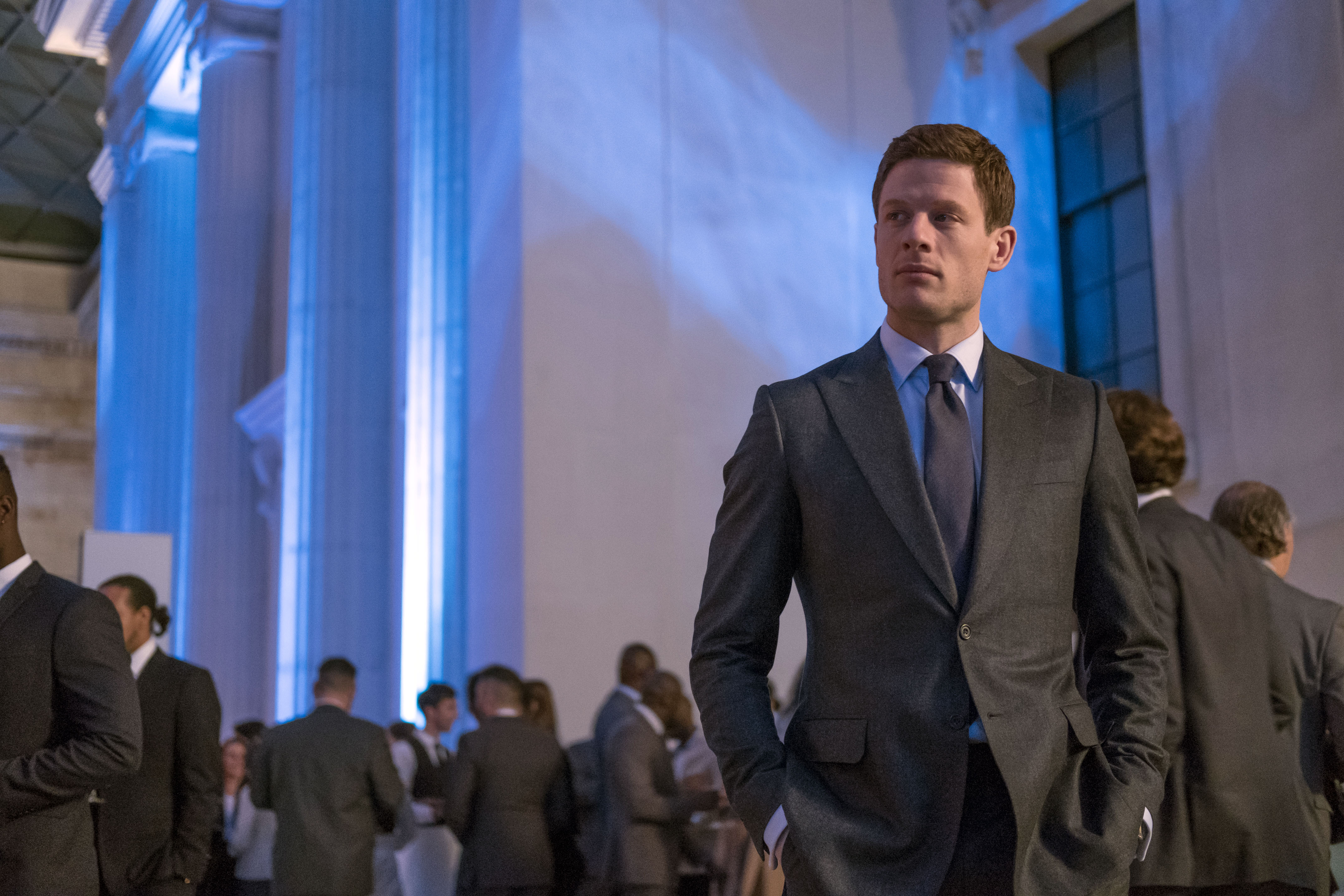
Glenny wrote McMafia and was an executive producer on the BBC drama series of the same name, which starred James Norton
NICK WALL/BBC
Clearly, Glenny, who has served as the rector of Vienna’s Institute for Human Sciences since 2022, and is the husband of his fellow BBC broadcaster Kirsty Lang, has the bona fides for In Our Time, but his appointment still came as a surprise to many.
Stephen Fry, the household name, former QI presenter and sometime actor, had been tipped as the man to breathe new life into Bragg’s old show. “I was told that Stephen didn’t apply,” Glenny says, politely ignoring a subtle invitation to look down his nose at last year’s The Celebrity Traitors contestant. “There was apparently a lot of mythology around [Fry getting the job]. Of course, he would have been very brilliant, precisely because he’s such a polymath and so erudite and a great talker.”
Glenny seems intent on not rocking the boat when he makes his debut on In Our Time. “I will not be going in like a bulldozer,” is how he puts it. “Melvyn’s legacy is absolutely huge and I want to build on that rather than demolish it.”
He says the show’s three producers and editor will “set the agenda entirely for the first couple of months or so — they’ve already got a whole series of topics lined up. But after that I want to do it in collaboration with them.” He has his sights set on the Seven Years’ War and microchips.
Glenny’s challenges will stretch beyond merely filling the void left by the much-loved Bragg, 86. Like the BBC at large, In Our Time needs to fight to retain relevance in an age when the state-owned broadcaster is losing ground to digital media.
• Melvyn Braggs’s manifesto for magic moments
It’s difficult not to view The Rest Is History, Dominic Sandbrook and Tom Holland’s wildly popular podcast, as a direct competitor, with listeners moving away from radio schedules and towards Spotify. And their success is encouraging others to have a go. Even Piers Morgan has a history podcast (although History Uncensored, while produced by Morgan’s company, is hosted by the former CNN anchor Bianca Nobilo).
“My hat goes off to them,” Glenny says of Sandbrook and Holland. “Just as In Our Time evolved under Melvyn, it will evolve under me, if only because the media environment is different and you have to find ways of competing with shows like The Rest Is History without simply aping them.”
Glenny’s plan, after settling his feet under the In Our Time desk, is to find ways “forward in a world that is dominated by TikTok, by podcasts, where the BBC’s radio monopoly has effectively been breached and it needs to react in a different way”. But he has no interest in pursuing the popular “talking-heads podcast” approach.
Many podcasts stretch out their discussions on topics over several hours or even multiple episodes. The Rest Is History, for instance, recently released a five-part series on Jack the Ripper. Might In Our Time extend its discussions beyond the standard 45 minutes?
• How to make a podcast — the expert guide
Glenny wrinkles his nose. “I can’t imagine doing the Reformation, Luther and the German princes stretching out over five episodes. It would be really hard to hold the audience,” he says. “Jack the Ripper is slightly different because there’s always been the kind of whodunnit and salacious aspect to Jack the Ripper, which is endlessly entertaining and attractive to people. I know The Rest Is History does very serious subjects but the sorts of subjects we want to do wouldn’t lend themselves to that.”
When I ask Glenny to name his favourite radio shows and podcasts apart from In Our Time, he tells me Czech public radio is “fantastic”. At home, he enjoys Radio 4’s Start the Week, Feedback and long-form documentary dramas such as Glenn Patterson’s The Brighton Bomb. The BBC will be pleased with its new presenter’s brand loyalty.
• I’ve listened to every episode of In Our Time. These are the 15 best
“It’s very difficult now outside of the BBC to hear structured documentaries, which are not just people talking about what they think about a subject,” Glenny says. “Most of the shows made outside of the BBC now are talking-heads podcasts, which is fine.” But not, I sense, Glenny’s cup of tea? “Well, I don’t mind it,” he says evenly. “But a well-produced documentary or feature … it’s a very different experience.”
Before letting Glenny go, I must ask him — after Bragg’s 27-year stint — how long he expects to be presenting In Our Time. “I promise you,” he says, “I won’t be doing it as long as Melvyn.”
What topics would you like to see featured on In Our Time? Let us know in the comments below
The first weekly episode of In Our Time presented by Misha Glenny is on BBC Radio 4 and BBC Sounds on Thursday, January 15 at 9am. McMafia: Seriously Organised Crime by Misha Glenny is published by Vintage, £10.99