
New report calls for stronger public role in building domestic supply chains and inclusive workforce.
Abu Dhabi, UAE/Geneva, Switzerland, 11 January 2026 – Despite renewable energy installations hitting a new peak, jobs in the sector only increased by 2.3% from 2023, reaching 16.6 million in 2024. The newly released Renewable Energy and Jobs – Annual Review 2025 by the International Renewable Energy Agency (IRENA) and the International Labour Organization (ILO) highlights the increasing impact of geopolitical and geoeconomic frictions, as well as growing automation, to the renewable energy workforce.
As in previous years, uneven development continues across the world. China remains the preeminent force in both deployment of generating capacities and equipment manufacturing, mainly due to its integrated, large-scale supply chains that deliver equipment at unmatched prices.
In 2024, China created an estimated 7.3 million renewable energy jobs, or 44% of the global total. The EU followed suit with the same total as in 2023 at 1.8 million jobs. Brazil’s renewables employment runs to 1.4 million, while India’s and the United States’ barely grew from around 1 million to 1.3 million and 1.1 million, respectively.
Commenting on this trend, IRENA Director-General, Francesco La Camera, said, “Renewable energy deployment is booming, but the human side of the story is as important as the technological side. Governments must put people at the centre of their energy and climate objectives through trade and industrial policies that drive investments, build domestic capacity, and develop a skilled workforce along the supply chain. The geographical imbalance of the job growth reminds us to get international collaboration back on track. Countries that are lagging behind in the energy transition must be supported by the international community. This is essential not only to meet the goal of tripling renewable power capacity by 2030, but also to ensure that socio-economic benefits become lived realities for all, helping to shore up popular support for the transition.”
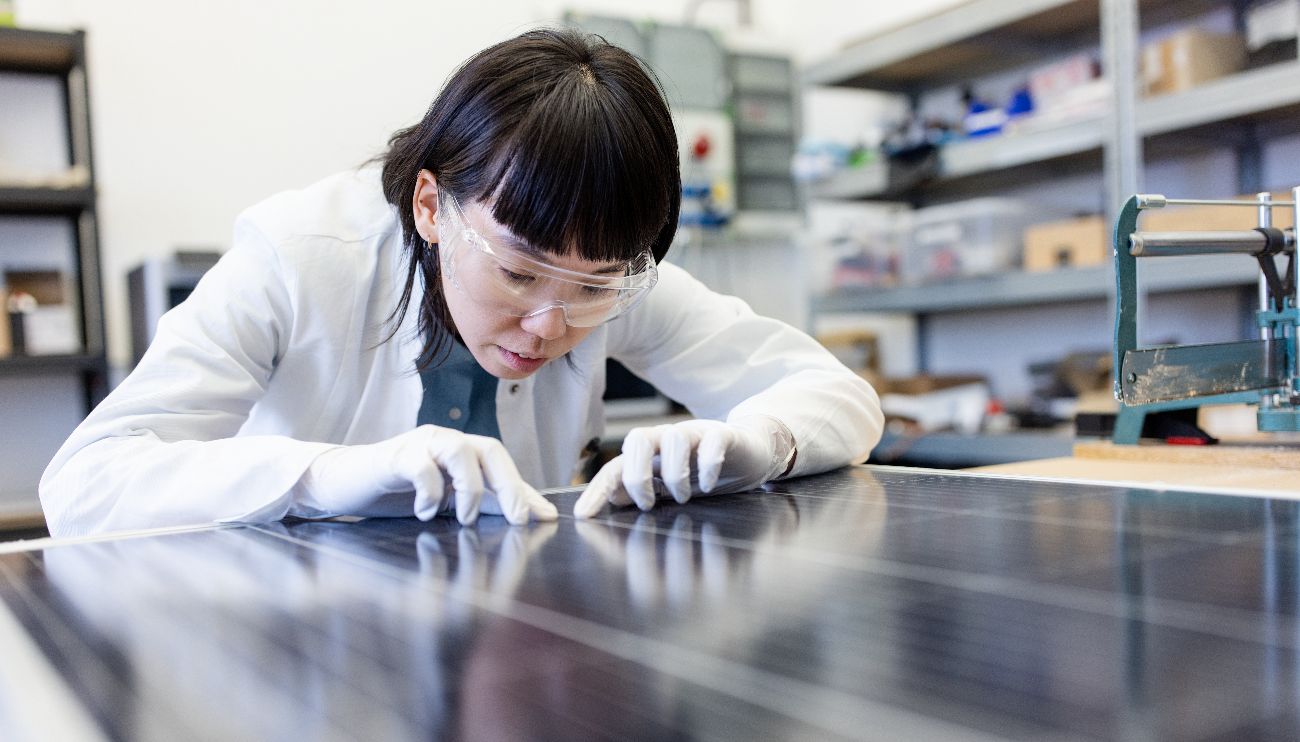
In terms of employment by technology, solar photovoltaics (PV) retains the lead, owing to the continued rapid expansion of installations and panel manufacturing plants. The industry employed 7.3 million people in 2024. Asian countries hosted 75% of the world’s PV jobs with China garnering the bulk of the employment at 4.2 million.
Liquid biofuels follow after solar PV, creating 2.6 million jobs in 2024 with 46.5% of the total jobs generated in Asia. Hydropower came in third place with 2.3 million jobs, and wind follows with 1.9 million jobs.
Beyond the numbers, this edition of the annual report underscores the need for more inclusion and equity in the renewable energy workforce. A just transition demands that no population groups—such as women and people with disabilities—are left at the margins. The renewables-based energy future must be shaped by diverse talents and perspectives. To this day, both groups’ potential remains under-utilised, which calls for deliberate, multifaceted and systemic action.
ILO Director-General, Gilbert F. Houngbo highlighted that “A just transition to a renewables-based future must be grounded in inclusion, dignity, and equal opportunity. As countries scale up renewable energy investments and job creation, we have a particular responsibility to ensure that accessibility for persons with disabilities – who too often face barriers to inclusion in labour markets despite their skills, experience and talent – is built into every stage of policy design and implementation. This requires accessible training systems, inclusive hiring practices, and workplaces that accommodate, welcome and respond to diverse needs and respect every worker’s rights. Disability inclusion is not only a matter of justice; it is essential for resilient labour markets and sustainable development. By removing barriers to equality and promoting decent work, we strengthen economies and ensure that the energy transition truly works for all.”
Fostering a culture that respects diversity and upholds inclusion and fairness requires sustained, inclusive policy frameworks including accessible education and training, labour market services, and other measures. Designing and shaping such policies requires that all stakeholders have a seat at the table, especially those who are all too readily sidelined. Discriminatory practices and outdated social and cultural norms must be left in the past for the energy transition to truly drive more successful economies for all members of the community.
This 12th edition of the Annual Review is part of IRENA’s extensive analytical work on the socio-economic impacts of a renewables-based energy transition. This is the 5th edition developed in collaboration with ILO. Building on its expertise on the world of work, the ILO contributed the report’s chapter on inclusion of people with disabilities.
Read the full report here.