
 Vicki Richardson

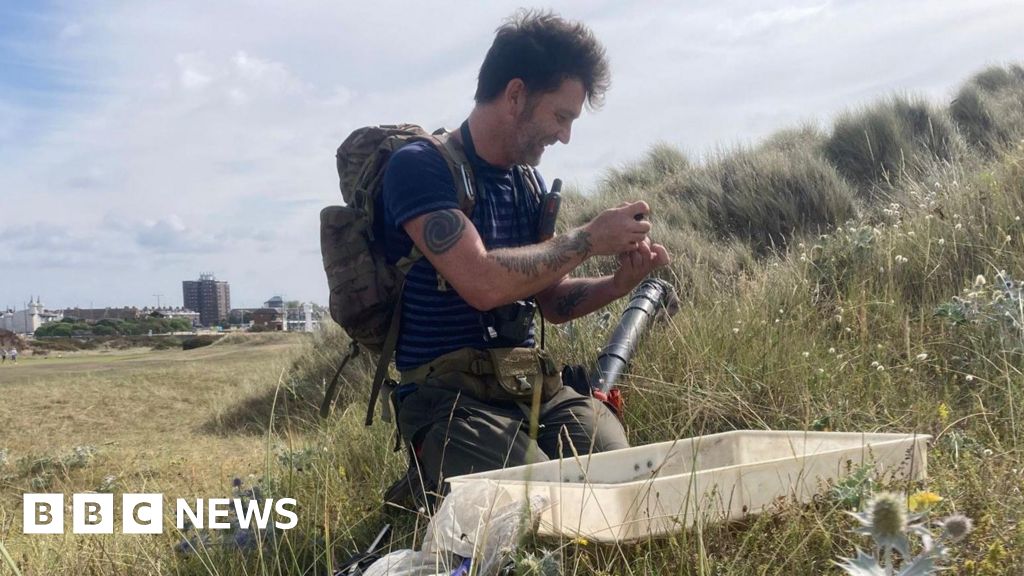
Graeme Lyons will be looking for species in all kinds of habitats from land to sea
An ecologist is hoping to see 6,000 different species in 2026.
Graeme Lyons, 47, who lives in Brighton, takes part in a hobby known as ‘pan-species listing’, where people compete to spot as many different living species as they can and record them on a website.
He wants more people to get involved and says the pastime can help people to become “brilliant all-round naturalists”.
“It changes how you perceive things…instead of just focusing on birds or plants like a lot of people do, suddenly everything is fair game,” he said.
Lyons helped to set up a website which has a leader board to show who has seen the most species, but he said it was “very gentle competitiveness”.
There are now hundreds of participants with the youngest five years old and the oldest 82, he believes.
Polycera quadrilineata is a type of sea slug Graeme Lyons saw off the Sussex coast
Micrommata virescens is known commonly as a Green Huntsman Spider
While any species counts towards the goal, he says people generally have favourites.
He said he had been “obsessed” with spiders for a long time, as “you’ve got to look at them up close under the microscope, and they have these incredible convoluted shapes”.
But recently, he said he had become enchanted by sea slugs.
“They’re like these little blobs of brightly coloured jelly,” he said.
“But you get them in the water and they unfurl into these incredible shapes and structures, multitudes of different colours.”
Lyons is using his challenge to raise money for Sussex Wildlife Trust and will mainly be looking within the county.
There are plenty of different habitats to search.
“A vegetated shingle will be wildly different to a bog, through to a rich fenland, down to chalk grassland,” he said.
‘Perfect’ for ADHD and autism
Lyons says he has ADHD and autism, so looking for plants and animals is “brilliant” for him.
“The fact that I’ve got this ever-present hobby, which is incredibly nerdy, incredibly detailed…it’s perfect,” he said.
He thinks it helps him spot things as “having a laser focus, that comes from neurodivergence”.
Pan-species listing is, as Lyons explains, “done on trust” and “something that you do as a bit of fun”, but people can create more detailed biological records which can be helpful for scientific research.