
Hugo (not his real name), an advanced clinical practitioner, was on the night shift in A&E at Great Western hospital, Swindon, when a drunk patient started swearing aggressively at a nurse. “When I asked if I could help, he told me, ‘Fuck off you gay cunt.’ When I asked him not to speak to me like that and to return to his seat in the waiting room, he just walked up the corridor swearing and repeatedly shouting ‘gaydar’.”
Hugo said he was initially more annoyed than scared, even when the patient grabbed a crutch and started swinging it about. “There wasn’t time to be frightened,” he said. “You’re just trying to protect your colleagues and the patients.” He called security and in the end the police had to arrest the patient. He said although he had experienced aggressive and violent behaviour – over the course of his career, he has been kicked, spat at, pushed and intimidated – “it’s still upsetting and psychologically exhausting to deal with.”
Now GWH hopes a renewed campaign to tackle violence and abuse will help staff such as Hugo realise that violence, abuse and aggression do not need to be part of the job. GWH first introduced a strategy to combat abuse in 2016. But executives decided the hospital needed to revive it after 2024 NHS staff survey results showed too few workers said they would report violent or abusive incidents. While a quarter of staff said they had experienced harassment, bullying or abuse from patients and the public, barely half said they would report it. And only two-thirds said they would report violence.
As part of the Never OK campaign NHS staff appear in a video to talk of the abuse they have experienced while doing their jobs: from the nurse who was scared to return to work after a patient left her with bruising; to the doctor who was spat on by the wife of a patient; to the healthcare support worker who was strangled while trying to take a patient outside for fresh air; and the healthcare assistant who was punched in the face.
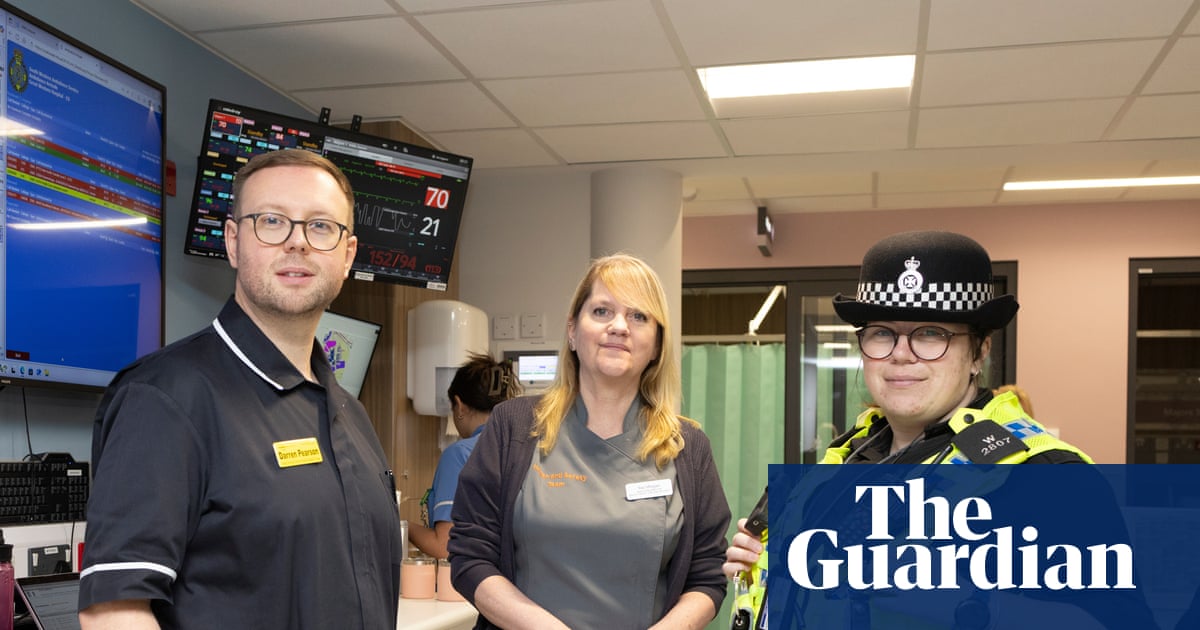
Darren Pearson, the deputy divisional director of nursing and chair of the Never OK working group, said: “We come to work to do our jobs and look after people, and we do that well. Nobody should have to experience or tolerate these behaviours.”
The campaign is backed by Wiltshire police, who want to encourage staff to realise that violence, harassment and aggression needn’t be part of the job. PC Becky Berni, the liaison officer at Wiltshire police, along with trainee officers, surveyed 600 workers at the hospital about the scale of abuse they have been subjected to – and are often expected to put up with. The research found that verbal aggression, physical violence and sexual assault had become more frequent.
“This has had a profound impact on frontline staff, with some living in fear of what they may face at work,” said Berni. While some incidents involved patients who couldn’t help it due to illness, “the majority of perpetrators act intentionally and with full understanding of their actions”.
Yet those who experience harm often do not see themselves as victims. This cultural acceptance of abuse means many GWH staff do not recognise when a crime has occurred and harmful incidents are repeated rather than prevented.
“If an NHS worker is assaulted, that trauma lives in their body,” said Berni. “It’s going to affect their day to day life. It’s going to affect them when they come back to work the next day, and their future care of patients, because they’re going to be on guard. But they are victims.”
“If someone on the street saw someone get punched, they’d phone the police. We’d turn up with blue lights flashing, take statements, make sure the victim has got support. But because it’s happened in a hospital environment, until now that was seen as OK, and that’s the culture we need to change.”
Wiltshire police have developed a training course for hospital staff to help them recognise offences and support victims of violence, harassment and abuse. “Our focus is not on criminalising those without capacity, but on ensuring victims receive recognition and support,” said Berni. “Addressing this issue requires cultural change, improved reporting mechanisms, and proactive measures to protect NHS staff.”
Where patients or relatives do have capacity and are intentionally aggressive or abusive, staff will always attempt to de-escalate the situation. However, if necessary, the hospital will call the police or security, issue sanction letters and even ban perpetrators from the premises (unless they require emergency care).
On 17 December, the hospital launched an action plan to encourage reporting, ensure support for victims and learn from incidents. In addition, some Swindon Town FC players have started coming in to talk to staff about their experiences of abuse and to hear from NHS workers about theirs.
The seven-point plan aims to ensure victims receive immediate support and are not prevented from reporting incidents from lack of prompt data gathering. Everyone will be expected to support victims and to help capture the salient facts of violent or abusive incidents as quickly as possible while memories are fresh. They will also be encouraged to report any such behaviour to management and/or the police on victims’ behalf.
“When you’ve been harmed, you’re not in the right mind to write a complex report about what’s happened,” said Berni. “You need someone to catch you, same as you catch your patients.”
A separate, dedicated Never OK email address has just been introduced for colleagues who find the formal reporting system too onerous. Sue Morgan, the associate director of health and safety at GWH, said: “We want to see higher reporting numbers. We know the level of abuse is probably fairly constant, but we want to change the culture so everyone finds it easier to tell us about it.”
“A lot of people think abuse comes with the territory and it shouldn’t,” said Hugo. “You just think, ‘Oh, it’s because we work in A&E – it’s kind of part and parcel of the job, but it shouldn’t be.”