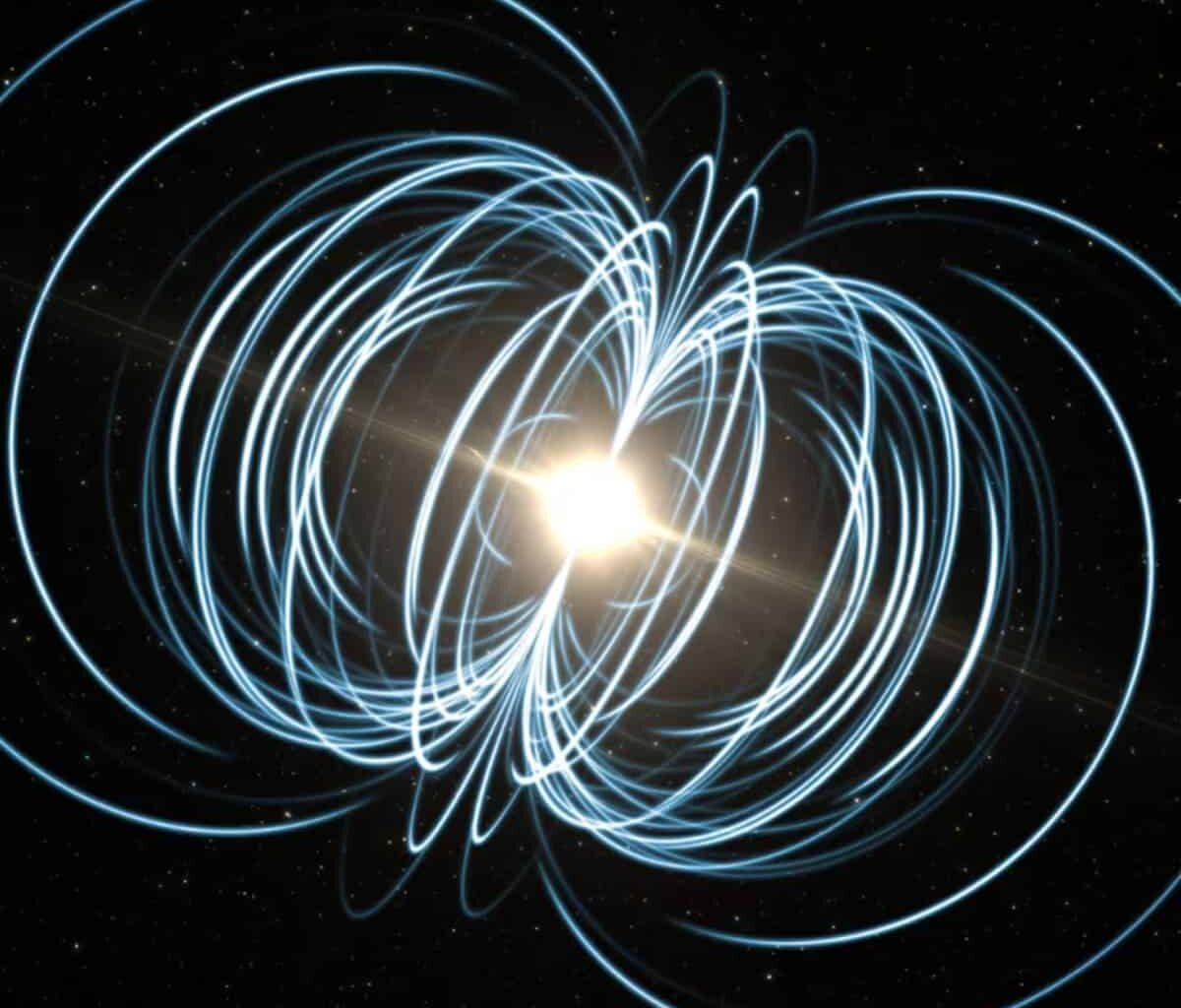
In the south of France, a revolutionary magnet powerful enough to lift an aircraft carrier has just been installed. But this engineering marvel isn’t about brute power — it’s about transforming how we generate energy. This colossal electromagnetic machine could change the future of humanity.
At the heart of the ITER project lies the most powerful central solenoid ever created, marking a crucial step toward achieving nuclear fusion. Located in Cadarache, this groundbreaking installation represents the culmination of decades of global research to replicate the energy of the stars here on Earth. The goal goes far beyond scientific prestige — it’s about securing a clean, sustainable, and virtually limitless energy source for generations to come.
An electromagnetic giant unlike anything before
Two hundred eighty thousand times stronger than Earth’s magnetic field — that’s the staggering force produced by ITER’s Central Solenoid. Standing 59 feet tall and weighing more than 1,000 tons, the cylindrical magnet generates a 13-tesla field, a record-breaking feat in electromagnetic engineering.
Each of its modules weighs as much as a passenger jet and requires millimeter-level precision during assembly. This massive superconducting coil is not just a technical accomplishment; it’s the beating heart of the experimental reactor that could one day power our world.
Unlike today’s fission-based power plants, fusion technology promises a safer energy source with no long-lived radioactive waste, using simple and abundant fuels such as deuterium and tritium.
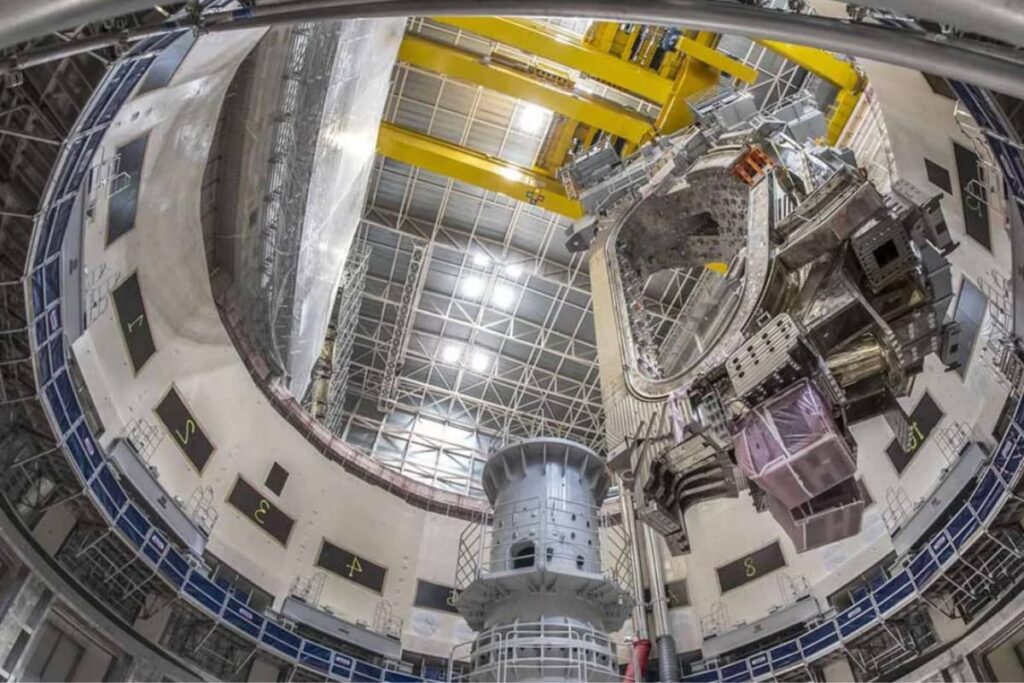
With a magnetic field of 13 teslas (280,000 times stronger than Earth’s), this magnet marks a key milestone in the construction of the ITER reactor. © ITER, iStock
The vital role of magnetic confinement
The Central Solenoid is much more than a gigantic magnet. It serves as an electromagnetic starter, capable of igniting and sustaining plasma at temperatures reaching millions of degrees Celsius inside the tokamak — the donut-shaped chamber where hydrogen atoms collide and fuse.
The entire system relies on an incredibly precise form of magnetic confinement. Electromagnetic fields keep the plasma suspended, preventing it from touching the reactor walls. This allows scientists to recreate — right here on Earth — the same extreme conditions found at the Sun’s core.
To achieve this, engineers must overcome enormous challenges:
• stabilizing plasma at temperatures hotter than the Sun’s center;
• managing immense electromagnetic forces;
• maintaining superconductivity at ultra-low temperatures;
• and synchronizing every magnetic component with perfect timing.
A model for global scientific cooperation
Installing this revolutionary solenoid shows what the world can accomplish when nations work together. Built by General Atomics in the United States and shipped piece by piece to southern France, each section required extraordinary care and coordination from dozens of international partners.
ITER unites 35 countries in a collective mission to secure the planet’s energy future — a project that transcends politics and borders. Every element of its transport and assembly demanded surgical precision, a testament to the expertise and teamwork behind this monumental undertaking.
Toward an energy revolution
The completion of this system marks the start of a new era in clean power. If ITER proves that large-scale controlled fusion is possible, it could redefine how we think about energy production by mid-century.
The potential rewards are extraordinary: independence from fossil fuels, major reductions in pollution, and access to a nearly inexhaustible power source. Such a breakthrough could even shift global power dynamics, freeing nations from their reliance on energy imports.
ITER’s Central Solenoid is more than a triumph of engineering — it’s a symbol of hope, proof that we might finally be on the brink of mastering the energy of the stars.