
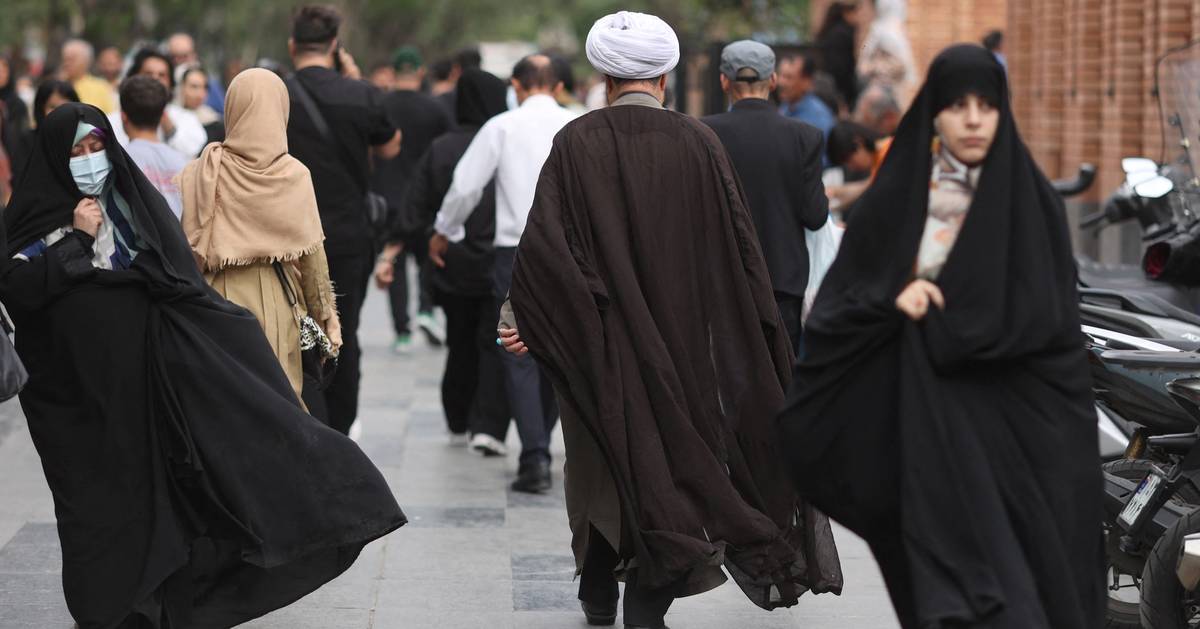
Videos and eyewitness accounts reviewed by Iran International showed crowds gathering after dark in Tehran, Isfahan, Mashhad, Tabriz and other cities despite gunfire, blocked roads and widespread disruptions to communications. The demonstrations followed massive rallies the previous night that was described as among the largest since the unrest began.
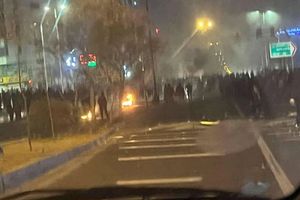
Eyewitnesses in Tehran described demonstrators regrouping after nightfall in multiple neighborhoods, blocking major roads, setting fire to police vehicles, and chanting anti-government slogans as security forces attempted to disperse crowds. Chants of “Death to the dictator” and “Neither Gaza nor Lebanon, my life for Iran” echoed through the capital, while car horns blared continuously in what witnesses described as coordinated acts of defiance.
 ‘People die in the dark’: experts decry Iran’s ‘worst internet shutdown’
In Isfahan, video verified by Iran International showed a large crowd chanting “Khamenei is a murderer, his rule is illegitimate,” alongside monarchist slogans including “Long live the King.”
In Mashhad, protesters filled major streets chanting “This is the last battle, Pahlavi will return,” according to eyewitnesses, as demonstrations continued despite heavy security deployments.
Footage from Tabriz showed protesters marching through city streets as the sound of gunfire rang out nearby, while other videos captured demonstrators disabling surveillance cameras and erecting makeshift barricades.
Eyewitness accounts from southern and central cities described similar scenes, with crowds converging on symbolic locations, burning banners and posters associated with the Islamic Republic, and remaining in the streets for hours despite internet outages and disruptions to phone service and electronic payments.
Several witnesses told Iran International that security forces appeared overstretched in some areas, relying on intimidation tactics, warning shots and use of force. In other locations, particularly in southeastern Iran, rights groups reported that security forces fired directly on protesters in Zahedan after Friday prayers, wounding several people.
Authorities threaten executions, tighten pressure
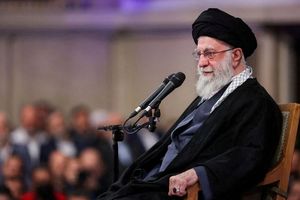
Supreme Leader Ali Khamenei warned US President Donald Trump that he would be brought down.
 Khamenei says Trump will fall, targets protesters in speech
“Trump should know that world tyrants such as Pharaoh, Nimrod, Reza Shah and Mohammad Reza were brought down at the peak of their arrogance. He too will be brought down,” Khamenei said in remarks aired on state television.
The Islamic Republic, he said, would not retreat in the face of unrest. “Everyone should know that the Islamic Republic came to power with the blood of hundreds of thousands of honorable people, and it will not back down in the face of saboteurs,” he added.
Tehran’s public prosecutor, Ali Salehi, said those accused of arson, destruction of public property or armed clashes with security forces would face charges of moharebeh, an offense that carries the death penalty under Iranian law.
Separately, Ali Larijani, Iran’s security chief, blamed what he described as “armed protesters” for fatalities during the unrest and said security forces had begun arresting what he called ringleaders. Iran’s Revolutionary Guards intelligence organization also issued a warning saying the continuation of protests was “unacceptable.”
The Supreme National Security Council accused foreign powers of steering the unrest and said security forces and the judiciary would show no leniency toward what it called saboteurs. Education officials announced that schools in several provinces would move to online classes, citing security concerns and disruptions caused by the blackout.
Exiled prince urges sustained action and strikes
Exiled Prince Reza Pahlavi urged protesters to return to the streets over the weekend, push toward central city areas and prepare for prolonged presence. He also called on workers in transportation, oil, gas and the broader energy sector to begin nationwide strikes aimed at cutting off state revenues.
Pahlavi said the demonstrations had exposed vulnerabilities within the security apparatus and appealed to members of the armed forces who support the opposition’s defection platform to further disrupt repression. He also said he was preparing to return to Iran and stand alongside protesters at what he described as a decisive moment.
International pressure builds
UN human rights chief Volker Türk said he was “deeply disturbed” by reports of violence and urged independent investigations and restoration of communications. The European Union condemned any excessive use of force and called for restraint, while France, Britain and Germany issued a joint statement urging Iranian authorities to protect peaceful assembly.
US President Donald Trump warned Iran against killing protesters and said Washington was watching closely, while the State Department cautioned Tehran not to test US resolve.
Several airlines, including Flydubai and Turkish Airlines, cancelled flights to Iran as unrest intensified, underscoring the widening international impact of a crisis entering its second week.