
Support CleanTechnica’s work through a Substack subscription or on Stripe.
US President Donald Trump certainly is busy these days, preoccupied as he is with the kidnap and murder of US citizens while desperately struggling to keep a lid on the Jeffrey Epstein files. And so, it is no surprise to see Trump’s energy policy, such as it is, circling the drain while his attention is turned elsewhere. The Venezuelan oil scheme is already blowing up in his face while the renewable energy momentum keeps on, well, momentumizing.
US States Lead On Renewable Energy
To be clear, President Trump has picked off some low-hanging renewable energy fruit, most notably in his attack on offshore wind. The domestic offshore wind industry is uniquely vulnerable to White House obstruction because it depends almost entirely on federal leases issued by the Bureau of Ocean Energy Management, in the US Department of the Interior. Cancel the leases, and Bob’s your uncle.
Or not, as the case may be. The low-hanging fruit is resisting. In December, a federal judge affirmed the President’s authority to stop issuing new offshore wind leases, but ruled that the Interior Department’s disruptive “review” of existing leases was illegal. The industry is also challenging an Interior Department stop-work order on five offshore wind farms.
In the meantime, state policy makers are undercutting Trump’s fossil-friendly energy policy left, right, and center, particularly in the case of solar energy.
On January 8, the Solar Energy Industries Association recapped a winning year for state-based energy policy, highlighted by legislation in California that has opened the door to new electricity partnerships with other Western states.
“Moreover, Governor Gavin Newsom signed the Executive Order on Bolstering Clean Energy Projects,” SEIA also noted. “The EO ensures California’s agencies and utilities stay on track and expedite projects of all sizes to ensure they can take advantage of expiring federal tax credits.”
Other stateside renewable energy wins highlighted by SEIA include Colorado, where a new Executive Order from Governor Jared Polis is aimed at accelerating grid connections and streamlining procedures for utility-scale clean energy buys. SEIA also credits itself with providing expert testimony leading to approval of a new Virtual Power Plant program in Colorado. The state’s heat pump profile is also beginning to accelerate alongside a new home energy rebate program (see more VPP background here).
SEIA gets another pat on the back from itself for collaborating with the members of the Texas energy industry and other stakeholders to knock down three pieces of proposed legislation that would have made renewable energy and storage projects more difficult to launch, while successfully promoting the passage of three new bills making rooftop solar and home energy storage more accessible and affordable.
More US States Come Out Swinging
SEIA also claims a leadership role in the passage of the new Clean and Reliable Grid Affordability Act in Illinois. Projected to save electricity ratepayers $13.4 billion over the next 20 years, the new law focuses on ramping up the state’s energy storage profile and establishing a new Virtual Power Plant platform.
When Illinois Governor JB Pritzker signed the bill into law on January 8, he made it clear that the his home state intends to serve as a model for other state policy makers. “The Clean and Reliable Grid Affordability Act sets a national standard in the effort to lower energy costs and marks a historic step forward in our clean energy vision,” Pritzker said.
“Once again, Illinois is stepping up where the federal government is failing,” he emphasized.
And, failing the federal government is. The new SEIA report also describes significant renewable energy wins in Maryland (front-of-the-meter solar and storage projects), New Jersey (community solar, energy storage, and rooftop solar), and Virginia (virtual power plants).
Looking forward, the Democratic candidate for New Jersey Governor, Mikie Sherrill, won her election in November and will take over the renewable energy banner from the outgoing Democratic Governor and offshore wind advocate, Phil Murphy, while voters in Virginia replaced their Republican Governor, Glenn Youngkin, with Democrat Abigail Spanberger. “Abigail knows that Virginia has the opportunity to be a national leader in clean energy, including by bringing high-paying clean energy jobs to the Commonwealth through investments in offshore wind, rooftop solar, and other renewable energy sources,” the Spanberger campaign has stated.
On top of government policy makers, US businesses and global investors are continuing to push the renewable energy envelope, one recent example being a new, 50-project solar and storage plan launched by the leading US waste management firm WM.
In another development with implications for further progress in the coming years, last October SEIA reported that the domestic solar industry completed the onshoring of its supply chain during Trump’s first year back in office, with dozens of new or expanded facilities coming online during the first nine months of 2025.
The Offshore Wind Battle Continues
Although SEIA President Abigail Ross Hopper warned that more than 100 solar and storage facilities remain at risk from further federal obstruction, so far the solar and storage industries have persisted.
The offshore wind industry and state officials are fighting back as well. The Interior Department issued its stop-work order against five wind farms on December 22: Vineyard Wind (Massachusetts), Revolution Wind (Connecticut and Rhode Island), Sunrise Wind (New York), Empire Wind (also New York), and the Coastal Virginia Offshore Wind project in Virginia. Two days later, the Governors of four of the impacted states demanded that the Interior Department justify its action, while the project developers have also launched their battle in court (here’s a good recap from PBS).
Notably absent from the fray is Virginia Governor Youngkin, who still holds the office until Spanberger is sworn in on January 17. It’s been nothing but cricket chirps from the outgoing Governor, whose previous support for the Coastal Virginia Offshore Wind project has evaporated as he ponders his next move up the Republican Party ladder.
Meanwhile, the renewable energy Whack-a-Mole continues. In one particularly interesting development, US solar innovators are beginning to exploit new opportunities in space, beyond the reach of federal obstruction (here’s a related example, featuring a Canadian developer). On the wind side, E&E News reports that New England governors have committed to expand the region’s longstanding, cross-border energy infrastructure collaboration with Canada, including the potential for an offshore wind partnership between Massachusetts and Nova Scotia.
As for distracting attention from the Epstein files, Trump’s plan for exploiting Venezuela’s vast oil reserves was a hot mess to begin with and it is getting stickier by the minute, as reality rears its ugly head in the form of significant security concerns and falling crude prices, leading the Republican-led Senate to formally register an objection to sending in US troops.
The next step is a vote in the House of Representatives next week. “Venezuela has the jungles of Vietnam and the mountains of Afghanistan,” NBC News reported on January 7, citing a security expert with the University of Chicago, which should help motivate House Republicans to support a resolution against further military action in Venezuela.
With Venezuela tucked away for the time being, Trump still has some other tools in his Epstein distraction toolkit. There’s the bizarre threat against Greenland and the NATO alliance, of course, but Trump has also been working on a much juicier distraction, a steady stream of canards about left wing terrorism and illegal immigration that has devolved into a cacophony of post-humus vitriol launched against Renee Nicole Good, an unarmed US citizen shot to death in her car on January 7, with the gunman identified as ICE officer Jonathan Ross.
It’s not going to work. While outrage over Trump’s ham-handed coverup of the Good murder continues to gather steam, on January 8 the bipartisan team of House lawmakers Thomas Massie (R-KY), and Ro Khanna (D-CA) called for the appointment of a special master to force the Trump administration to release the full Epstein files as required by law. The pressure is only going to increase as Election Day 2026 approaches.
Thoughts? Drop a note in the comment thread or better yet, find your representatives in Congress and let them know what you think.
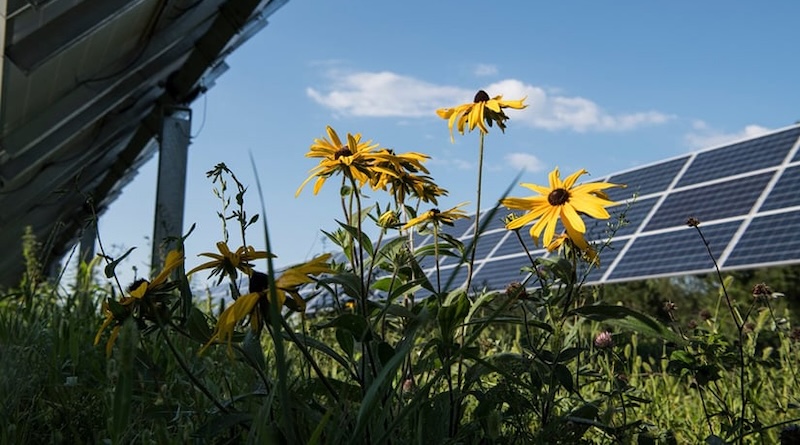
Photo: The renewable energy transition continues in the US, supported by new state-based legislation favoring economic benefits over partisan politics (cropped, courtesy of NREL).
Sign up for CleanTechnica’s Weekly Substack for Zach and Scott’s in-depth analyses and high level summaries, sign up for our daily newsletter, and follow us on Google News!
Advertisement
Have a tip for CleanTechnica? Want to advertise? Want to suggest a guest for our CleanTech Talk podcast? Contact us here.
Sign up for our daily newsletter for 15 new cleantech stories a day. Or sign up for our weekly one on top stories of the week if daily is too frequent.
CleanTechnica uses affiliate links. See our policy here.