
Welcome to Fast Company Daily, our daily newsletter on LinkedIn featuring an article snapshot selected by our editors as well as a roundup of great advice on careers, hiring, innovation, and technology.
Visit fastcompany.com for our top stories and breaking news. First time seeing this? Please subscribe.
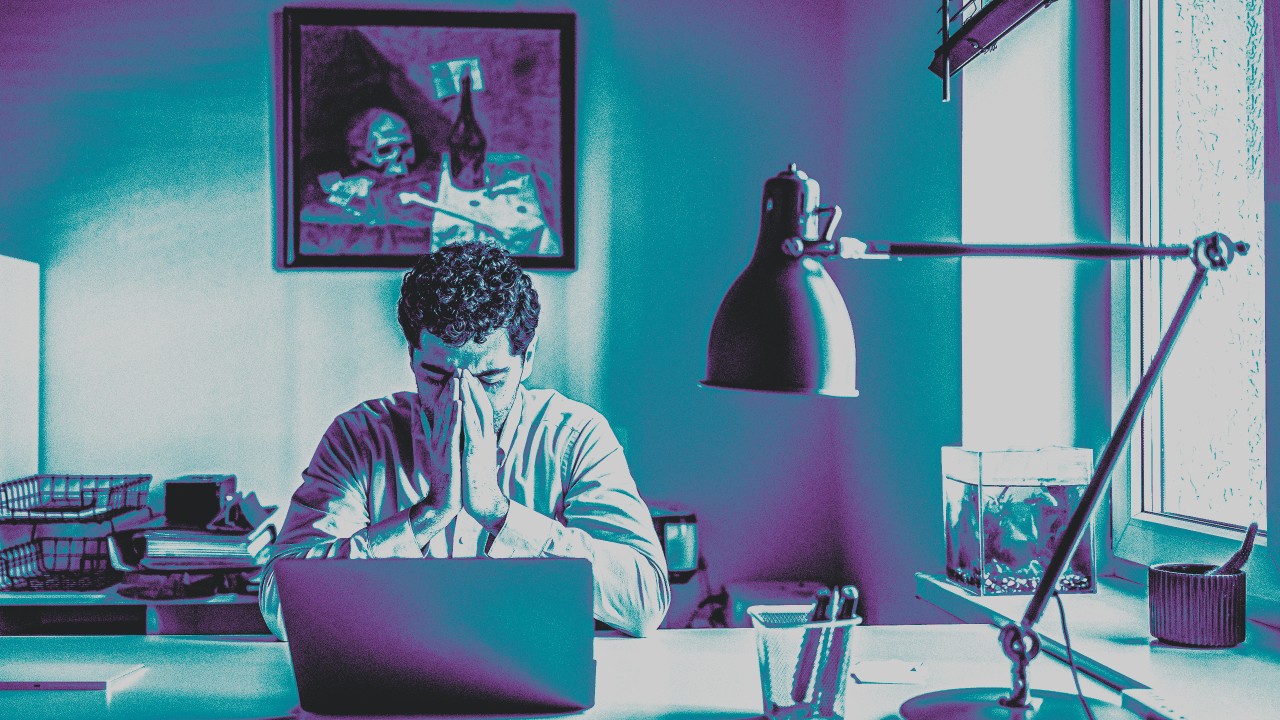
[Illustration: Linn Fritz]
The founder of Slack once deemed email “the cockroach of the internet.” He wasn’t the first to lament the extreme survivability of our inbox. From text messages to social media to office messaging platforms, all sorts of communication technologies have teased the promise of killing email by connecting us to others in faster, richer ways.
And yet, more than 50 years after its invention, ye olde email is more popular than ever. Some 1 billion people spend three hours a day in email—adding up to more than a trillion hours collectively per year, according to the email app Superhuman. And there’s no sign of this slowing down. “More people use Gmail every single month than ever before,” says Blake Barnes, head of Gmail product, who oversees the experience of more than 2.5 billion users on the world’s most popular email platform.
To some, email is an endless guilt machine: The average person receives dozens of messages each day but takes action on fewer than five, according to Yahoo. And the range of emails we receive is wild to comprehend: personal notes. Newsletters. Amazon package updates. Dinner reservations. Jira tickets. LinkedIn invites. Passwords we’ve sent to ourselves. Strange conspiracy theory chain letters forwarded along by a second cousin once removed.
Email has become the junk drawer for our digital lives. A catchall for intimate and automated messages, our inboxes contain too much information for most people to process. “Your last 100 emails are more unique than your fingerprint,” says Anant Vijay, product lead behind the encrypted-email platform Proton Mail. “Even if you’re using another app to do something, there’s an imprint left in your email.”
And therein lies the opportunity. Not only is email refusing to go away, it’s becoming more important than ever in our new, data-hungry world. And startups and incumbent tech companies alike are vying to control it.
A slew of email apps have launched in recent years—including Notion Mail, from emerging productivity giant Notion, and the organization-minded Shortwave—each with a different set of handy UX features for juggling your inbox. At the same time, giants like Yahoo and Google are racing to maintain their dominance. But nowhere is the value of email more evident than writing-assistance titan Grammarly’s acquisition of email startup Superhuman for an undisclosed amount over the summer. (Superhuman was last valued at $825 million, in 2021, according to PitchBook.) In October, Grammarly rebranded itself as Superhuman.
Read the full story on Fast Company Premium.
A Fast Company Premium subscription offers readers full access to subscriber-only stories including exclusive reporting and trend analysis on technology, business innovation, future of work, and design.
Get the details and subscribe here.
Single people are more apt to work on Sundays
Singles are drowning their Sunday blues with work, which experts warn isn’t necessarily the healthiest coping strategy.
In a recent survey of 1,000 singles by Dating.com, 52% of those without a romantic partner said they spend most Sundays alone and 65% say it’s the loneliest day of their week. To cope, 74% say they’ve turned to work to keep themselves busy, and 40% say they do so often.
“Sunday is usually the quietest day of the week, and when you don’t have a family or anyone that you’re dating to spend time with, it’s a time that could feel very sad,” explains licensed clinical social worker and resident therapist for Dating.com, Jaime Bronstein. “A lot of people work to avoid being in their feelings, which is not necessarily recommended because it’s important to feel your feelings.”
Bronstein adds that some employers may even put higher expectations on their single staff knowing they have fewer personal responsibilities occupying their time.
“Sometimes people that are single feel like they don’t have a purpose,” she adds. “By working extra, they can feel like that’s their purpose.”
Though dating in any generation has its challenges, Bronstein suggests it’s become more isolating in the digital age.
“It’s the rise of social media comparisons, seeing all the happy-looking couples, and then it’s all the dating apps,” she says. “There’s so much ghosting, people aren’t giving people enough of a chance because of the disposability factor and the ability to just find someone else, so there’s a lot more rejection.”
Read the full story on Fast Company.