
Tamil Nadu has launched a dedicated Deep Tech Startup Policy 2025–26, positioning it as the country’s first state-level framework designed specifically for science-led, IP-intensive ventures with long research cycles and high technical risk.
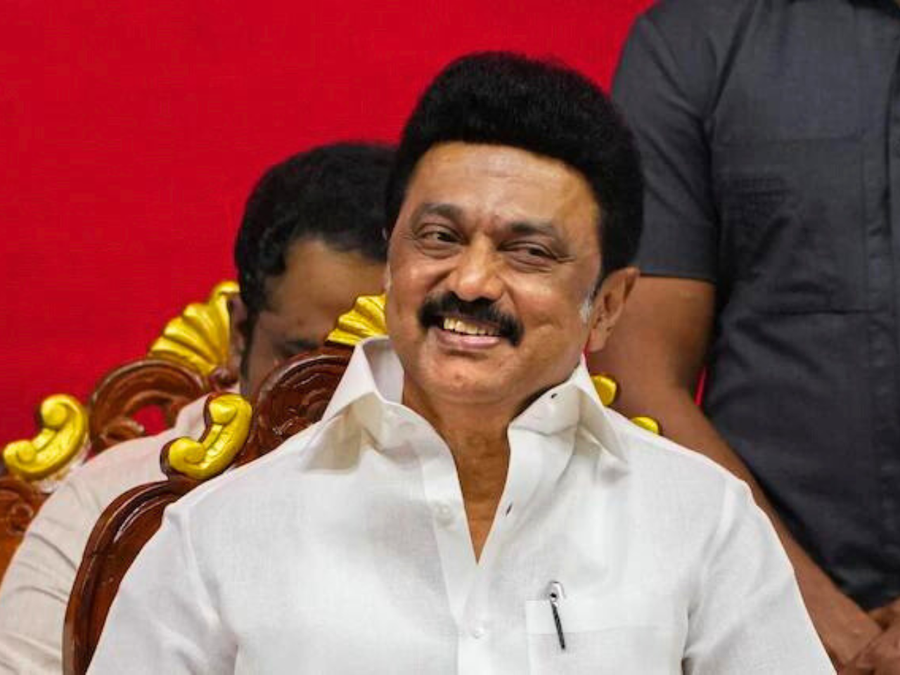
The policy was unveiled by CM M K Stalin at the Umagine TN technology summit in Chennai.
Anchored by the Information Technology and Digital Services Department and implemented through the Tamil Nadu Technology (iTNT) Hub, the policy seeks to bridge the long-standing lab-to-market gap faced by deep tech startups. It aims to back around 100 startups and mobilise Rs 100 crore in public and private investments over the next five years, while providing structured support from early-stage research to commercial scale-up and market adoption.
“This deeptech startup policy lays the foundation for a future where innovation empowers every citizen and elevates our collective destiny,” Stalin said at the launch. IT minister Palanivel Thiaga Rajan added that the framework is intended to build a globally competitive deep tech ecosystem and strengthen entrepreneurship in the state.
The policy sits alongside the broader Tamil Nadu Startup and Innovation Policy, under which iTNT already supports deep tech incubation, technology commercialisation and sector-focused programmes in partnership with StartupTN and other incubators. It defines deep tech startups as ventures built on advanced scientific or engineering breakthroughs, typically at early Technology Readiness Levels, with strong proprietary intellectual property, long gestation periods and the potential to create new markets or significantly transform existing ones.
Sectors highlighted include healthcare, energy and manufacturing, as well as AI, blockchain, semiconductors, electronics manufacturing, spacetech and animation, visual effects, gaming and comics (AVGC).
According to the policy document, such startups face a combination of high R&D uncertainty, capital intensity and difficulty in securing early customers, challenges that conventional startup schemes are not designed to address. To tackle this, the framework is structured around five pillars: research and development support, funding and investment acceleration, infrastructure and ecosystem development, innovation workforce and knowledge alliances, and deep tech adoption and market expansion.
On funding, the state will offer TRL-linked R&D grants for early-stage research up to TRL 4, followed by commercialisation and scale-up support for higher readiness levels. The policy also includes assistance for IP creation and commercialisation, performance-linked micro-fund support for incubators, and the proposed creation of a Deep Tech Fund of Funds. Additional capital subsidies for corporates that procure from or otherwise support accredited deeptech startups are intended to crowd in private capital and industry participation.
Infrastructure support will be provided through deep tech research parks and cluster-specific facilities, voucher-based access to shared infrastructure, rental subsidies within government-supported parks and sector-specific test beds to enable validation in live environments.
A “Government as Early Adopter Programme” with an annual allocation of Rs 25 crore is proposed to fund pilot deployments and proof-of-concept projects that can later be scaled across public and private sectors.
The talent and knowledge component includes grants for deep tech skilling programmes, doctoral fellowships for researchers transitioning into entrepreneurship, and mentorship and international exchange initiatives to connect Tamil Nadu startups with global accelerators, twin-city partners and overseas experts.
The policy sets targets of a 25% increase in annual patent filings by deep tech startups, at least 10 technology transfer or licensing deals from academic and R&D institutions, training of more than 10,000 students and professionals, and facilitating global market access for 50 startups through export support, trade missions and international partnerships.
Eligibility under the policy requires startups to have an operational presence in Tamil Nadu and to employ at least 25 per cent of their workforce within the state. The framework also places emphasis on deploying deep tech for social applications in areas such as public health, clean energy, mobility, disaster resilience and social protection, aiming to align industrial competitiveness with inclusive growth.
iTNT Hub will act as the nodal agency, responsible for managing funds, operating a unified digital platform for infrastructure and resource sharing, and coordinating with other state departments.