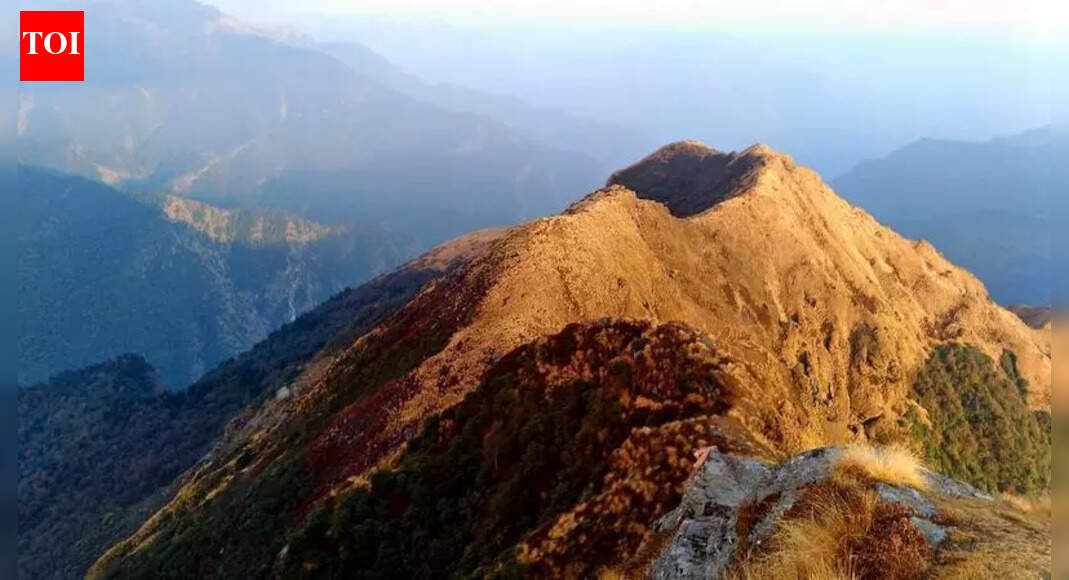
 DEHRADUN: For the first time in nearly four decades of recorded observations, the high-altitude peaks of Tungnath in the Garhwal Himalayas have remained snow-free through Jan so far, signalling a climatic anomaly and raising concern among alpine scientists.Experts said the prolonged deficit in rainfall and snowfall has begun to adversely affect key medicinal plant species of the alpine region, including Nardostachys jatamansi (jatamansi), Picrorhiza kurroa (kutki) and Aconitum heterophyllum (atees).”The region’s natural precipitation cycles are undergoing noticeable alteration. The absence of winter snowfall in Tungnath, located at around 12,000 feet, poses a serious threat to the stability of this fragile alpine ecosystem, which supports several rare and endemic Himalayan plant and animal species,” said scientist Aditya Narayan Purohit, a Padma Shri awardee and founder of the High Altitude Plant Physiology Research Centre (HAPPRC) in Tungnath.Other alpine scientists said several medicinal plant species depend on sustained snow cover for soil moisture regulation, breaking seed dormancy and successful germination, processes that are now being delayed. They added that dry air and parched soil are particularly disrupting the normal functioning of the alpine ecosystem.Explaining the impact, Sudeep Semwal, senior scientific officer at HAPPRC, said snow acts as a natural insulator, keeping alpine soils warmer by limiting heat loss. “This thermal buffering supports root activity, plant survival and early growth of alpine plants,” he said, adding that many of these species are native and well adapted to the Himalayan region.Scientists noted that systematic snowfall observations in the region began only after 1985, and that this is the first instance of a January in Tungnath being marked by frost alone, with no snowfall recorded so far.