
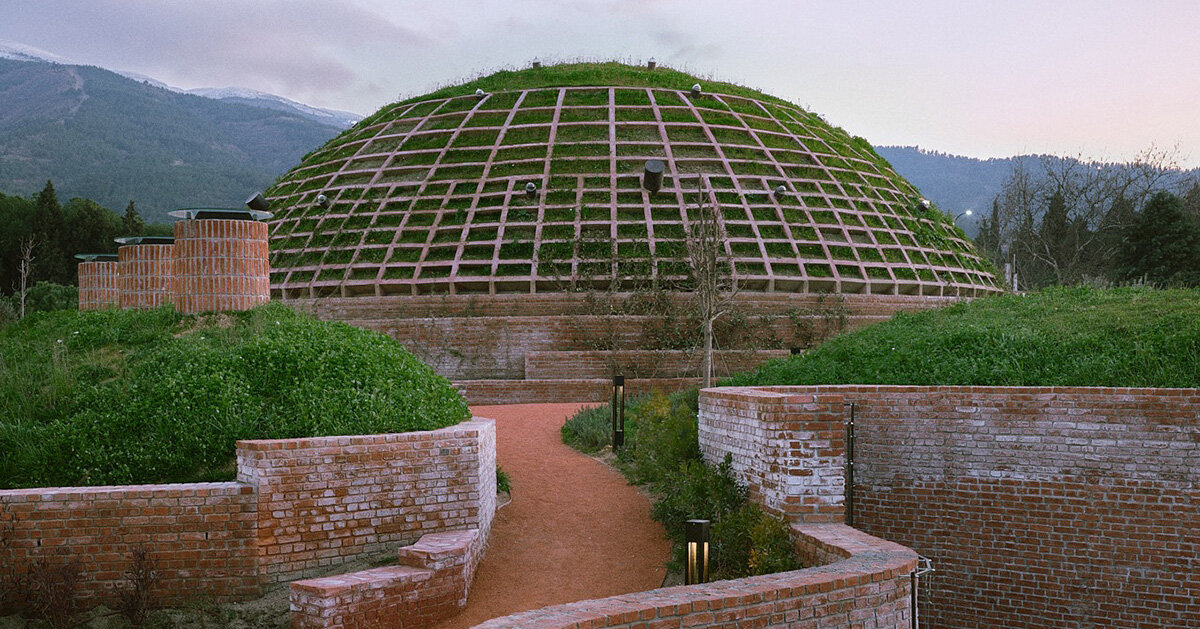
brick, earth, and topography shape Liberation Museum of Manisa
In Manisa, western Turkey, the Liberation Museum by Yalin Architectural Design is a memory space shaped by absence, loss, and collective resilience. Developed for the Greater City Municipality of Manisa, the 3,800-square-meter project narrates the local civil resistance movement that emerged independently of central authority between 1918 and 1923, during and after the First World War. The museum is conceived as an experiential landscape, guiding visitors through a spatial narrative of occupation, destruction, liberation, and rebuilding.
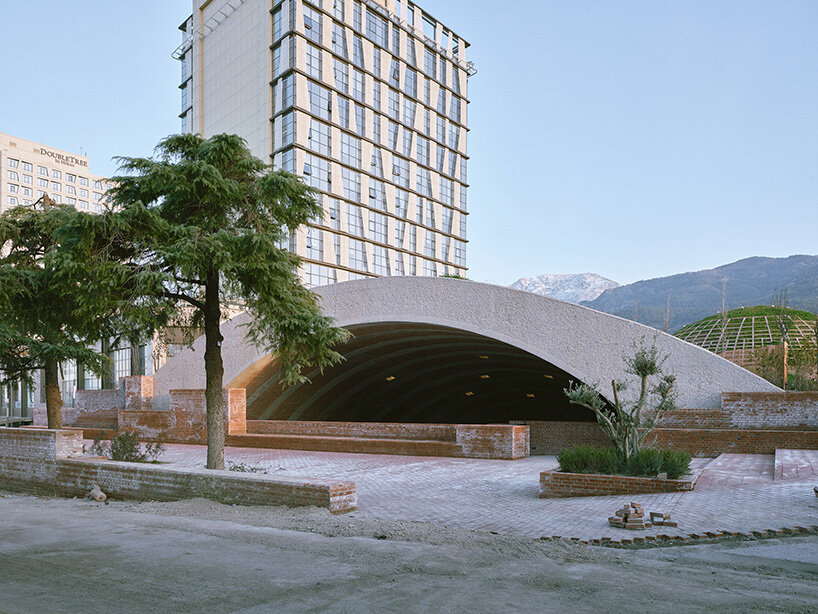
Earth-covered domes, brick vaults, and sunken courtyards give the building a grounded, almost geological presence. Instead of standing apart from its context, the museum appears embedded within it, its green roof folding into the surrounding landscape. Brick, used extensively throughout the project, forms thick walls, stepped seating, arched ceilings, and long corridors. The repetition of vaults produces a rhythmic spatial sequence that feels neither ceremonial.
all images by Egemen Karakaya, unless stated otherwise
Yalin Architectural Design shapes lived memory
The museum by the Istanbul-based team at Yalin Architectural Design focuses on Manisa’s lived experience of war, the gradual encroachment of occupation forces, the burning of the city during their retreat, and the long process of reconstruction that followed. This local perspective shapes the curatorial approach of the project, foregrounding the everyday courage of unnamed civilians who risked their lives, families, and futures for the ideal of independence.
Narrow passages open into larger chambers, while filtered daylight enters through openings. These transitions are meant to mirror emotional shifts from uncertainty and compression to endurance and cautious hope. According to the narrative framework of the project, the exhibition avoids dramatization, instead aiming to sustain a mood in which optimism persists despite destruction, pain, and scarcity.
The architectural shell of the Liberation Museum participates in the storytelling of the exhibition, with its curved roof structures, ribbed brick ceilings, and stepped platforms functioning as spatial metaphors. Visitors move through spaces that feel protective, heavy, and enclosed before encountering openness and light.
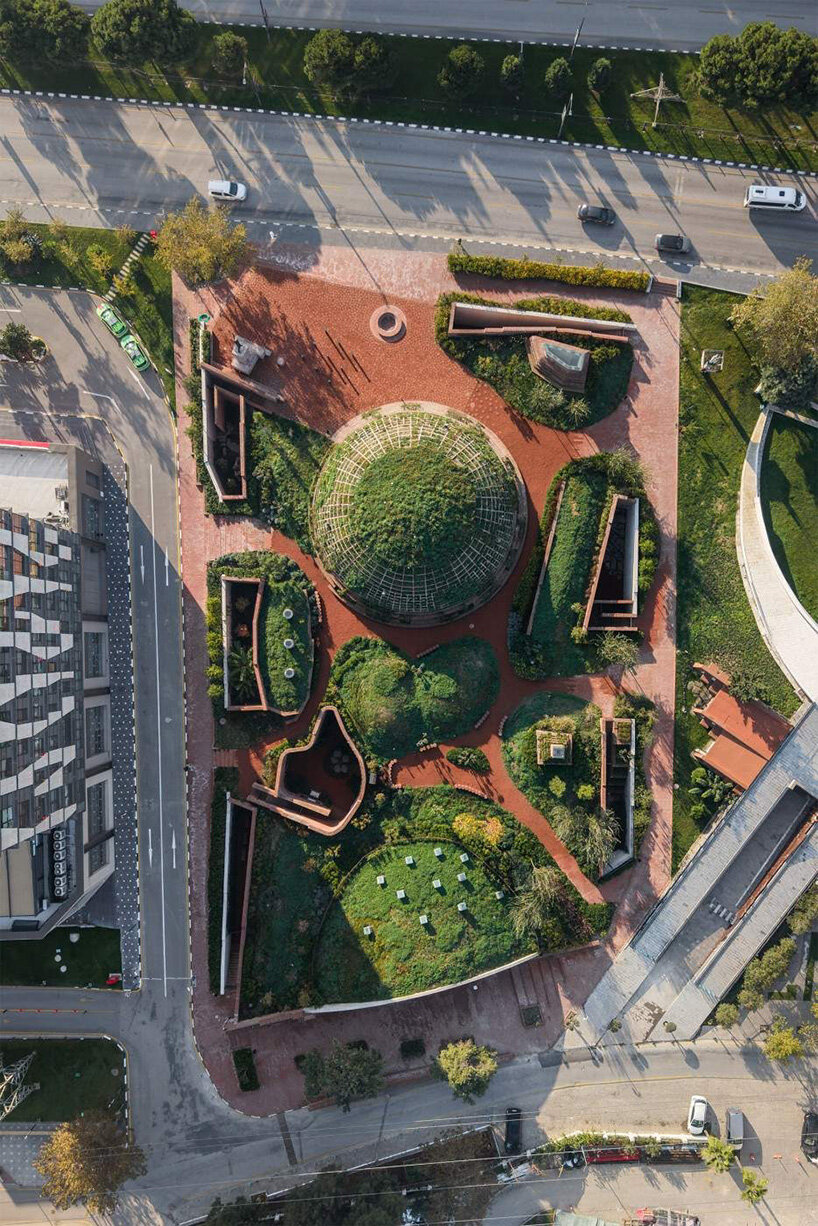
a topographic composition of paths, voids, and planted surfaces | image by Hacer Bozkurt
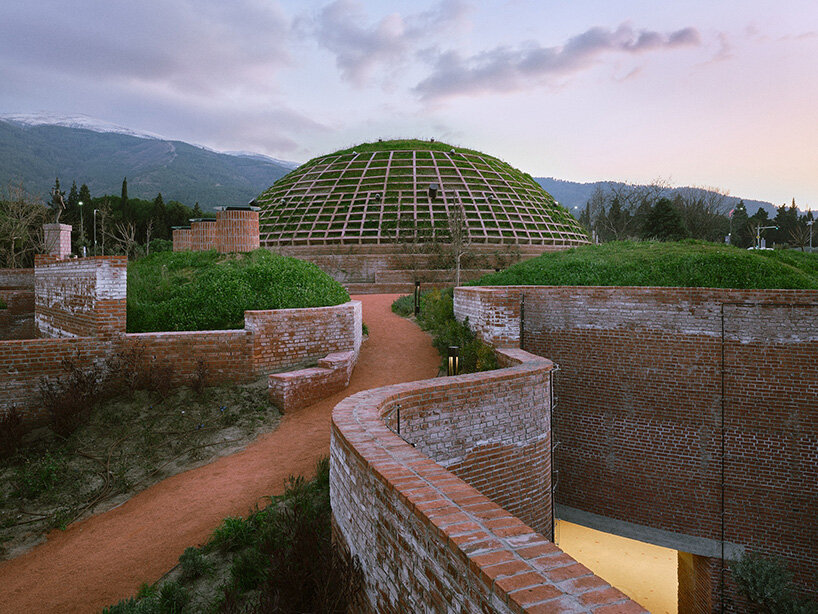
earth-covered domes and sunken courtyards shape the museum as a landscape
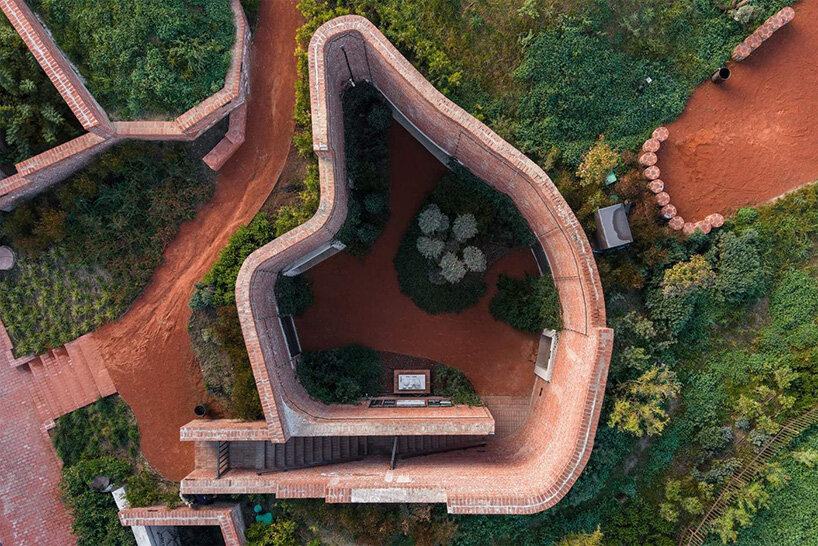
curved retaining walls and planted enclosures carve out contemplative outdoor rooms | image by Hacer Bozkurt