
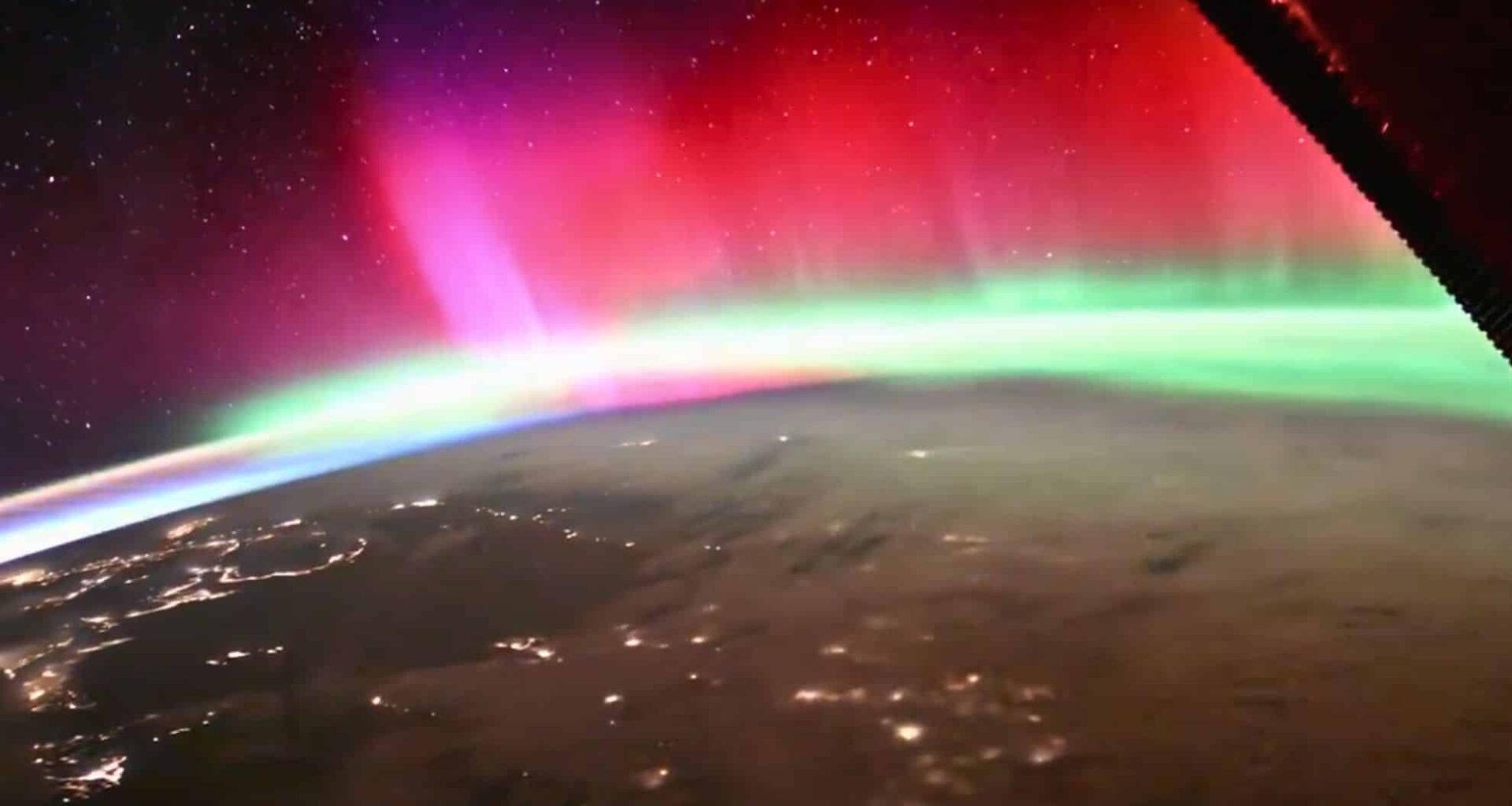
High above the planet, a green and red shimmer traced the Earth’s horizon. Captured from the International Space Station in early January, the brief sequence of light showed more than atmospheric beauty. It was a visual record of a system in flux.
Solar activity has increased sharply in recent months, producing not only heightened auroral events but also measurable effects on orbital infrastructure. These effects are expected to continue. Alongside this, the daily routines aboard the ISS shifted abruptly when one of its crew required an early return to Earth.
Both events occurred within the same week, but their link is not causal. One was celestial, the other medical. Still, they expose a shared vulnerability: the dependency of human spaceflight on stable systems, whether biological or solar.
The aurora video drew wide attention, in part for its aesthetics, but also because it coincided with decisions that altered the course of a six-month crew mission. Those decisions mark a rare deviation in ISS operations.
Solar Maximum Confirmed as Auroras Expand
The aurora sequence was filmed by Kimiya Yui, an astronaut with the Japan Aerospace Exploration Agency, during short windows between assigned tasks aboard the ISS. Released on 11 January, the 33-second time-lapse showed structured bands of light moving across the Earth’s limb. These emissions result from geomagnetic storms, which occur when high-energy solar particles interact with atmospheric gases.
おはようございます!
仕事の隙間を狙っての撮影が続いています。
私がまもなく帰還するのを知って、太陽さんが頑張ってくれたのか、とても美しいオーロラを撮影する事が出来ました。
撮影できた事も嬉しかったですが、何より映像を見て皆さんが喜んでくださる様子を思い浮かべ、1人で微笑みました笑。 pic.twitter.com/qQJDpqlq1U
— 油井 亀美也 Kimiya.Yui (@Astro_Kimiya) January 11, 2026
The visibility of auroras at orbital altitudes reflects the influence of Solar Cycle 25, now in its most active phase. In October 2024, NASA and the National Oceanic and Atmospheric Administration (NOAA) confirmed that the Sun had reached its solar maximum, the period of greatest magnetic activity in its 11-year cycle. During this phase, sunspots become more frequent, solar flares intensify, and the likelihood of coronal mass ejections (CMEs) increases.
According to data from the NOAA Space Weather Prediction Center, observed sunspot numbers throughout 2025 exceeded projections made during the previous forecasting period. A strong uptick in F10.7 cm solar radio flux, a key proxy for solar activity, was also recorded. These indicators correspond with a rise in auroral visibility beyond polar regions, extending into mid-latitude zones during major events.
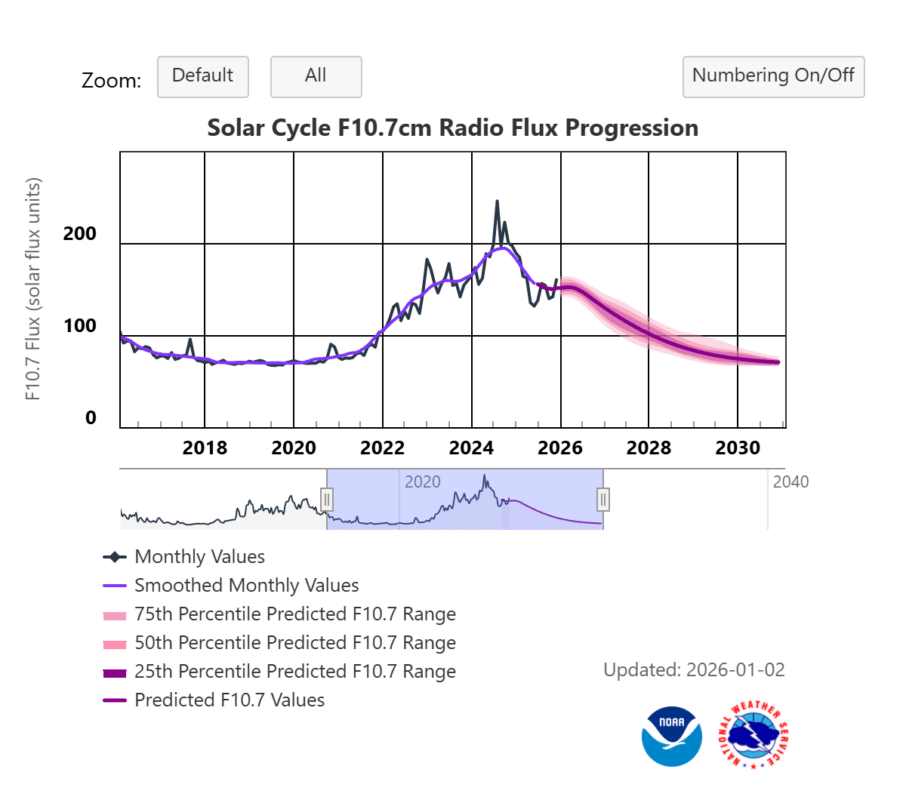 F10.7 cm solar radio flux. Credit: NOAA
The solar maximum is ongoing and may persist for several more months. However, scientists note that significant solar storms often occur even after peak activity has passed, especially during the descending phase of the cycle.
Auroral Mechanisms Confirm Atmospheric Impact
Analysis of auroral structures reveals details about atmospheric composition and solar input. As outlined by researchers at UNSW Sydney, green light is produced when oxygen atoms at 100 to 200 kilometres altitude undergo a slow, high-energy transition. These processes are known as “forbidden” in quantum mechanics because they occur rarely under typical atmospheric conditions.
At even higher altitudes, above 200 kilometres, the same oxygen atoms may emit red light through a secondary, even slower transition. Because of the required conditions—low pressure, minimal molecular interference—these emissions are generally reserved for strong geomagnetic events.
 The aurora australis captured over Hobart’s Tasman Bridge. Credit: Scott Glyph
The presence of both green and red layers in Yui’s footage suggests a significant geomagnetic disturbance. NOAA tracking confirmed elevated Kp index values, used to measure the strength of geomagnetic storms, during the period surrounding the recording.
Though largely aesthetic to the public, these events carry operational consequences. Increased atmospheric drag on satellites, signal degradation for high-frequency communications, and temporary GPS interference are all documented outcomes of elevated solar activity.
ISS Crew Rotation Altered by Health Issue
While auroral data points to external environmental change, events aboard the ISS in early January were prompted by a different factor. On 8 January, NASA announced that the Crew-11 mission would return to Earth approximately one month earlier than planned due to a serious medical condition affecting one astronaut.
Crew-11 launched in September 2025 and includes astronauts Zena Cardman and Mike Fincke (NASA), Kimiya Yui (JAXA), and Oleg Platonov (Roscosmos). The affected crew member was reported to be stable at the time of the announcement. No further medical details have been released, in line with standard health privacy protocols.
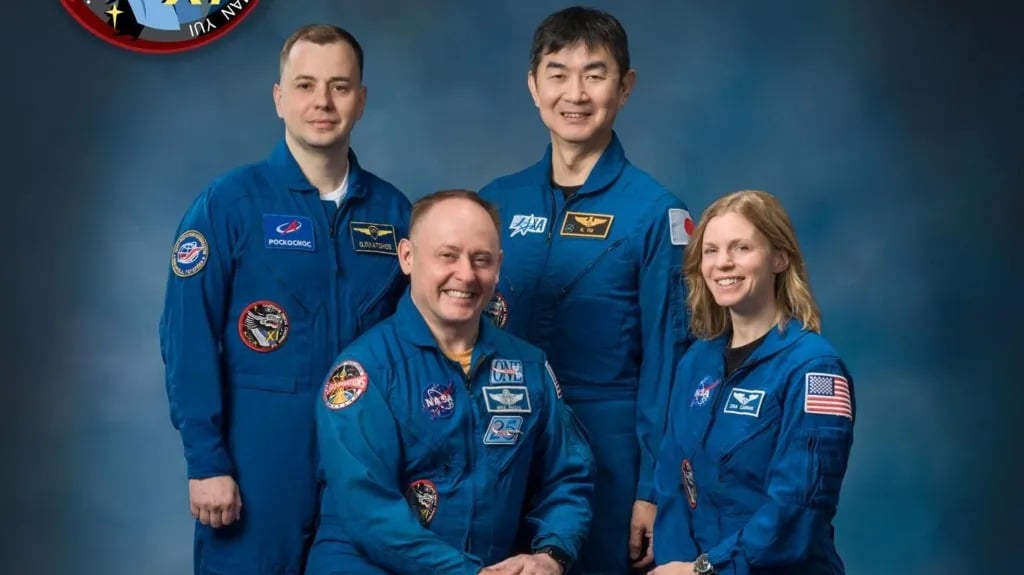 Front row, from left: Pilot Mike Fincke and Commander Zena Cardman, back from left: Mission Specialists Oleg Platonov and Kimiya Yui of the Japanese space agency JAXA. Credit: NASA
This incident represents the first early crew return from the ISS due to medical reasons in NASA’s history, according to Dr James Polk, the agency’s Chief Health and Medical Officer. A planned spacewalk scheduled for 9 January was cancelled. Remaining crew onboard adjusted priorities to focus on station maintenance and medical coordination.
Operations will resume full scale once the replacement crew arrives later in the rotation cycle. In the meantime, some non-essential experiments and systems upgrades have been delayed.
Solar Forecasts and Mission Planning
The combination of intense solar activity and a medical contingency underscores a broader concern: the increasing complexity of human presence in low-Earth orbit. NASA and its partners continue to adapt systems and procedures to account for solar weather impacts. These include shielding for spacecraft electronics, radiation exposure monitoring, and mission scheduling that avoids periods of heightened solar risk.
At the same time, limitations in on-board medical support remain a focal issue for long-duration spaceflight. The ISS is equipped with diagnostic tools and direct communication links with ground-based medical personnel, but advanced care depends on timely Earth return.
With future missions targeting lunar operations and eventual Mars expeditions, contingency planning for both solar disturbances and medical events will require more robust solutions. NASA’s Parker Solar Probe, now in its final series of close approaches to the Sun, aims to refine models for space weather forecasting and improve early-warning capabilities.