
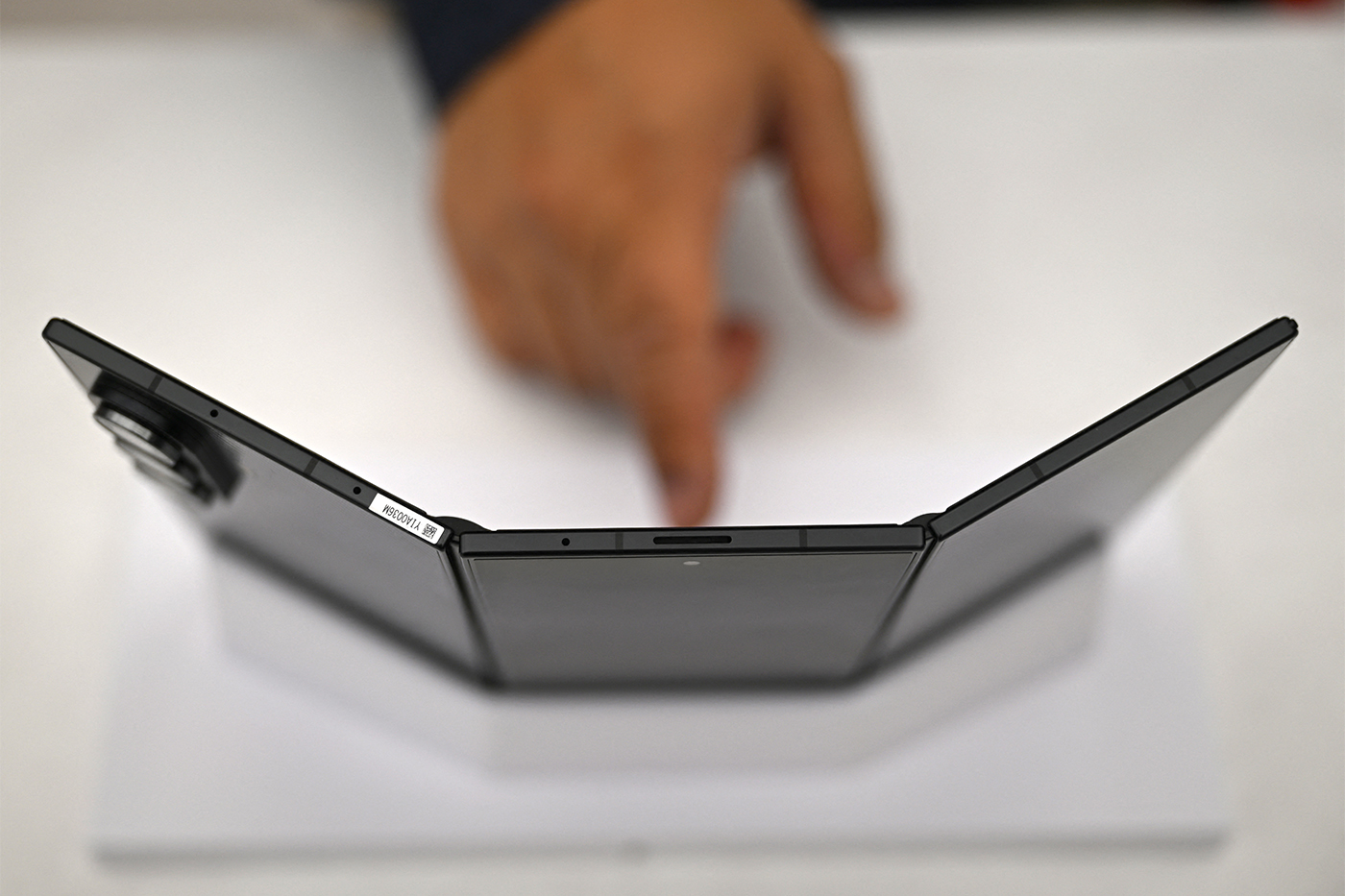
What if you could put a 10-inch tablet in your pocket as easily as your smartphone?
That’s no longer just a tech enthusiast’s dream.
At the Consumer Electronics Show in Las Vegas last week, Samsung showed off the Galaxy Z TriFold, its latest folding smartphone featuring a 10-inch inner display.
Samsung isn’t the first company to release a tri-folding phone — Huawei debuted one in China in 2024, for example — but it is the first device of this kind to come to the U.S.
Samsung hasn’t announced an official release date for the U.S. market but said it will be sometime in the first quarter of 2026. It is already being sold in South Korea, where Samsung is based.
Since their introduction nearly a decade ago, folding phones have come a long way. They are thinner than ever, can contort into various form factors, and are nearing the durability of your standard one-screen smartphone.
Yet they are still a niche product, representing just 1.5% of the smartphone market in 2024, according to the research firm TrendForce.
There are a few reasons why they have been more widely adopted, according to Ravinder Dahiya, a Northeastern University professor of electrical and computer engineering and a flexible electronics researcher.
Buying one could run you thousands of dollars, despite advancements, long-term durability remains questionable, and their practical use cases remain low, he said.
“They are more about convenience than usefulness because they carry the same function as an iPad,” he said.
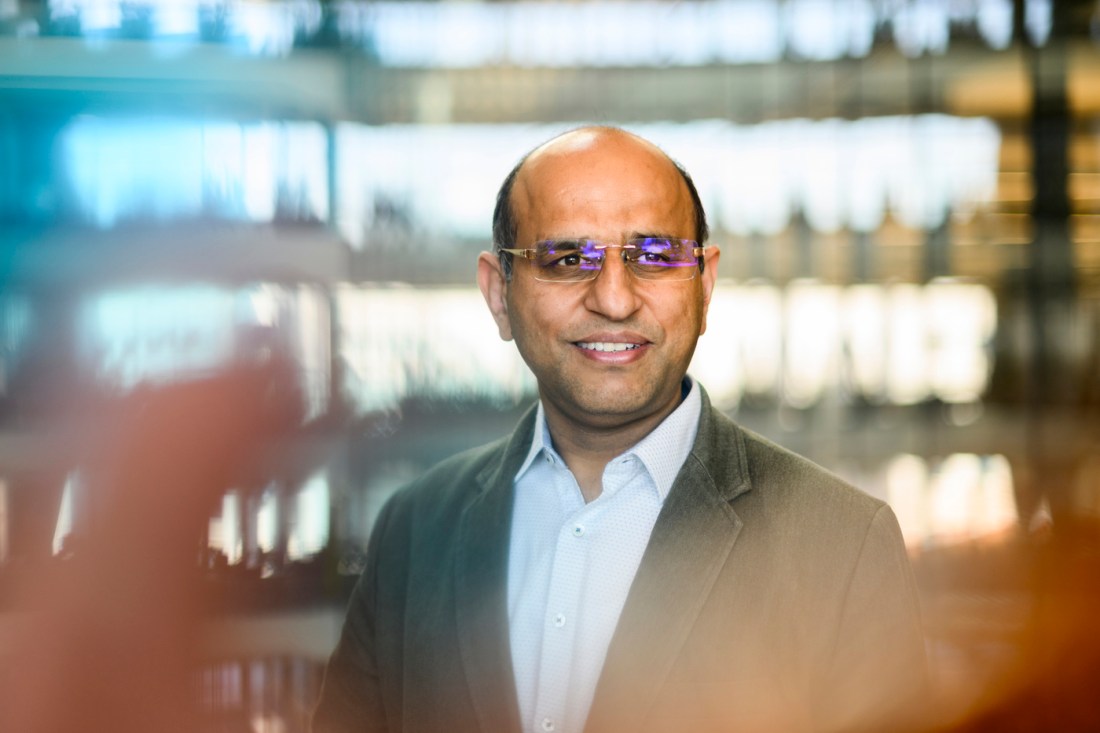 Professor of engineering Ravinder Dahiya. Photo by Matthew Modoono/Northeastern University
 03/26/25 – Boston, MA – Ruobing Bai, a mechanical and industrial engineering professor, poses for a portrait outside of the Mugar Life Sciences Building on Wednesday, March 26, 2025. Photo by Alyssa Stone/Northeastern Universityr
Northeastern engineering professors Ravinder Dahiya and Ruobing Bai share their perspective on folding phones. Photos by Matthew Modoono/Northeastern University and Alyssa Stone/Northeastern University
Advancements in organic light-emitting diode, or OLED, display technologies have been key for foldable phone makers as they’ve iterated on these devices over the past 10 years, Dahiya explained.
In that time, phone makers have also obtained a better understanding of what works and what doesn’t work in terms of material selection and manufacturing processes, highlighted Ruobing Bai, a Northeastern professor of mechanical and industrial engineering.
They’ve improved the adhesives they use to keep phones intact during bends as well as the device’s overall design architecture for increased durability, he said.
“I’m very excited about the progress they’ve made,” he said, noting that key durability issues still remain but will likely continue to improve in the years to come.
However, foldable phones are still more challenging to build than your standard slab phone, which is in part why foldable phones often cost more. They will also likely never be as durable as a traditional phone given all their moving parts, Dahiya said.
From manufacturing displays and testing durability to making sure the devices are scratch- and water-resistant, the costs and complexities add up. There’s also just more technology inside a folding phone, including multiple high-resolution displays.
“Every step comes with extra costs,” he said.
Samsung hasn’t announced how much the Galaxy Z Trifold will cost in the U.S., but in South Korea it costs KRW3,5900,400, which is roughly $2,428.
By contrast, a one-screen Samsung Galaxy S25 costs just $780.
Given the high barrier of entry, Dahiya argues that foldable phones will continue to cater to just a niche market of tech enthusiasts for the foreseeable future.
Truly bendable consumer electronics that could wrap around the body could have more use cases down the line, but that type of technology is still mostly in the research phase.
He pointed to the potential of a bendable screen that can contort around your wrist to serve as a smart watch, as an example.
“Unlike trifolds, which are mostly about convenience, true bendability would come with a lot of benefits,” he said. “It is much easier to carry your phone when you are wearing it than putting it in your pocket.”