
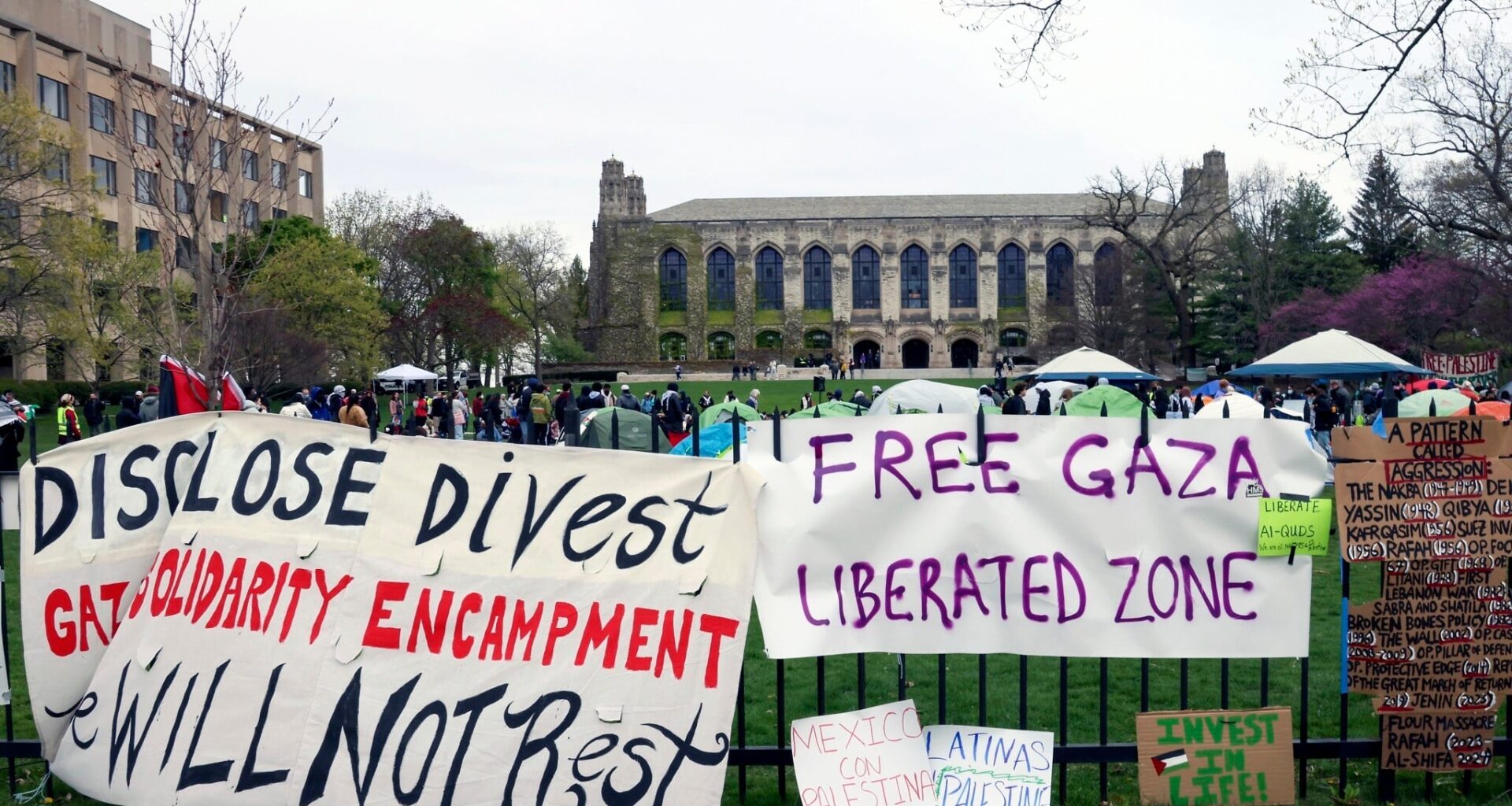
Anti-Israel activists at Northwestern University in Illinois dropped a lawsuit that had sought to halt the university’s mandatory antisemitism training, according to legal documents filed last month.
The Northwestern Graduate Workers for Palestine and two graduate students filed the class-action lawsuit against Northwestern in October, claiming that an antisemitism training required by the school for enrollment was biased and discriminatory toward Palestinian and Arab students.
In a December 22 filing, lawyers for both sides submitted a joint stipulation of voluntary dismissal, meaning both parties asked the court to drop the case. The dismissal was filed without prejudice, meaning the plaintiffs can revive the case if they choose.
The agreement came a month after the university’s lawyers filed a motion to dismiss the case, saying the lawsuit did not outline any evidence of discrimination by the university.
The judge in the case, filed in the federal US District Court for the Northern District of Illinois, had previously ruled on the side of the university. In October, the judge declined to issue a restraining order against Northwestern and said the lawsuit had failed to prove the university had a discriminatory motive in requiring the video.
Get The Times of Israel’s Daily Edition
by email and never miss our top stories
By signing up, you agree to the terms
The class-action lawsuit was filed with the backing of the Chicago branch of the Council on American-Islamic Relations (CAIR).
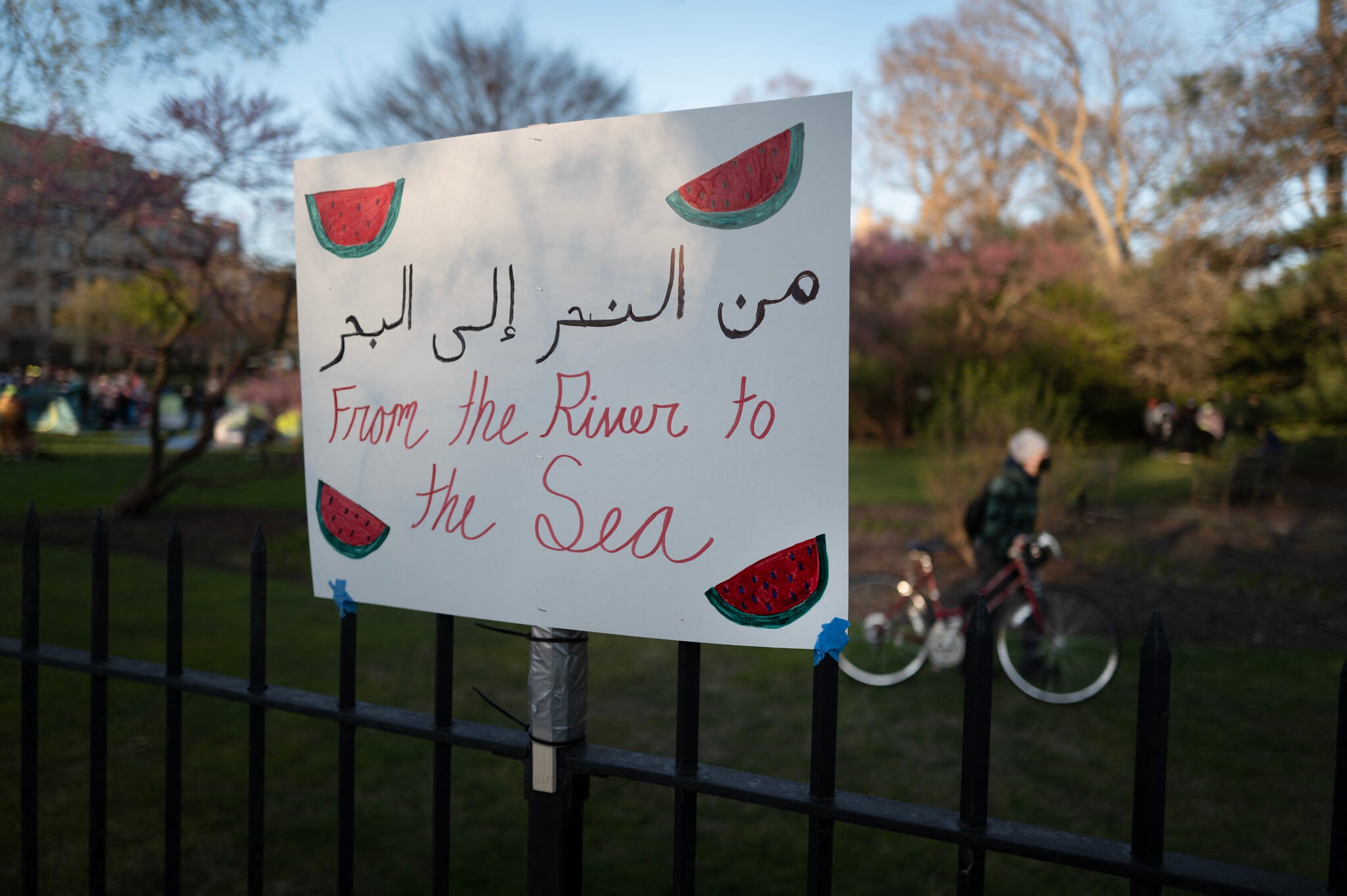
Pro-Palestinian and anti-Israel protesters rally on the campus of Northwestern University, April 25, 2024, in Evanston, Illinois. (Scott Olson/Getty Images via AFP)
The antisemitism training was announced by Northwestern in March 2025 in an email to the student body that cited US President Donald Trump’s executive order, “Additional Measures to Combat Antisemitism.”
The 17-minute video was created by the Jewish United Fund of Chicago at Northwestern’s request.
The video offers a basic history of Judaism, Israel and antisemitism. It says that some criticism of Israel can veer into or sound like antisemitism but emphasizes multiple times that not all critiques of Israel are antisemitic.
Fewer than three dozen students had been blocked from classes after they refused to watch the video. Over 200 people, some from outside the university, signed a letter to the university calling the training “denialist, unscholarly, discriminatory and morally harmful,” leading to the lawsuit.
One of the students in the lawsuit said the video was “deeply discriminatory, repressive and unscholarly.”
“I do not wish to become complicit in the normalization of the dehumanization of Palestinians,” the student said in a legal filing.
The complaint also criticized the school for adopting the International Holocaust Remembrance Alliance (IHRA) definition of antisemitism, which the complaint said “effectively limits Arab students, and particularly Palestinian students, in their expressions of nationalist aspirations and protest against mistreatment of their ethnic group.”
The IHRA definition of antisemitism does not list calls for a Palestinian state as antisemitic, nor does it list criticism of Israel in and of itself. Rather, it defines as antisemitism criticism of Israel that would not be made of other democratic states and “denying the Jewish people their right to self-determination by claiming the existence of a State of Israel is a racist endeavor,” which many pro-Palestinian and anti-Israel activists do by accusing Israel of apartheid.
The “Antisemitism Here/Now” training video did not ask students to agree with its contents.
In 2024, as pro-Palestinian protests continued to roil Northwestern and other campuses across the country, Northwestern became one of the first schools to enter direct negotiations with protesters, prompting the school’s antisemitism committee to resign en masse over criticism of the deal.
The university later revoked its deal with the student protesters under pressure from the Trump administration.
Northwestern in November paid the federal government $75 million to settle complaints about antisemitism on the campus, in exchange for the government restoring $790 million in federal funding to the university that the Trump administration had frozen in April.
JTA contributed to this report.
Is accurate Israel coverage important to you?
If so, we have a request.
Every day during the past two years of war and rising global anti-Zionism and antisemitism, our journalists kept you abreast of the most important developments that merit your attention. Millions of people rely on ToI for fact-based coverage of Israel and the Jewish world.
We care about Israel – and we know you do too. So we have an ask for this new year of 2026: express your values by joining The Times of Israel Community, an exclusive group for readers like you who appreciate and financially support our work.
Already a member? Sign in to stop seeing this
You appreciate our journalism

You clearly find our careful reporting valuable, in a time when facts are often distorted and news coverage often lacks context.
Your support is essential to continue our work. We want to continue delivering the professional journalism you value, even as the demands on our newsroom have grown dramatically since October 7.
So today, please consider joining our reader support group, The Times of Israel Community. For as little as $6 a month you’ll become our partners while enjoying The Times of Israel AD-FREE, as well as accessing exclusive content available only to Times of Israel Community members.
Thank you,
David Horovitz, Founding Editor of The Times of Israel