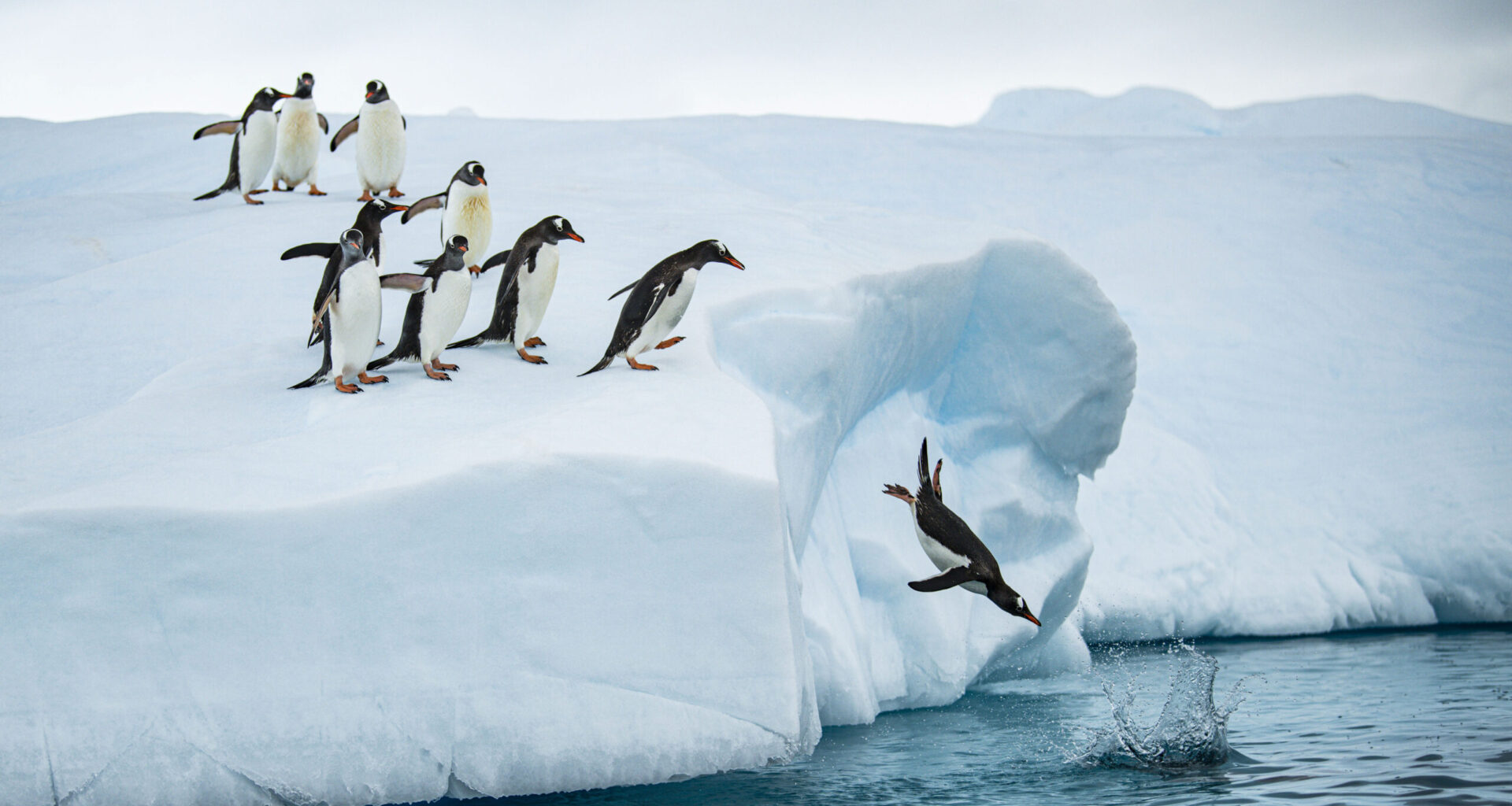
Climate-driven changes to the distribution of micronutrients across the global ocean may reduce the efficiency iron delivery to marine habitats, weakening the base of marine food chains, new research has warned. Crucially, over time this could mean fewer krill and fewer whales, seals, and penguins.
Marine phytoplankton are tiny algae that sit at the very bottom of ocean food webs. These organisms rely on iron, a vital micronutrient, to grow and function. Iron reaches the oceans mainly through airborne dust from deserts and dry regions, as well as through meltwater released by glaciers.
The research – led by scientists from Rutgers University – shows that when iron is scarce, phytoplankton waste energy and photosynthesis falters. In turn, the phytoplankton grow more slowly, capture less sunlight, and remove less carbon dioxide from the atmosphere.
To gain an understanding of real-world conditions, lead author Heshani Pupulewatte spent 37 days at sea in 2023 and 2024. During the voyage she measured fluorescence, which reflects the energy released by phytoplankton when photosynthesis breaks down. She also added nutrients to see if photosynthesis resumed when conditions were restored.
The results showed that when iron was scarce, as much as 25% of the proteins that capture the light become “uncoupled” from the structures that convert energy into usable chemical forms. This disconnect reduces how efficiently phytoplankton can photosynthesise.
Encouragingly, when iron became available again, the algae were able to reconnect these systems.