
MONTREAL — The Northwest Coast Oil Pipeline is meant to fix a bunch of problems. Salve Albertan agitation. Bolster Canada against MAGA-fied imperialism and, crucially, prove that the country can still build big things. A railroad for modern times—the stuff from which narratives are crafted and myths are made.
Unfortunately, this epoch has no time for crafted narratives. The U.S. invasion of Venezuela, and Donald Trump’s intent to flood America with Venezuelan hydrocarbons, doesn’t change the reality: building a new pipeline through Canada in 2026 doesn’t make economic sense.
Related Articles

The timing is unfortunate. A decade ago, the Energy East project did, in fact, make economic sense only to collide with a recalcitrant Quebec. If Quebec killed Canada’s last pipeline dream, this one looks likely to die at the feet of cold, hard numbers.
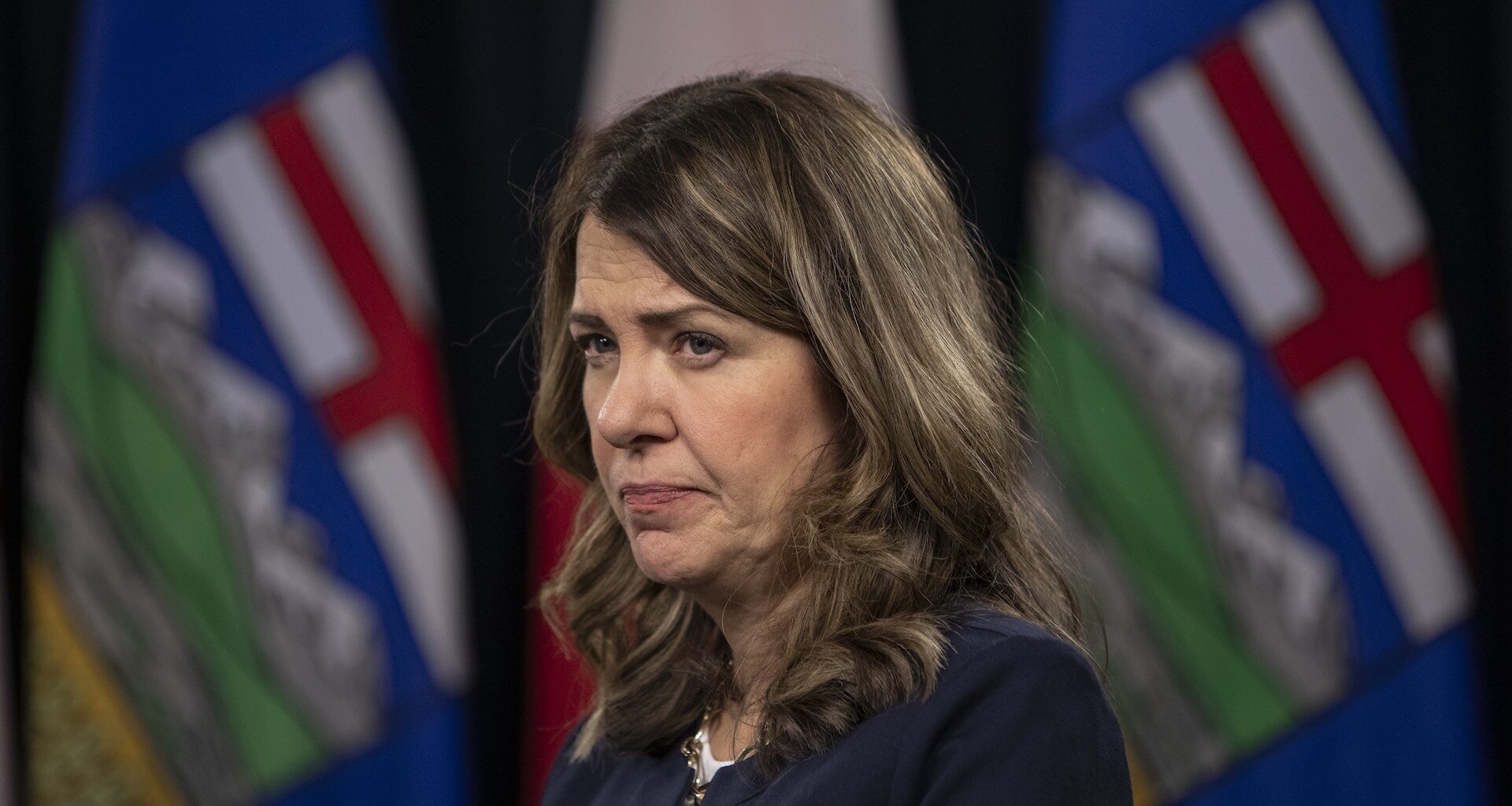
The proposed Northwest Coast Oil Pipeline would cost $20 billion, in Alberta Premier Danielle Smith’s estimation. At such sums, there are only two companies with the wherewithal to take on the job: Enbridge and TC Energy spinoff South Bow. Both have remained mum throughout the Alberta-Ottawa agreement and its resulting political noise. Their silence is likely a bit of corporative discretion, an important thing when billions in shareholder value are potentially at stake.
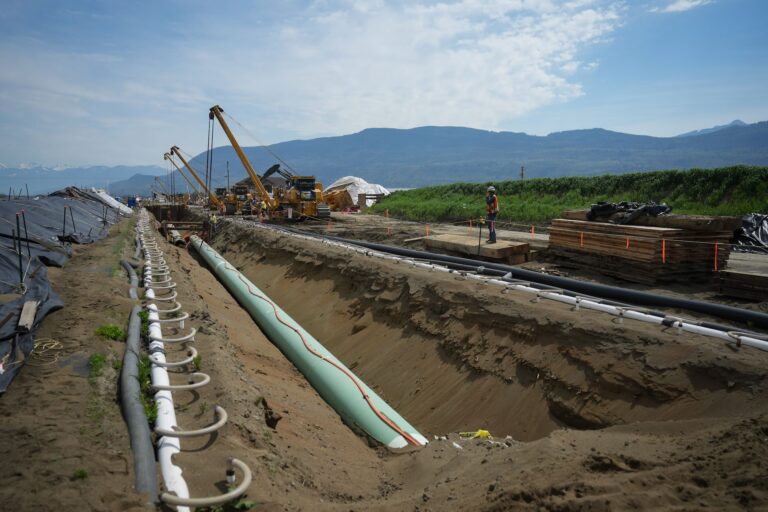
In a land where the Trans Mountain pipeline expansion cost more than six times initial estimates, even $20 billion risks being delusional. Regardless of the actual figure, it won’t be cheap to ship a million barrels a day westward, which proponents say is crucial to avoid choke points in the country’s oil infrastructure, already near capacity.
Yet there are far less expensive alternatives to accommodate what S&P Global estimates will be a 600,000-barrel-a-day increase of Alberta’s oil bounty by 2030. Optimizing the existing Trans Mountain pipeline alone could increase its capacity by 360,000 daily barrels for $4 billion at most, according to Trans Mountain CFO Todd Stack. Enbridge’s mainline expansion, announced in March 2025, will add another 150,000 barrels for $2 billion. Together, that’s 510,000 extra barrels a day for $6 billion. No new pipeline needed.
The prospect of Venezuelan hydrocarbons replacing Canadian-sourced ones complicates things further. “I probably got more bullish on a pipeline over the last six weeks just from watching the U.S.,” Andrew Leach, an energy economist at the University of Alberta, told me. However, as Leach points out, an influx of Venezuelan oil won’t hurt Canada as much as the potential flight of capital away from Canada should U.S. oil companies instead pump money into the South American country. If anything, this makes building a new pipeline more difficult.
Energy East made sense in 2016, in that the bulk of the proposed 4,600-kilometres pipeline from Hardisty, Alta., to Saint John, N.B., was already in the ground. Originally set to come online in 2018, it would have benefitted from over seven years of oil toll revenue.
Yet Energy East died in 2017 after Quebec balked, and though the province has since softened its anti-pipeline stance, the math has only gotten worse in the interim. Put another way, on what planet does it make sense to spend at least $20 billion on a new pipeline when you can just make the existing ones bigger for a fraction of the price—particularly when a barrel of Alberta oil is going for about $68?
This equation is all the more pertinent when you consider a key trend in the energy markets. Oil companies aren’t spending much on huge, world-bending oil-bearing projects these days. Infrastructure investment was 40 per cent below its peak from a decade before, according to a 2025 Carbon Tracker report, with those dollars instead transformed into dividends.
“Oil companies are basically managed like utility companies,” Charles St-Arnaud, chief economist at Alberta-based Servus Credit Union, told me. “The idea is, ‘Let’s make money, and let’s return that money to shareholders.’”
There’s another reason why this oily cash cow isn’t ponying up for new pipelines: the dwindling demand for what comes out of them. While predicting peak oil is a mug’s game, it’s nonetheless worth considering how the U.S., the biggest oil consumer on the planet, saw its demand flatline in 2024, despite a 2.8 per cent increase in GDP. It was a similar dynamic in China: five per cent GDP growth, less than one per cent increase in demand for oil.
This downward trend has caused some in the industry to go bearish on new pipelines. Following the Ottawa-Alberta announcement in November, a Quebec energy executive I spoke with shrugged when I asked if a new pipeline made sense. “The pipeline to build was Energy East, and the time to build it was 10 years ago,” they said.
Martin Patriquin is The Logic’s Quebec correspondent. He joined in 2019 after 10 years as Quebec bureau chief for Maclean’s. A National Magazine Award and SABEW winner, he has written for The New York Times, The Guardian, The Walrus, Vice, BuzzFeed and The Globe and Mail, among others. He is also a panelist on CBC’s “Power & Politics.”