
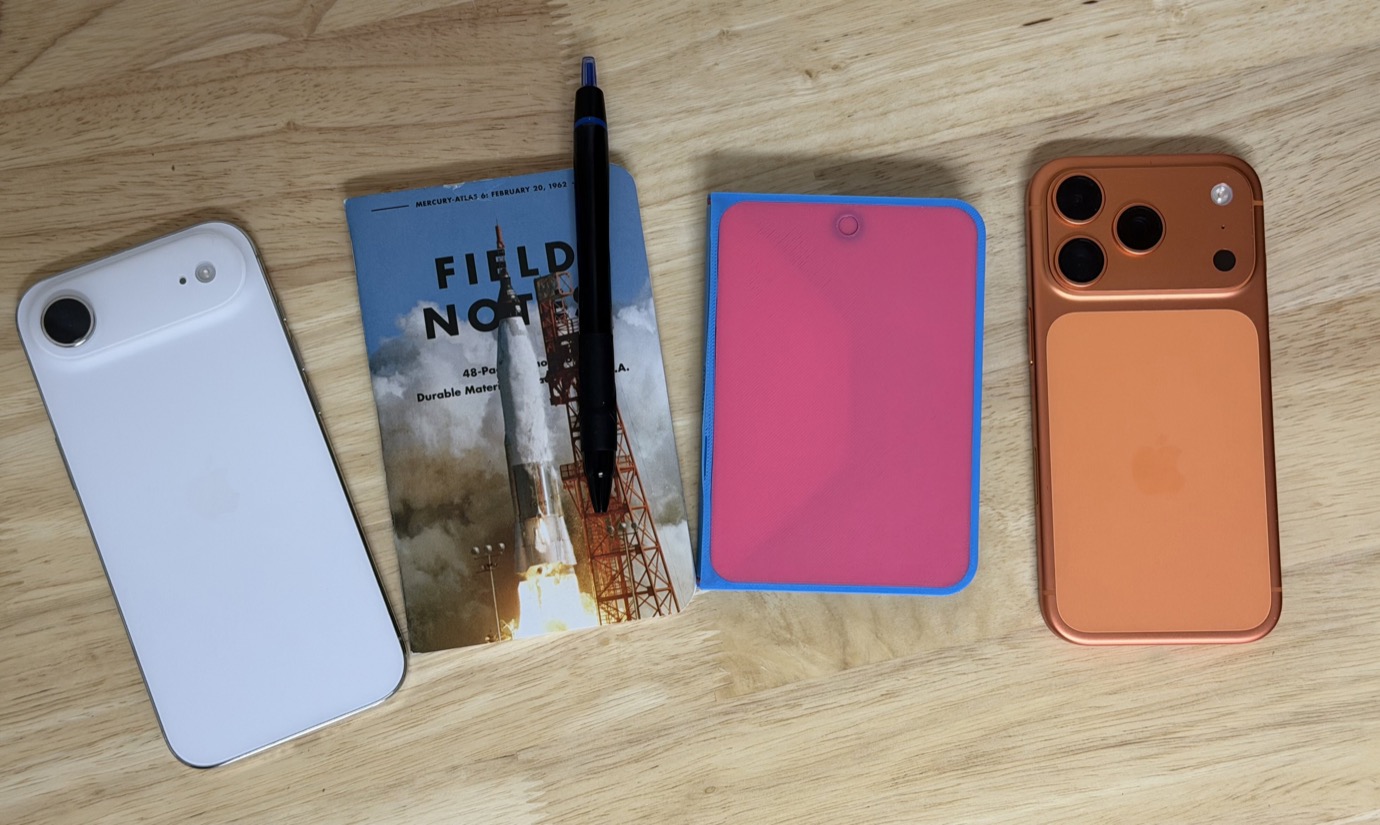
 Left to right: iPhone Air, Field Notes and pen, iPhone Fold mock-up, iPhone 17 Pro.
If many years-long rumors are true, 2026 will be the year when Apple’s long-gestating folding iPhone becomes a reality. But there are a lot of different approaches to folding phones out there, and there’s no guarantee that the folding iPhone you imagine is the one that Apple is imagining.
Leaks from Apple’s supply chain have begun to strongly suggest the shape and size of the product we’ll call, for lack of a better name, the iPhone Fold. And since it’s likely going to be nine months before anyone holds one of these things in their hands, this seems like as good a time as any to consider the story Apple is likely to tell when it’s selling this device.
Not your usual iPhone
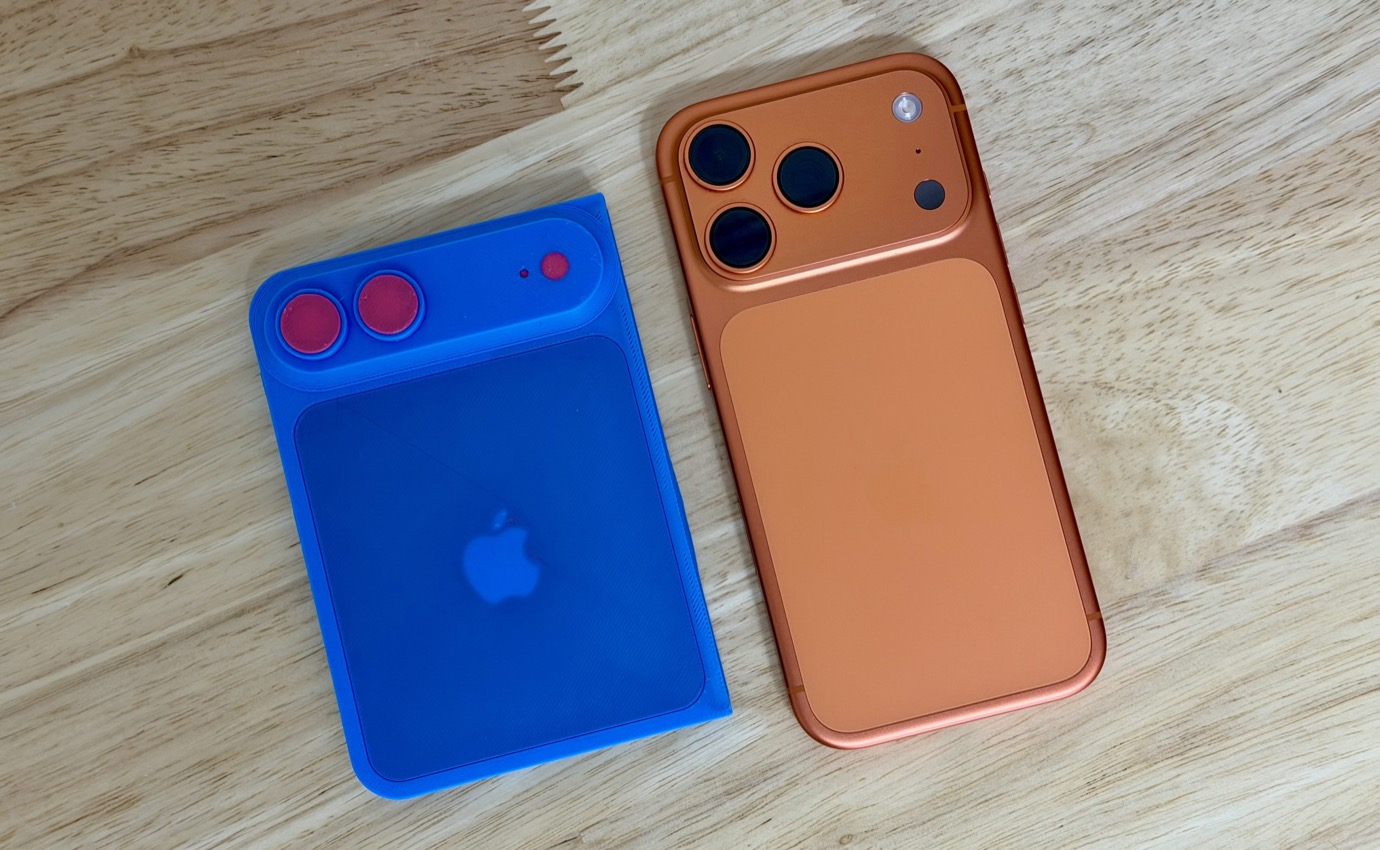
First, a disclaimer: Nobody knows anything, except the people who do. We’re left to go on rumors and extrapolation. That said, many people have spent time doing the math required to extrapolate the shape of the new iPhone based on rumored specs, and even building a 3D printing template so you can build one and hold it in the real world.
If these mock-ups are real, this folding iPhone is not going to be what you may have pictured in your head: a modern iPhone, roughly the shape of an iPhone Pro, that folds open to reveal a larger screen inside.
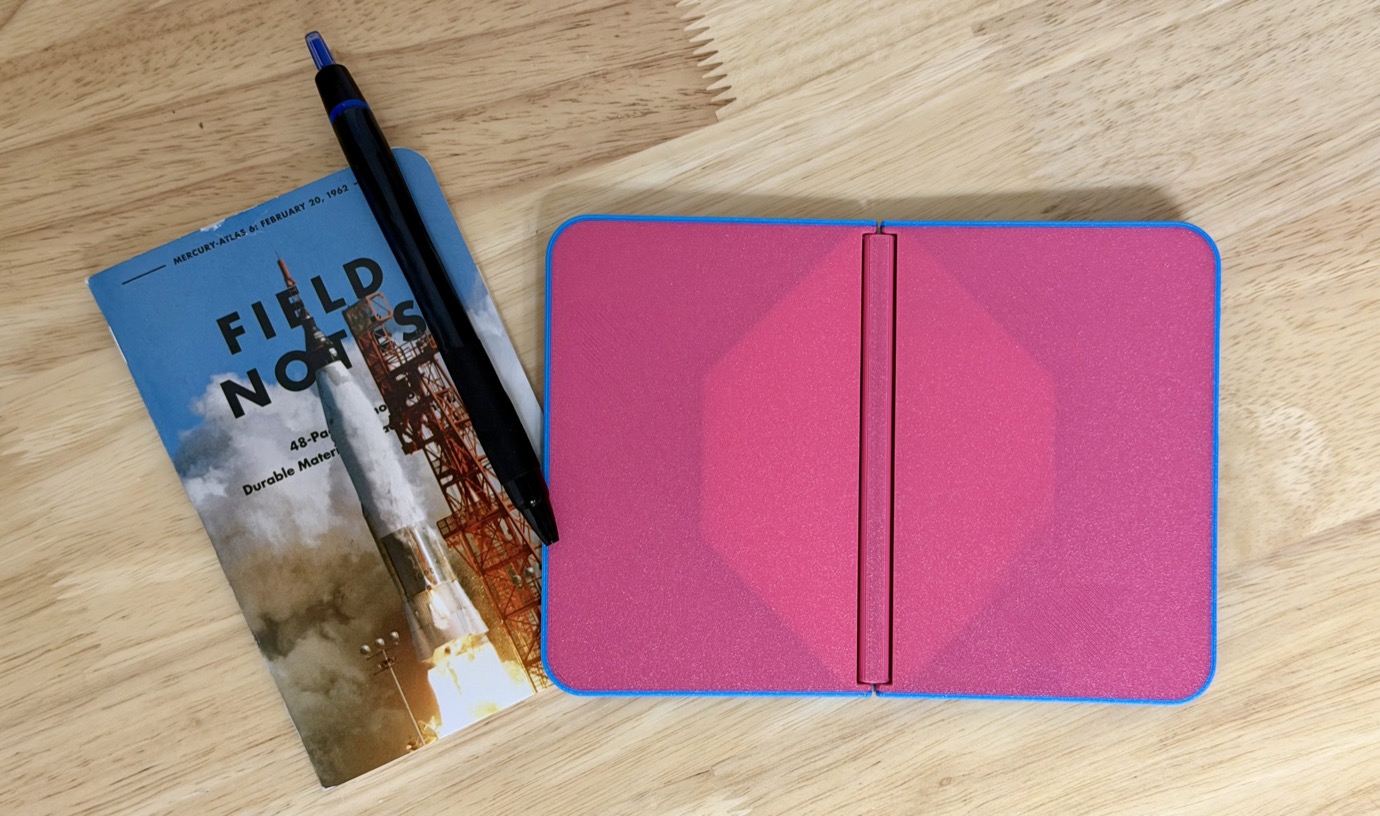
Instead, Apple may be making a device that’s much wider and squatter than existing iPhones when it’s folded up. The mock-ups people are printing show a phone that’s squatter than an iPhone mini and wider than an iPhone Pro Max! If that shape is right, the iPhone Fold will look a bit more like a mini notebook when it’s folded, unlike any iPhone that has ever existed.
The shape makes sense, however, when you imagine what that phone looks like when it’s unfolded: a screen with a 4:3 aspect ratio, the shape of an old-school television and—more importantly—an old-school iPad. In fact, this rumored design would make the unfolded iPhone the shape of an iPad, just slightly smaller than the iPad mini. (The iPad mini’s screen is 8.3 inches when measured diagonally, while this screen is rumored to be 7.76 inches.)
Apple’s sales pitch?
Apple’s taking a real risk if the new folding iPhone doesn’t look like an iPhone. If people read it as looking weird or lesser in some way, that may turn them off—even if they were otherwise willing to buy a $2000+ phone. So why would they do it?
Here’s my guess at Apple’s thought process: If what you really want is an iPhone that looks like an iPhone, literally all the other iPhone models will deliver on that. The iPhone Fold is designed around what it provides when it’s unfolded. Yes, when it’s folded, it will work like a normal, albeit squat, iPhone. But it comes alive and is unique when it’s open.
When it’s open, it’s an iPad.
The battle between iOS and Android rages on in the smartphone world. Apple leads in some markets, Android in others. It’s a duopoly, and both companies are making a lot of money and wielding a lot of power based on their successes in that market. But in the tablet market, the truth is that the iPad is successful, and every other tablet out there is not. Not only in terms of sales and profits, but in terms of functionality.
Over the years, Google has rededicated itself multiple times to the idea that Android is going to be a better operating system for tablets, and that Android tablet apps are going to get better. And yet every time I use an Android tablet, I’m struck by just how awful the experience is compared to an iPad. Even now, most apps just feel like phone apps wearing clothes several sizes too large.
This is Apple’s big advantage when it comes to a phone that can open up to become something much larger: That larger thing can be an iPad, with apps that make sense in that size and shape. Apple has separated iOS and iPadOS, but they are essentially the same operating system, with some differentiated features based on what hardware is involved. Apple can bring as much or as little of iPadOS to the iPhone Fold experience as it wants to.
I’m not sure what will make the move across. Will full-on windowed multitasking be offered, or will Apple limit it to some basic tiling? Will the iPhone Fold be the first iPhone to support the Apple Pencil? Will the iPhone Fold drive an external display? It’s all for Apple to decide.
But after looking at these 3D-printed mock-ups and seeing a squat, paper-notepad-shaped iPhone that unfolds into a small iPad, it seems pretty clear to me: If this is the shape of the iPhone Fold to come, Apple is focusing on it being an iPad you can fold up and stick in your pocket, not as an iPhone that unfolds into two iPhones placed side by side.
[Thanks to Stephen Hackett for the photos.]
If you appreciate articles like this one, support us by becoming a Six Colors subscriber. Subscribers get access to an exclusive podcast, members-only stories, and a special community.