
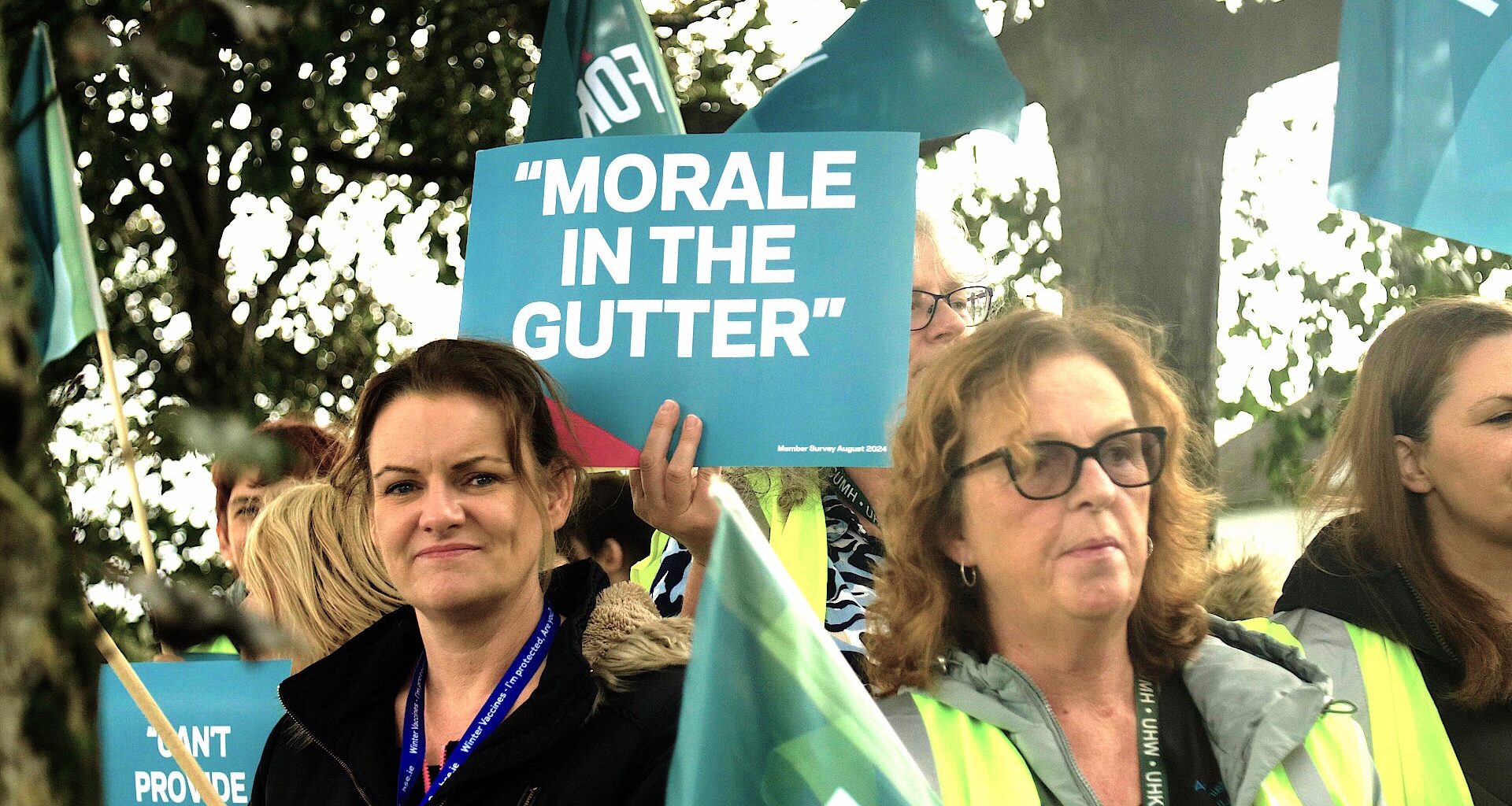
A major new study conducted by the progressive think-tank TASC has revealed a growing staff retention crisis in health services, with three-quarters of workers regularly considering leaving their role, and 67% ‘actively’ considering leaving. The research describes a workforce dealing with low morale and working under extreme pressure across Ireland’s health and social care services.
The mixed-methods study was commissioned by Fórsa’s Health and Welfare Division, which represents more than 32,000 health and social care staff, including clerical and administrative staff, health and social care professionals, and pharmacy staff.
The research surveyed 3,775 Fórsa members across the HSE, Tusla, Section 38 and voluntary organisations, in addition to nationwide focus groups. The research identifies chronic understaffing, ‘top-down’ decision-making, and a failure to meaningfully engage frontline workers as eroding health staff morale and undermining the delivery of essential services.
Fórsa said the findings paint a stark picture of a sector struggling to meet demand while carrying the legacy of long-term underinvestment and recent policy decisions that have capped staffing and abolished vacant posts.
The study identifies six central pressures driving low morale and threatening service delivery:
Severe understaffing and escalating workload pressures: Almost half of respondents reported feeling burnt out “often” or “always.” Workers attributed these pressures largely to inadequate staffing levels and the 2024 ‘Pay and Numbers’ strategy. The report calls for workforce planning based on local needs rather than arbitrary staffing caps.
Disconnect between senior management and frontline realities: Participants described a top-heavy system characterised by one-way, top-down communication that leaves workers feeling unheard and undervalued.
‘Vicious circle’ of low morale and poor retention: The risk of losing staff remains high, reflected in the high number (67%) of those actively considering leaving their role, while the loss of experienced staff increases pressure on those who remain, placing patient care and service stability at risk.
Direct negative impacts on service quality: Understaffing is leading to longer waiting lists, reduced access to local services, and an increased reliance on private providers. Workers reported that these delays undermine preventative care, worsen outcomes, and demoralise staff who feel they are delivering care far below acceptable standards.
Clear risks to the delivery of Sláintecare: Workers strongly believe (78%) that staffing levels are far below what is required to deliver the promised shift to universal, community-based care. More than half said they did not feel supported or confident in delivering the changes demanded.
Urgent lessons for decision-makers: The report calls for evidence-based staffing levels, improved retention strategies, continued progress on pay equity in the voluntary sector, and a stronger worker voice to ensure policy is informed by frontline experience.
“A wake-up call for Government and senior health leaders”
Head of Fórsa’s Health & Welfare division, Ashley Connolly, said low morale is eroding teamwork, retention, and patient care as envisioned by the Government’s Sláintecare programme, designed to create a community-centred model of provision: “The lived reality for our health and welfare members is long waiting lists, reduced access to community services, and local networks closing or shrinking.
“Sláintecare was intended to deliver universal, community-based care, but staff do not believe the system is staffed or supported to achieve that. Their experience must be taken seriously by the Government and the Department of Health,” she said.
Fórsa national secretary Linda Kelly added: “Morale is central to delivering real and sustainable healthcare reform. If workers don’t have the resources or support to maintain services, any efforts at reform are undermined.
“We need evidence-based staffing, fair pay, most especially in the voluntary sector, as well as enhanced retention strategies, and a stronger worker voice in policy decisions. Unless these root causes of demoralisation are addressed, the workforce crisis will threaten staff wellbeing and the future of Sláintecare itself,” she said.
Join a trade union that wins. Join Fórsa.