
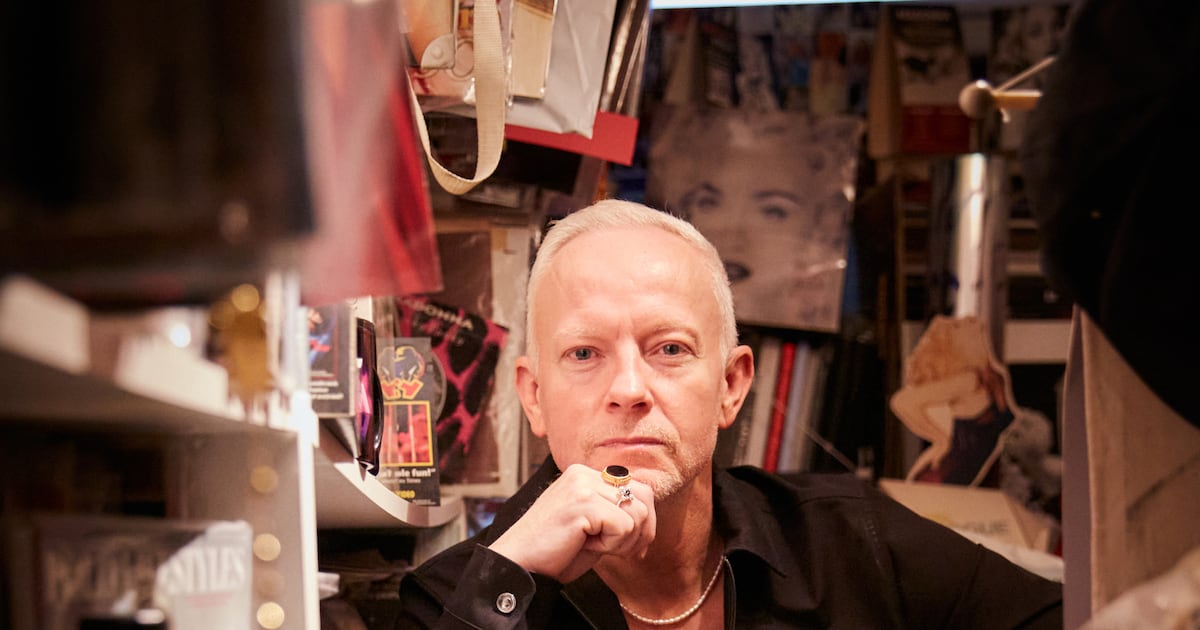
In a room in his London house, 52-year-old spray-tan artist James Harknett has carefully arranged more than 12,500 items connected, in one way or another, to Madonna.
Along with CDs, vinyl records, store displays and magazines including Smash Hits and Record Mirror, Harknett’s collection includes an oversize rhinestone bracelet that the pop megastar flaunted in her video for Material Girl, in 1985; not one but three of the costumes that she wore in the Oscar-winning film Evita, from 1996; and more than 200 pieces of framed imagery.
It all began when Harknett was 11 – “I was completely captivated,” he says – and he estimates that over the past four decades he has shelled out more than €500,000 on Madonna memorabilia.
In 2004 he wanted to buy a mint-condition copy of a vintage issue of Island magazine, which featured Madonna on the cover, but tickets for 18 stops of her Re-Invention tour that year meant he couldn’t afford it.
Harknett is far from alone in his zealous commitment to collecting a beloved megastar’s memorabilia – and these days, as he and his fellow devotees are keenly aware, there are perhaps more collectibles out there than ever before. (Just ask Taylor Swift’s marketing team.)
The problem: the hobby can get expensive quickly, and certain holy-grail items, such as that issue of Island, are rarely cheap.
In August, for example, a sheer catsuit embellished with crystals that Whitney Houston wore onstage in 1991 sold at auction for €19,000. In November, an original print of the artwork for David Bowie’s Aladdin Sane album cover sold for about €428,000. And in December, a Bob Mackie dress that Cher wore in 1978 went for nearly €50,000.
Even if you can afford it, pop-culture memorabilia can be a chancy investment. According to Claire Tole-Moir, who oversees the popular culture and science department at the auction house Bonhams, for household names including The Beatles or Jimi Hendrix, “If there’s only one particular guitar or important stage clothing or set of handwritten lyrics, then it’s going to always be important.”
With other artists, it’s harder to predict whether their memorabilia will climb in value – tastes tend to be fickle. To obsessive collectors such as Harknett, though, the potential financial rewards are hardly the point. As Tole-Moir puts it, “If you love it, then you will always get some return.”
And Harknett loves Madonna.
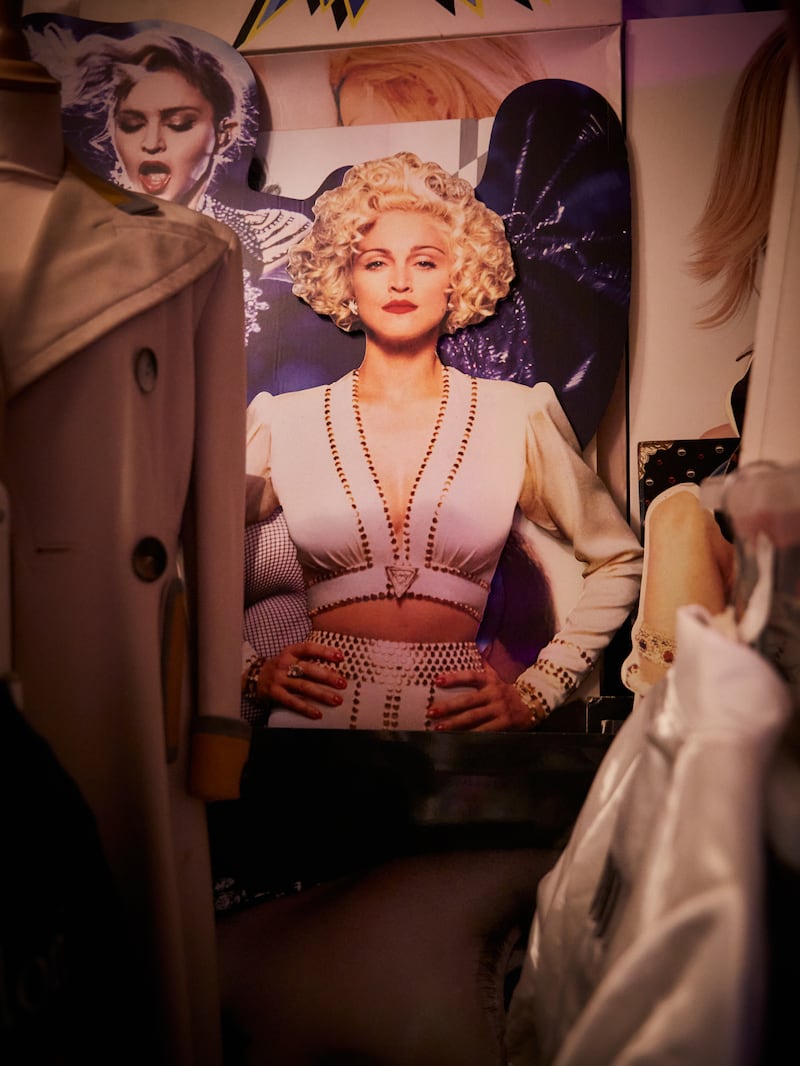 Images of Madonna in James Harknett’s collection of Madonna memorabilia at his home in London. Photograph: Alice Zoo/New York Times
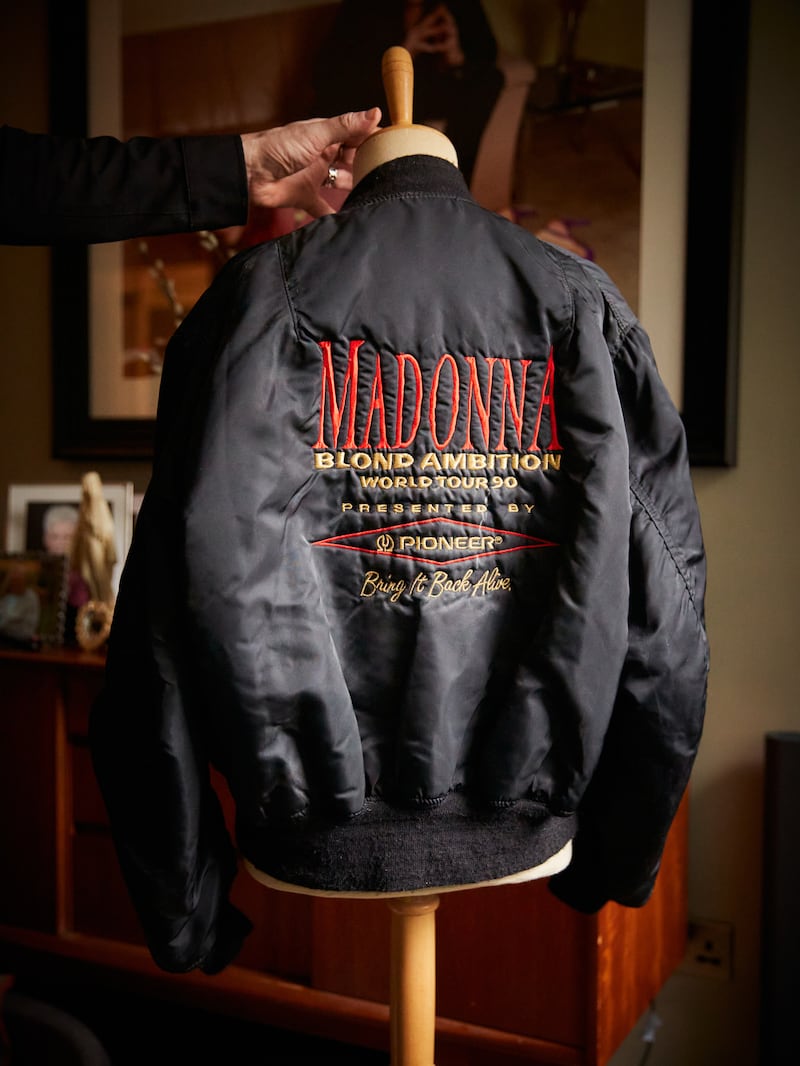 A Madonna jacket in James Harknett’s collection of memorabilia at his home. Photograph: Alice Zoo/New York Times
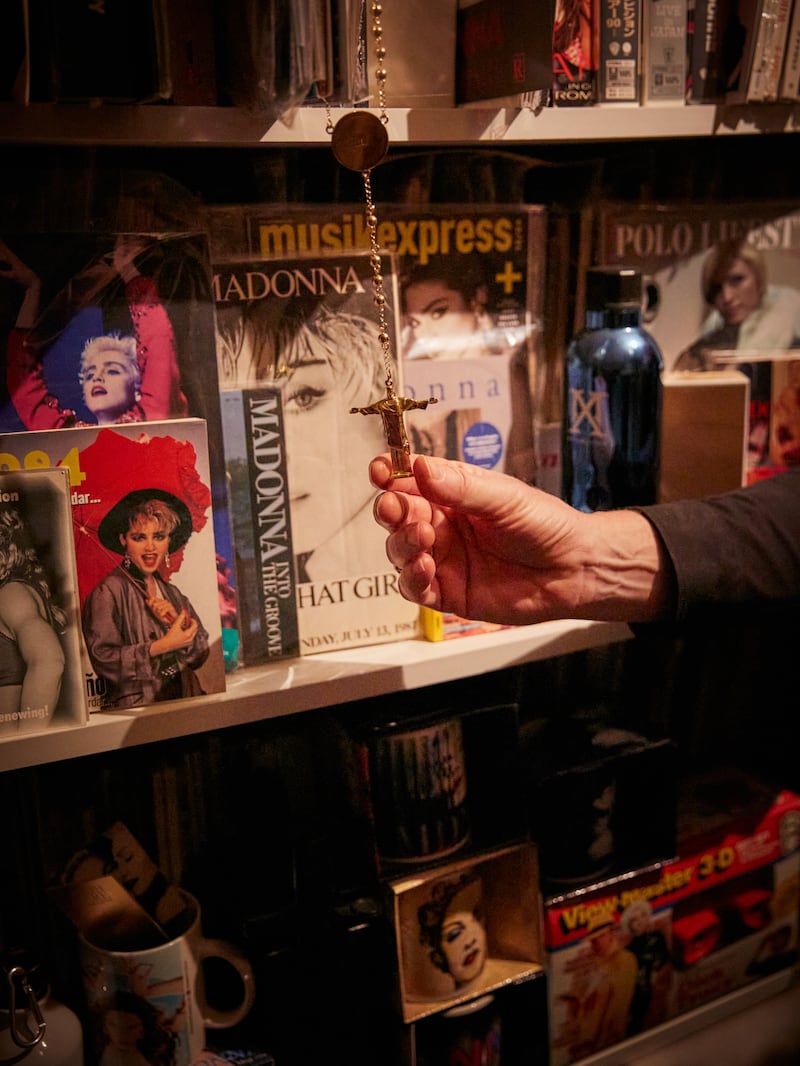 James Harknett shows off particular items in his collection of memorabilia. Photograph: Alice Zoo/New York Times
“By surrounding myself with her music and memorabilia, I felt comforted and excited,” he says. “I viewed them as souvenirs of my devotion to her art and genuine love to the gay community.”
For Zachary Gordon-Abraham, who works for a soda company in Pennsylvania, in the United States, the love flows to Britney Spears.
Gordon-Abraham, who is 30, was a young child when his mother gave him a Britney Spears doll. It turned out to be a catalyst to collecting thousands of pieces of Spears memorabilia.
“My mom started to instil in me collecting things, like valuing them, not playing with them,” Gordon-Abraham says.
After the doll came Spears-focused VHS tapes and DVDs, and then ephemera such as bubblegum and hit clips all bearing her name and image. In 2022 he commissioned a custom-made doll with an outfit created from the fabric of one of her tour costumes, which a wardrobe designer for Spears had given him.
Gordon-Abraham allows that he has sometimes fantasised about selling it all. “But so much of it holds so much sentimental value,” he says. (The New York Post once valued Gordon-Abraham’s collection at about €115,000, but he said it was “priceless” because so many of the items were old or out of circulation.)
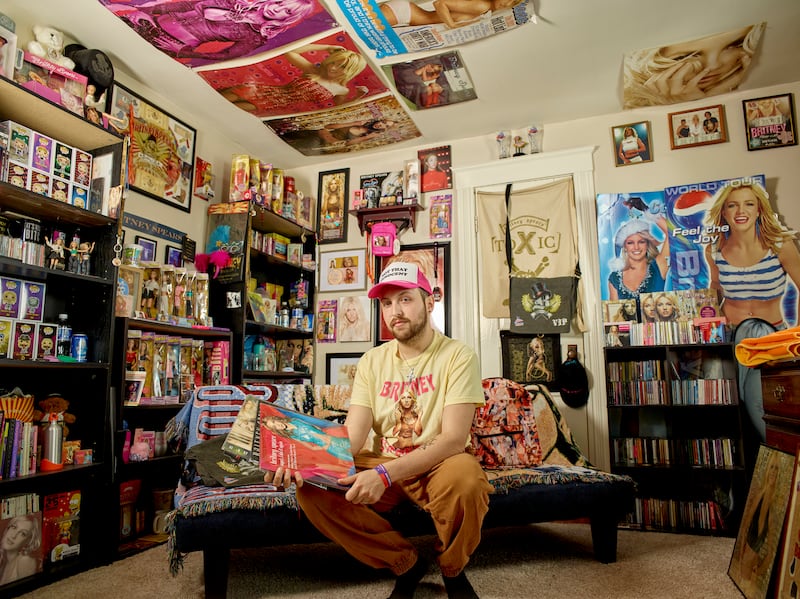 Zachary Gordon-Abraham surrounded by Britney Spears memorabilia at home in northeastern Pennsylvania. Photograph: Noah Kalina/The New York Times
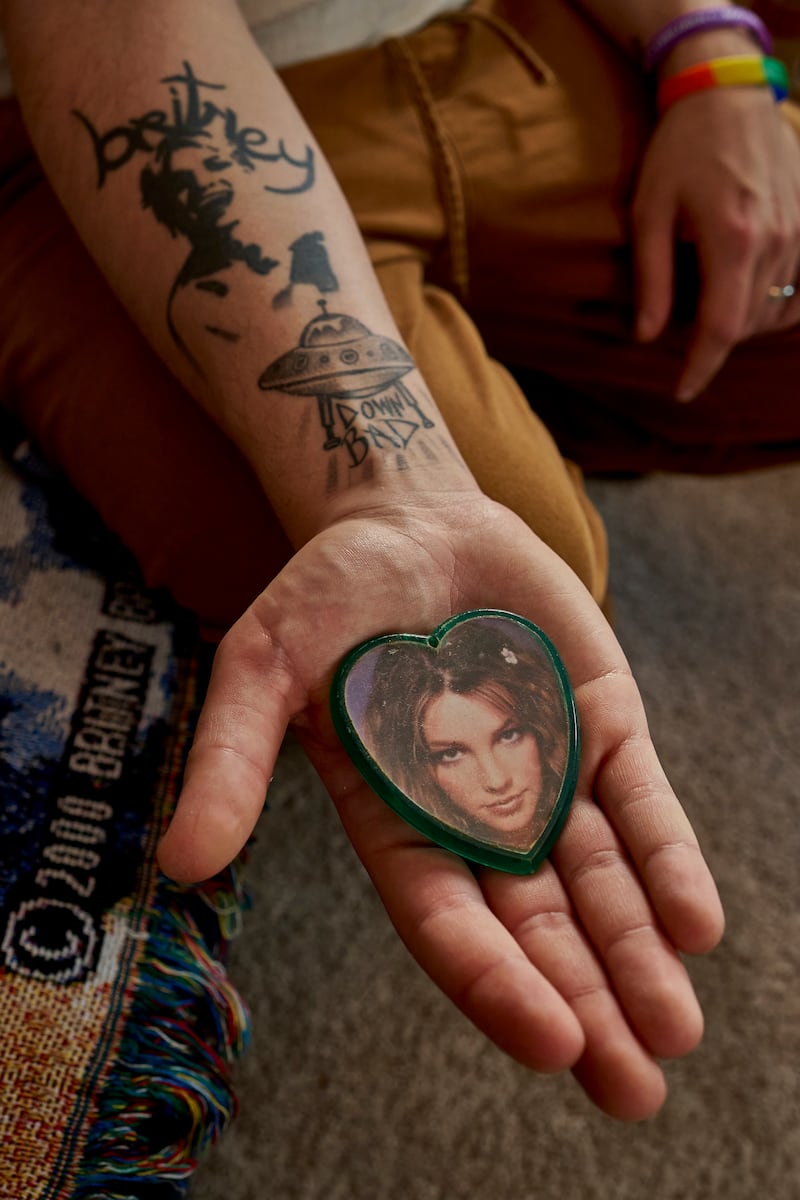 Zachary Gordon-Abraham with an image of Britney Spears from his collection of Spears memorabilia at his home in Pennsylvania. Photograph: Noah Kalina/The New York Times
George Newman, a psychologist who teaches at the University of Toronto, says supercollectors feel the same heartache in parting with items that so many others do. “Many people find those to be irreplaceable and would be devastated if they lost it,” he says.
This kind of hard-core collecting, driven by a deep emotional bond but also by a belief in what Newman calls contagion – that a celebrity’s star power transfers itself to an associated object – has, in fact, been around for thousands of years. Robert Thompson, who studies popular culture at Syracuse University, in New York State, says the trend dates at least to ancient Rome, where Pliny the Elder was a noted autograph collector.
In the 18th and 19th centuries, collectors including Johann Wolfgang von Goethe and Johannes Brahms compiled their autographs into albums. “You’d carry these books around, and it became a kind of testament to all the important people you knew,” Thompson says.
But it wasn’t always autographs. Within three days of Beethoven’s death, in 1827, so many mourners had clipped tufts of his hair that they had turned a head famous for its flowing locks into a bald pate.
Francie Elliott, a 49-year-old from Tennessee, says she has about 1,000 items – magazines, T-shirts, cups, tapes, blankets, Christmas decorations – in her “Mariah Room”, although she admits that she has lost exact count. Her passion for Mariah Carey, she estimates, has cost her anywhere from €40,000 to €80,000.
‘She’s always smiling and being nice with everybody. You hardly see her upset or angry, and it resonates as a great energy back to me’
— Collector Cleonilson Junior on Kylie Minogue
“Every concert, I fly to Vegas or wherever she’s at,” says Elliott, who works as a human resources manager at a pipe-manufacturing facility. “So that’s the airfare, the stay, the ticket, the meet-and-greet, the memorabilia. It’s expensive, but I don’t even think about it.”
[ Collectors set to flock to Ireland’s first ever rock and pop memorabilia auctionOpens in new window ]
Elliott was first drawn to Carey in the early 1990s, soon after her family moved to Tennessee from Los Angeles. Not many people in Clarksville, their new hometown, shared her appearance, she says (she identifies as Hispanic), and she came to see herself in Carey’s hair and skin tone.
“I just kind of gravitated toward her with my identity,” Elliott says. She has found solace in Carey ever since, especially as she mourned her husband’s unexpected death several years ago.
“Her music has helped me get through things in life.”
Some 7,500km away, in the Brazilian city of Salvador, Cleonilson Junior, a 34-year-old estate agent, maintains a collection of more than 2,000 items dedicated to Kylie Minogue, including a headpiece in the shape of a black bow that Minogue wore during a concert in Brazil in 2020.
“I imagine the connection I feel with her comes from her personality,” says Junior, who started his collection in 2007 and runs an Instagram account dedicated to the singer. “She’s always smiling and being nice with everybody. You hardly see her upset or angry, and it resonates as a great energy back to me.”
Harknett can understand those kinds of vibes.
“It used to be, like, a negative term, ‘You’re obsessed with Madonna,’” he says. “I’m, like, ‘Of course I am!’”
“If you’re going to be obsessed with someone,” he goes on, “make sure it’s probably the most talented, most fantastic human being who ever walked the earth.” – This article originally appeared in the New York Times