
More than 2,000 residents without running water since early December
⭐️HERE’S WHAT YOU NEED TO KNOW⭐️
Kashechewan First Nation in Ontario is facing a water crisis.
Community members haven’t had running water since early December.
The water crisis stems from failures at a local water treatment plant.
Community leaders are moving to evacuate all 2,300 residents.
Keep reading to find out how one teen is experiencing the crisis. ⬇️⬇️⬇️
Fifteen-year-old Keisha Paulmartin hasn’t been able to take a proper shower since early December.
“I hate feeling dirty and the fact that I can’t shower just takes a toll on my mental health. It’s dehumanizing,” she told CBC Kids News.
“We have the right to be clean.”
Keisha and thousands of others on Kashechewan First Nation in Ontario haven’t had access to water for a month due to issues in their local water treatment plant.
On Jan. 4, Chief Hosea Wesley declared a state of local emergency.
Some residents have already been relocated , and community leaders are hoping to evacuate most of the community in coming weeks.
Although steps are being taken to address the crisis, Keisha and other community members have been frustrated with the response.
They say the crisis is just another issue that has left them feeling neglected.
What happened?
The Kashechewan First Nation is a Cree community of around 2,300 people that is located along northern Ontario’s James Bay coast.
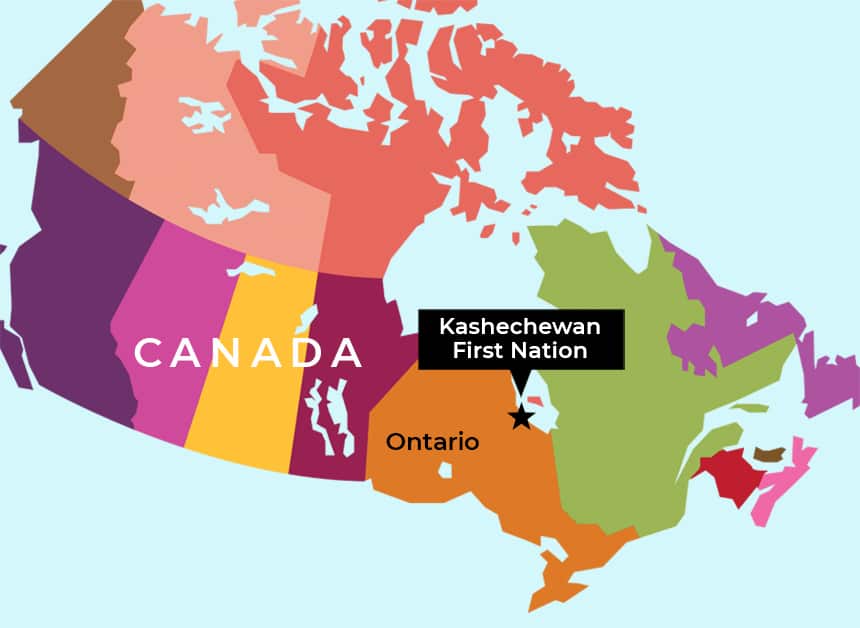
(Graphic design by Philip Street/CBC)
In early December, pumps in the local water treatment plant that clean the community’s drinking water failed.
Later that month, a device that brings raw sewage into the plant also failed.
The issues have affected not only drinking water, but have shut off water in general for basic services, even leading to a sewage backup in the community’s small clinic.

A family from Kashechewan First Nation boards a plane headed for Kapuskasing, Ont., as evacuations begin due to a water crisis. (Submitted by Tyson Wesley)
Keisha, who is a member of Kashechewan’s youth council, says the crisis is taking a toll.
“It sucks because we can’t flush our toilets, take a shower, or even wash our hands,” she said.
Keisha says that many residents have been travelling down to the river to retrieve water and bring it back to their houses, but not everyone has a vehicle to transport the river water.
Those households have been given bottled water, but that also poses a problem.
“The problem is some households may have six or seven children and the water they’re being given isn’t going far enough,” she said.
And not having running water is creating problems that even Keisha couldn’t have foreseen — like illness spreading during a flu outbreak.
“Imagine how many more people are getting sick because nobody can wash their hands.”
Community says they feel neglected
Community members have said that the slow response to addressing the crisis has been frustrating.
They say it’s just another among a series of ongoing issues their community faces that makes them feel neglected.
“Almost every few months it seems like something with the water plant happens,” said Keisha.
“Obviously since water is a human right, it just feels like whoever is supposed to be providing that water or the solutions to the problems just don’t care enough,” she said.
On top of the water woes, the community has been forced to evacuate many times in the spring because Kaschewan is located in a flood plain.

Homes in Kashechewan First Nation don’t have access to running water due to a failure at the community’s water treatment plant. (Image credit: Olivia Stefanovich/CBC)
Tyson Wesley, Kashechewan First Nation’s executive director, says for 30 years community members have been urging the federal government to move them to an area to the north that is less prone to flooding, but nothing has been done.
“We’ve been kind of left aside and forgotten, and our issues have kind of grown over the years,” Wesley told CBC Sudbury.
“Today we’re seeing that impact happening now and it’s our people that are the ones that pay the price of our government’s inaction.”
Last week, Wesley said he thought the response to the current crisis was “not good enough.”
“And I don’t think they understand that these are children, these are people. I think one of the comments that I’ve been hearing from our community members is, ‘We are people. We are human beings and we deserve clean water.’”
What’s being done?
Kashechewan’s leaders are working with the federal and provincial governments for a full evacuation of the First Nation’s 2,300 residents.
A handful of flights have already been chartered to relocate the most vulnerable people in the community to places like Kapuskasing, and Timmins, both in Ontario, among other cities.
More flights are planned to Kingston and Niagara Falls, Ontario.
Indigenous Services Canada (ISC) confirmed that workers with a company called Northern Waterworks were deployed to the community to repair the water treatment plant.
But it’s unclear when the repairs will be done.
The company was able to replace a pump in the lift station and was bringing in additional equipment to complete the repairs.
ISC also said that Indigenous partners are being approached to support mental wellness.
The Department of National Defence is also providing a group of Canadian Rangers to help with the evacuation.
“This is an evolving situation, and we will continue to respond to all critical needs, to support community members and leadership through this evacuation, and to get people back home as soon as possible,” said ISC.
Have more questions? Want to tell us how we’re doing? Use the “send us feedback” link below. ⬇️⬇️⬇️
With files from Jonathan Migneault/CBC